If you’ve ever wondered “When should I put out my hummingbird feeders?” you’re not alone. Different neighbors, websites, and even bird books often say different things, and it can feel like you might accidentally “miss” the birds or keep them too long.
This guide gives you a clear, practical answer: a simple rule of thumb, a state‑by‑state timing chart, and tips for weird weather years. You’ll also see how to set up your feeders and yard so hummingbirds stay safe, healthy, and coming back year after year.
Quick answer: general timing rules
If you just want the short version, here it is.
-
Spring: Put your feeder out about two weeks before you usually expect hummingbirds in your area. If you’re not sure, use the state guide below as your “latest” target date and feel free to put it out earlier.
-
Fall: Leave your feeder up at least two weeks after you see the last hummingbird, and longer if you don’t mind changing nectar. Late migrants and young birds often pass through after your “regulars” disappear.
You don’t need fancy gear to get started, but a simple, easy‑to‑clean feeder and a couple of basic accessories make timing much easier to manage. Consider starting with a reliable leak‑free feeder and a cleaning brush set so fresh nectar is never a chore.
My favorite Hummingbird feeder that’s easy to take apart and clean is the HummZinger Ultra.
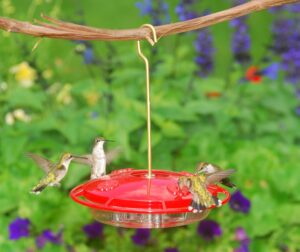
The HummZinger Ultra 12oz Saucer Feeder is one of the best options for a hummingbird feeder that’s both easy to clean and maintain. This top-tier feeder features patented Nectar Guard tips—flexible membranes on the feeding ports that keep flying insects out while still allowing hummingbirds to feed freely. Plus, it comes with an integrated ant moat to prevent crawling insects from reaching the nectar, and the raised flower ports help divert rain, keeping the nectar fresh.
With a 12 oz capacity, this mid-size feeder offers plenty of space and can be hung or mounted on a post using the included hardware. It has four feeding ports and is made from durable, unbreakable polycarbonate. Whether you’re concerned about bees, wasps, or ants, this feeder is built for easy cleaning and insect protection.
“A dedicated hummingbird feeder brush kit makes it easy to scrub every corner of the reservoir and ports, so nectar stays fresh and safe for your birds.”

Why timing matters to hummingbirds
Understanding why timing matters makes it easier to adjust for your own yard and weather.
Spring arrival
Most hummingbirds time their migration to match:
-
Lengthening daylight
-
Rising temperatures
-
The first flush of insects and early flowers
They need nectar for quick energy and tiny insects for protein. A feeder waiting for them acts like an emergency fuel stop, especially in early spring when flowers can still be scarce.
Fall departure
In fall, hummingbirds are building up fuel reserves for migration. Some leave early, others linger depending on:
-
Age and experience
-
Local flower and insect availability
-
Weather patterns and cold fronts
Leaving a feeder up “late” does not make hummingbirds stay longer than they should. It just gives late migrants and young birds a safe food source as they pass through.
Weird weather years
Some years bring early heat waves, late frosts, or long rainy periods. In these years:
-
Err on the side of putting feeders out earlier in spring.
-
In fall, keep feeders up as long as nectar is staying fresh and you can maintain them, even if you’re only seeing an occasional visitor.
How to use the state‑by‑state timing guide
Use the dates below as guidelines, not hard rules. Every year is a little different, and local micro‑climates (cities vs rural, coastal vs inland, mountains vs lowlands) can shift things by a week or two.
-
“Put out by” = latest recommended date. Earlier is usually fine.
-
“Leave up until at least” = minimum recommended time. Leaving feeders up longer is helpful, as long as nectar stays fresh.
Here is the state-by-state guide with special information about feeding hummingbirds
| State | Special Information |
|---|---|
| Alabama | Feeders should be put out in early March and taken down in December. |
| Alaska | Feeders can be kept year-round in Southeast Alaska; elsewhere, April to September. |
| Arizona | Keep feeders up year-round due to resident species like Anna’s Hummingbirds. |
| Arkansas | Put feeders out mid-March; take them down by December. |
| California | Year-round feeding is possible due to resident hummingbird species like Anna’s. |
| Colorado | Start feeding in early April, and take feeders down by November. |
| Connecticut | Feeders should be out by early April and removed by November. |
| Delaware | Put feeders out early April and take them down by November. |
| Florida | Feed hummingbirds year-round due to the presence of resident species. |
| Georgia | Year-round feeding is recommended for resident species like Ruby-throated Hummingbirds. |
| Hawaii | No native hummingbirds; however, some introduced species may be present. |
| Idaho | Feeders should be put out in late March and removed by November. |
| Illinois | Start feeding in early April; take feeders down by December. |
| Indiana | Put feeders out early April; remove them by December. |
| Iowa | Ruby-throated Hummingbirds arrive mid-April; feeders should be removed late November. |
| Kansas | Feeders should be put out early April; Rufous Hummingbirds may visit in fall. |
| Kentucky | Ruby-throated Hummingbirds arrive late March; rare Rufous Hummingbirds may winter here. |
| Louisiana | Year-round feeding is ideal due to wintering species like Rufous and Buff-bellied Hummingbirds. |
| Maine | Ruby-throated Hummingbirds arrive mid-April; take feeders down by November. |
| Maryland | Ruby-throated Hummingbirds arrive mid-April; Rufous may winter here occasionally. |
| Massachusetts | Ruby-throated Hummingbirds arrive early April; take feeders down by December. |
| Michigan | Ruby-throated Hummingbirds arrive late April; remove feeders mid-November. |
| Minnesota | Ruby-throated Hummingbirds arrive late April; remove feeders mid-November. |
| Mississippi | Year-round feeding is recommended due to wintering hummingbird species. |
| Missouri | Feeders should be put out in early March and removed by January. |
| Montana | Multiple species like Rufous and Calliope arrive in April; remove feeders by November. |
| Nebraska | Ruby-throated Hummingbirds arrive late April; remove feeders mid-November. |
| Nevada | Year-round feeding is possible in western and southern lowlands due to resident species like Anna’s Hummingbirds. |
| New Hampshire | Ruby-throated Hummingbirds arrive early April; remove feeders mid-November. |
| New Jersey | Feeders should be put out mid-March and removed by December. |
| New Mexico | Year-round feeding is acceptable due to resident species like Costa’s Hummingbirds. |
| New York | Feeders should be put out late March and removed by December. |
| North Carolina | Year-round feeding is ideal for resident hummingbird populations like Ruby-throated Hummingbirds. |
| North Dakota | Ruby-throated Hummingbirds arrive late April; remove feeders by November. |
| Ohio | Feeders should be put out late March and removed by December. |
| Oklahoma | Feeders should be put out late March; remove them by November if no activity is observed for two weeks. |
| Oregon | Year-round feeding is possible due to resident hummingbird populations like Anna’s Hummingbirds in western areas. |
| Pennsylvania | Feeders should be put out late March and removed by December if no activity is observed for two weeks. |
| Rhode Island | Ruby-throated Hummingbirds arrive early April; remove feeders by November. |
| South Carolina | Year-round feeding is recommended due to resident species like Ruby-throated Hummingbirds. |
| South Dakota | Ruby-throated Hummingbirds arrive late April; remove feeders by November. |
| Tennessee | Ruby-throated Hummingbirds arrive late March; remove feeders by December. |
| Texas | Year-round feeding is ideal due to the presence of multiple resident species. |
| Utah | Feeders should be put out mid-March; remove them by November if no activity is observed. |
| Vermont | Ruby-throated Hummingbirds arrive early April; remove feeders by November. |
| Virginia | Ruby-throated Hummingbirds arrive early March; remove feeders by December. |
| Washington | Year-round feeding is possible in western areas due to resident species like Anna’s Hummingbirds. |
| West Virginia | Ruby-throated Hummingbirds arrive mid-March; remove feeders by December. |
| Wisconsin | Ruby-throated Hummingbirds arrive late April; remove feeders by November. |
| Wyoming | Feeders should be put out in late April; remove them by November. |
Get your feeder ready before they arrive
Once you know your timing, the next step is making sure your setup is safe and easy to maintain.
Feeder options
-
Easy‑clean starter feeder – A simple, wide‑mouth feeder that comes apart fully makes it much easier to clean every few days. Look for a model that doesn’t leak and has sturdy hanging hardware.
-
Small feeder for hot weather – If you live where it gets very hot, a smaller feeder you refill often is safer than a huge one that sits for days. It encourages you to change nectar more frequently.
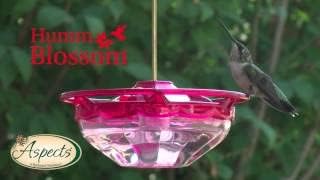
Aspects HummZinger 4 oz HummBlossom feeder

-
Window‑mounted feeder – Great for people who want close‑up views from inside. Small, simple feeders on a window can be especially fun near kitchens or home offices.
-

Helpful accessories
-
Ant moat – A small cup that sits above your feeder and holds water, creating a barrier ants won’t cross. Very helpful near trees, decks, or railings.
-
-
Feeder brush set – A long bottle brush plus tiny brushes for ports make it easy to scrub nectar residue from every corner.

- Shepherd’s hook or hanging pole – Lets you place feeders where hummingbirds feel safe and visible: near, but not buried in, shrubs and trees.

Tip: No matter which feeder you choose, the real key is fresh nectar plus regular cleaning. The easier a feeder is to take apart and scrub, the more likely you are to keep it clean.
How often to change nectar (by temperature)
Knowing when to put your feeder up is only half the story. The other half is keeping the nectar fresh enough that it’s safe.
As a general guideline:
-
Below ~70°F (21°C):
Change nectar every 4–5 days. -
70–85°F (21–29°C):
Change nectar every 2–3 days. -
Above ~85°F (29°C):
Change nectar daily, and move feeders into partial shade if possible.
Signs that nectar needs to be changed:
-
Cloudy or milky appearance
-
Stringy or slimy material inside the feeder
-
Black spots or film on feeder parts
-
Safe nectar recipe and what to avoid
The safest nectar recipe is extremely simple:
-
-
4 parts clean water
-
1 part plain white granulated sugar
-
Heat the water, stir in the sugar until dissolved, let the solution cool, then fill your feeder. Extra nectar can be stored in the refrigerator for up to a week in a clean container.
Recipe Variation
Instead of a 4 to 1 ratio of water to sugar, this woman uses a 2 to 1 ratio. Although higher sugar content is more attractive to bees, her results are unbelievable! Be sure to check it out!
“This sugar shaker nectar mixer lets you measure, mix, and pour hummingbird nectar in one container, so you don’t have to juggle multiple cups and funnels. The simple design is easy to rinse out between batches, which helps keep your nectar fresh and safe.”

Avoid:
-
Honey
-
Brown sugar
-
Artificial sweeteners
-
“Raw” sugar that isn’t fully refined
-
Any red dye or colored nectar
These ingredients can ferment faster, grow dangerous microbes, or simply don’t provide what hummingbirds need.
Common mistakes (and better options)
Many people have the right intention but run into the same pitfalls. Here are some of the most common mistakes and what to do instead.
-
Putting feeders out too late
-
Mistake: Waiting until you see a hummingbird before hanging a feeder.
-
Better: Use your state dates as a guide and put the feeder up a week or two early so it’s ready for the first scouts.
-
-
Taking feeders down as soon as you “stop seeing” birds
-
Mistake: Removing feeders right away when your usual birds seem to have left.
-
Better: Leave feeders up at least two more weeks to help late migrants and young birds.
-
-
Using red dye or pre‑colored nectar
-
Mistake: Thinking colored nectar is necessary to attract hummingbirds.
-
Better: Use clear homemade nectar and let the feeder itself provide the color. Many feeders have red parts and work perfectly without dye.
-
-
Letting nectar sit too long in hot weather
-
Mistake: Filling a large feeder and leaving it for several days in high heat.
-
Better: Use smaller feeders, fill them partially, and change nectar frequently.
-
-
Beyond Nectar: Help Hummingbirds Thrive
Safe nectar is only part of the picture. Hummingbirds also need flowers, insects, water, and safe cover.
- The Art of Attracting Hummingbirds to Your Yard– complete habitat, flower, and feeder guide.
- How to Use Water Features to Attract Hummingbirds – shallow, moving water they love.
- Hummingbird Nesting Facts – how they nest and how to keep nests safe.
- Hummingbird Facts: How They Live, Feed, and Thrive – behavior, migration, and more.
Beyond feeders: plants and habitat that keep hummingbirds around
Feeders are wonderful, but they’re only part of the picture. Hummingbirds also need:
-
Flower nectar
-
Small insects and spiders for protein
-
Safe places to perch and nest
You can keep them in your yard much longer if you:
-
Plant nectar‑rich flowers that bloom in succession from early spring through fall.
-
Include native shrubs and small trees that provide cover, insects, and seasonal interest.
-
Avoid pesticides, especially broad‑spectrum insecticides, which remove their natural food.
-
“Best native flowers for hummingbirds in the Northeast”
-
“Shrubs that support hummingbirds and other wildlife”