template for feeder/water features


Plan for blooms from spring through fall
Include early, mid‑season, and late‑blooming plants so something is always flowering when hummingbirds are present in New Jersey. Plant in groups or drifts rather than isolated single plants so hummingbirds can feed efficiently and find blossoms more easily. My detailed guide The Art of Attracting Hummingbirds to Your Yard offers seasonal plant lists and layering ideas, making it easy for New Jersey birders to choose a few plants for sun and shade that will keep flowers in bloom all season long.
My special guide The Art of Attracting Hummingbirds to Your Yard will provide you with lists of hummingbird-attracting plants that bloom during each season: spring, summer and fall. It makes it easy for you to select plants that will provide continuous blooms for your hummingbirds during the time they are visiting your yard until the time they leave in the fall. You will also get advice on layering plants for a successful hummingbird garden. My guide also provides plant lists for sun and shade to make it easy to select plants for your particular growing conditions. Planting a “hummingbird-friendly garden” will never be easier!
Use feeders to supplement, not replace, flowers
Feeders provide a reliable nectar source alongside your plants, especially in early spring and late summer when wild blooms may be sparse because of drought or temperature swings. Hang them where they’re visible from your best flower beds so hummingbirds can move naturally between blossoms and sugar water.
Here is my favorite feeder and why I recommend this feeder: HummZinger Ultra 12‑oz Saucer Feeder.
If you’re tired of leaky bottle feeders and constant insect problems, this video explains why a simple saucer‑style Aspects feeder is my go‑to choice. You’ll see how the low, shallow 12‑ounce bowl helps you mix only what your hummingbirds can use before it spoils, while the built‑in ant moat, raised ports, and included Nectar‑Guard tips work together to keep ants, bees, and wasps out of the nectar. The drip‑proof design and twist‑off cover make cleaning and refilling quick and easy, so it’s realistic to keep nectar fresh even in warm weather. Made from tough, UV‑stabilized polycarbonate in the USA and backed by a true lifetime guarantee, this is a “buy it once” feeder you can count on year after year
Provide safe perches and nesting cover
Keep some shrubs, small deciduous trees, and a few dead or thin branches where hummingbirds can rest, display, and build nests. Avoid pruning
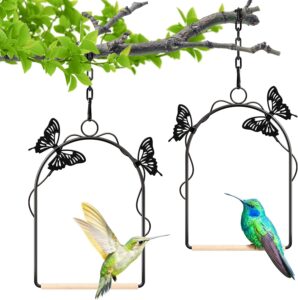
everything into bare, tight shapes; a slightly softer outline with twiggy tips gives birds more places to sit and watch over feeders and flowers.
A simple hummingbird swing or decorative perch placed a few feet from your feeder brings birds into perfect view and gives them a “guard post.” Hummingbirds may spend more time perched than many people realize, using these spots to rest, preen, digest nectar, and defend their favorite feeding areas. Once birds adopt a swing or perch, they often stay in the yard longer and make more frequent, relaxed visits.
Offer water in a way hummingbirds like
Most people focus on feeders and flowers, but the right water feature can turn your yard into a hummingbird hangout. Hummingbirds prefer shallow, moving water—fine sprays, mists, and droplets on leaves—over deep, still birdbaths. Add a mister, dripper, or fine spray so hummingbirds can bathe in moving droplets on leaves or in a shallow basin.
Consider adding a mister. Most people focus on feeders and flowers, but the right water feature can turn your yard into a true 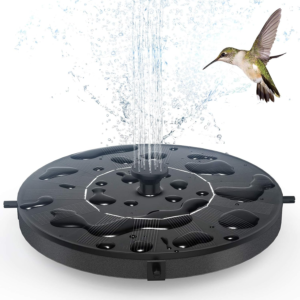 hummingbird hangout. Hummingbirds prefer shallow, moving water—fine sprays, mists, and droplets on leaves—rather than deep, still birdbaths. Add a mister, dripper, or fine spray so hummingbirds can bathe in moving droplets on leaves or in a shallow basin.
You can also install a shallow birdbath with gently sloping edges with gently sloping edges—no more than about an inch of water— gives hummingbirds a place to sip and splash at the edge. Position water features near, but not directly over, key flower beds so birds can move easily between bathing and feeding.
Placing Water Features for Maximum Hummingbird Activity
Where you place your water features matters as much as what you choose.
-
Near cover, not in the open: Position water within a few feet of shrubs, small trees, or tall perennials so hummingbirds can retreat quickly if they feel threatened.
-
Partial shade: Light shade keeps water cooler and reduces evaporation while still allowing enough sun for droplets to sparkle.
-
Close to nectar plants and feeders: Place water features near your hummingbird‑friendly flowers and feeders so birds can easily move between feeding and bathing.
-
Safe viewing distance: Set features where you can see them from a window, patio, or garden bench, but not so close that frequent traffic scares birds away.
If you have multiple water features, spread them around to reduce territorial conflicts and give more birds access.
For a comprehensive guide on using water features, check out my article: How to Use Water Features to Attract Hummingbirds. This guide will walk you through the exact kinds of misters, drippers, and shallow baths hummingbirds prefer, how deep and how strong the water flow should be, where to place everything so birds feel safe, and how to keep it all clean without spending a lot of money.
Skip pesticides and let insects thrive
-
Avoid or greatly limit pesticides, especially systemic insecticides, because hummingbirds and their chicks rely heavily on tiny insects and spiders for protein.
- A healthy, chemical‑free yard with native plants will naturally support more insects, which means more high‑quality food for hummingbirds.
My article Natural Pest Control Methods for Your Hummingbird Garden shows readers they don’t have to choose between a healthy hummingbird garden and effective pest control. It explains exactly how to prevent and manage pests using natural methods—companion planting, encouraging “good bugs,” organic sprays like garlic, pepper, and neem, physical barriers, and smart traps—so they protect their plants without poisoning hummingbirds or the insects they eat. It also gives clear, season‑by‑season checklists and safety tips (like where not to spray, how to avoid harming pollinators, and how to keep pest control away from nests and feeders), making it easy to follow even if you’re new to organic gardening. If you want fewer pests, stronger plants, and a garden that’s truly safe for hummingbirds from spring through fall, this is the article for you!
Keep Insects Away From Your Feeder
Bees, wasps, and ant trails can quickly take over a hummingbird feeder, but you don’t have to give up and bring the feeder in. My detailed guide: How to Keep Bees and Ants Away From Your Hummingbird Feeder walks you through the safest, most effective ways to keep pests out of your nectar—using ant moats, bee‑resistant feeders, smarter placement, and even “decoy” feeders that draw insects away—so the sugar water stays clean and available for hummingbirds only. If you’re tired of fighting swarms on your feeders and want a simple plan that actually works, This guide is your proven answer!
If you are lucky, ants, bees and wasps are the only pests you have to deal with at your hummingbird feeder. Here is a guide to help you deal with those much larger feeder pests: Effective Tips For Pest Control At The Hummingbird Feeder
You must be logged in to post a comment.