Key Takeaways: Highbush Blueberry for Hummingbirds
-
Keystone habitat shrub: Highbush blueberry’s spring flowers support pollinators, its foliage hosts many caterpillars, and its berries feed birds and mammals, strengthening the food web your hummingbirds rely on.
-
Edible and ornamental native: This 6–12 foot shrub is hardy across the Northeast, with white spring bloom, summer blueberries, and brilliant red‑orange fall foliage.
-
Needs acidic, moist soil: Thrives in full sun with consistently moist, well‑drained, acidic soil (about pH 4.5–5.5), making it perfect for dedicated blueberry beds or mixed native shrub borders behind your main nectar plants.
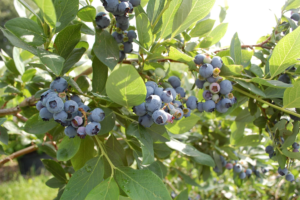
Highbush blueberry is a tall, multi‑stemmed native shrub in the heath family that grows naturally in moist woods, bog edges, and clearings across eastern North America, including the Northeast. In gardens, it typically reaches about 6–12 feet tall and wide, with an upright to vase‑shaped form and fine, twiggy branching. In spring, it produces clusters of white to pink, bell‑shaped flowers, followed by edible blueberries in early to mid‑summer, and then spectacular red, orange, or purple fall color.
For hummingbird gardeners, highbush blueberry is less about nectar and more about keystone habitat value. Its foliage is documented to host more than 200–300 species of moth and butterfly caterpillars, and its berries and cover support a wide array of birds and mammals. That makes it one of the powerhouse shrubs in the same category as serviceberry,chokeberry, American hazelnut, ninebark, and witch hazel, all of which quietly fuel the insect and bird life that hummingbirds depend on.
How Highbush Blueberry Supports Hummingbirds
Flowers and Pollinators
Highbush blueberry flowers in mid‑ to late spring (often April–May in much of the Northeast), producing clusters of small, urn‑ or bell‑shaped white to pink blossoms along its twigs. These flowers are highly attractive to bees and other pollinators:
-
Many native bees, including specialist “blueberry bees,” bumble bees, and solitary bees, use buzz pollination to vibrate the flowers and release pollen.
-
Honey bees also visit, though they are less efficient than native bees at pollinating blueberry flowers.
Hummingbirds may occasionally investigate blueberry flowers, but the blossoms are small, pendant, and not classic hummingbird tubes. The real benefit to hummingbirds is the pollinator boom they attract—your shrubs will buzz with insect life in spring, giving hummingbirds more hunting opportunities around your planting.
Caterpillars and Keystone Value
Highbush blueberry is widely cited as a “keystone” shrub for Lepidoptera. Native plant and wildlife sources list:
-
Around 200–300+ species of moth and butterfly caterpillars feeding on blueberry foliage, including species such as red‑spotted purples, elfins, and various sphinx moths.
-
Some conservation groups specifically highlight Vaccinium species as among the most important woody plants for supporting caterpillar biomass for songbirds.
Because nesting birds feed their young mostly on soft‑bodied insects like caterpillars, a blueberry thicket becomes a nursery and feeding center for many bird species. Hummingbirds, in turn, hunt small insects and spiders throughout the season; a shrub that generates this much insect life makes your hummingbird garden richer and more self‑sustaining.
Fruit and Cover
Highbush blueberry’s edible berries are beloved by humans and wildlife alike:
-
Clusters of blue, sweet berries ripen from late June into July or August, depending on variety and location.
-
The fruit is eaten by many songbirds (such as catbirds, thrushes, tanagers, bluebirds), gamebirds, mammals (bears, foxes, squirrels, chipmunks), and, of course, people.
If you plant highbush blueberries, you should expect to share or actively protect some crops with netting if you want substantial fruit for yourself.
The shrubs’ dense branching and foliage also provide:
-
Nesting sites and hiding cover for small birds and mammals.
-
Winter structure once leaves drop and berries are gone, especially when planted in groups.
Around your hummingbird beds and vines, highbush blueberries act as fruiting, insect‑rich hedges that keep the whole area busy with wildlife.
Size, Hardiness, and Site Requirements in the Northeast
Highbush blueberries are well‑suited to Northeastern climates.
-
Hardiness: Most highbush blueberries are hardy in USDA Zones 4–7 (some 3–8), covering nearly all of the Northeastern U.S.
-
Size: Typical garden plants reach about 6–12 feet tall and 4–8 feet wide, depending on cultivar and site conditions.
Light
-
Best fruiting and fall color occur in full sun (at least 6 hours of direct light), but plants will tolerate light shade.
-
In the Northeast, morning sun with some afternoon shade can help in hot, exposed spots while still giving good fruit set.
Soil
Highbush blueberries have specific soil needs:
-
Acidic soil is critical: Ideal pH is about 4.5–5.5.
-
High organic matter: They prefer loose, humus‑rich, well‑drained soils—often sandy or peaty.
-
Moist, not soggy: Blueberries like consistent moisture but cannot tolerate waterlogged conditions; raised beds or berms are useful in heavier soils.
If your native soil is neutral or alkaline or heavy clay, you will likely need to:
-
Amend generously with peat moss, pine fines, composted bark, or other acid organic materials.
-
Consider raised beds filled with an acidic soil mix for best long‑term performance.
Planting, Spacing, and Basic Care
Planting and Spacing
Extension recommendations for highbush blueberries typically suggest:
-
Plant healthy 2–3 year old shrubs in early spring.
-
Space plants about 5–7 feet apart in rows 8–10 feet apart if you’re creating a hedge or patch.
-
Dig a hole about twice the width of the root ball, mix native soil 1:1 with peat moss or acidic organic material, and plant slightly deeper than they were in the nursery.
After planting:
-
Water thoroughly and remove any weak or dead branches.
-
Apply a 3–4 inch layer of mulch—pine needles, wood chips, bark, or sawdust—to conserve moisture, suppress weeds, and maintain acidity.
Water and Fertility
-
Maintain even moisture, especially during establishment and fruiting; avoid drought stress.
-
Use fertilizers formulated for acid‑loving plants (azalea/rhododendron blends) and avoid over‑fertilizing, which can harm shallow roots.
-
It’s often recommended to remove flowers for the first one to two years to encourage root and branch development before allowing full crops.
Pruning
To maintain productivity and structure:
-
Prune during dormancy (late winter) once plants are established (year 4+).
-
Remove weak, low, dead, or diseased canes, and gradually remove older canes (over ~6 years old) to favor younger, more productive wood.
-
Aim to keep a mix of canes of different ages, with a total of about 8–12 strong canes per mature bush.
For a wildlife‑oriented planting where yield isn’t the only goal, you can prune a bit more lightly, focusing on health and shape rather than maximum fruit production.
Highbush Blueberry in a Hummingbird Garden Design
Because highbush blueberry pulls so much weight for pollinators, caterpillars, birds, and people, it’s ideal as a structural shrub in your hummingbird layouts.
Mixed Native Shrub Row
Along a fence line, property boundary, or the back of a large bed:
-
Combine highbush blueberry with other shrubs from your Shrubs for Hummingbirds in the Northeast: Building a Layered Garden page—such as serviceberry, chokeberry, American hazelnut, ninebark, New Jersey tea, witch hazel, and buttonbush.
-
Plant highbush blueberries where you can easily access them for picking and where their fall color will be visible from the house.
In front of that row, create nectar bands using the perennials from the Best Hummingbird Plants for Northeastern United States article, such as bee balm, wild bergamot, cardinal flower, jewelweed, fire pink, royal catchfly, great blue lobelia, butterfly weed, fringeleaf wild petunia, sweet William, wild blue phlox, and garden phlox.
The blueberries and other shrubs provide structure, insects, berries, and nesting; the perennials and your vines (like trumpet honeysuckle / coral honeysuckle) supply the nectar show.
Edible Edge to a Hummingbird Bed
Because highbush blueberry is both edible and ornamental, you can use it where you want to merge an edible landscape with a hummingbird garden:
-
Place a small group of 3–5 highbush blueberries at one edge of your hummingbird planting, interplanted with acid‑tolerant natives like [highbush blueberry is already your feature here, so pair with native azaleas or serviceberry.
-
In front and between them, tuck your favorite nectar plants and perhaps a short run of trumpet honeysuckle on a small trellis.
This gives you a one‑stop corner where you can pick berries, watch hummingbirds, see fall color, and enjoy bird activity all in one cluster.
Small Yard Strategy
Even in a small Northeastern yard, a single highbush blueberry can make a big difference:
-
Use one shrub as a corner anchor or near a patio, where its spring bloom, summer fruit, and fall color are visible.
-
Around it, plant 3–5 clumps of bee balm,cardinal flower, and wild bergamot, and run a short length of trumpet honeysuckle along a fence.
Even this tiny setup can significantly increase hummingbird visits while still feeding pollinators, birds, and your family.
FAQ: Highbush Blueberry in Hummingbird Gardens
Is highbush blueberry a good plant for hummingbirds?
Indirectly, yes. It’s not a top nectar plant, but its flowers feed pollinators, its foliage hosts hundreds of caterpillars, and its berries and cover support birds and mammals, all of which strengthen the habitat your hummingbirds use.
Will highbush blueberries grow well in the Northeastern United States?
Yes. They are native in the East and are hardy in roughly USDA Zones 4–7 (some cultivars 3–8), fitting most Northeastern climates provided you can give them acidic, organic, well‑drained soil.
Do I need more than one blueberry plant?
Highbush blueberries are generally self‑fertile but yield and berry size improve significantly with cross‑pollination from a second compatible variety.
What is the biggest challenge in growing highbush blueberries?
Soil pH. They need acidic soil (around pH 4.5–5.5) and high organic matter; neutral or alkaline soils and heavy clays require amending or raised beds.
Will wildlife eat all my berries?
Birds and mammals love blueberries, so unprotected bushes often lose a significant portion of berries to wildlife. Netting or other exclusion methods are recommended if you want to harvest most of the fruit yourself.
“Want to go deeper on hummingbird habitat and native plants? These resources are a great next step:”
1. Eastern U.S. hummingbird habitat (USDA Forest Service)
Maintaining and Improving Habitat for Hummingbirds in the Eastern United States – USDA Forest Service & Pollinator Partnership
Region‑specific habitat guide for the East (Ruby‑throated range).
Covers nesting, cover, water, and native plant lists by habitat type.
2. Using native plants for hummingbirds (USDA FS)
Attracting Hummingbirds to Your Garden Using Native Plants – USDA Forest Service
Short, readable PDF on why native plants matter for hummingbirds.
Includes general plant selection tips and layout ideas.
3. Northeastern / New England native angle
Keep hummingbirds happy with native plants – Maine Audubon
New England‑oriented article tying hummingbirds directly to specific native flowers and shrubs.
4. General “how to attract hummingbirds” (Extension)
Attracting Hummingbirds to Your Property – University of Missouri Extension (PDF)
Clear, research‑based fact sheet on feeders, flowers, shrubs, and habitat structure.
“Want detailed guidance on planting and caring for highbush blueberries? These extension resources are a great place to start:”
1. University of Maine Extension – Highbush blueberries
Growing Highbush Blueberries – UMaine Extension
Very detailed, blueberry‑specific guide, especially relevant for cool, Northeastern climates.
Covers site selection, soil preparation and acidification, planting, pruning, and pest management.
2. UNH Extension – Highbush blueberries fact sheet
Growing Fruit: Highbush Blueberries – University of New Hampshire Extension
Concise fact sheet with pH targets, spacing, pruning basics, and variety notes.
Strong fit for New England and broader Northeast gardeners.
3. Clemson / Arbor Day – Practical planting and care
Blueberry – Clemson Home & Garden Information Center
Good general reference on soil requirements, fertilizing, and pruning for home gardeners.
Blueberry Bush Planting & Care Instructions – Arbor Day Foundation
Simple, step‑by‑step planting and care notes recommended for beginners.