Red Salvias That Hummingbirds Love
Red salvias are some of the best flowers you can grow for hummingbirds. Their bright color and tube-shaped blooms make them perfect nectar stops for these fast little birds. You can also pair salvias with other nectar plants on your site, such as trumpet honeysuckle.
Why Hummingbirds Love Red Salvias
Hummingbirds are strongly drawn to the color red. Red salvia flowers stand out like bright flags in your garden. The flowers have long tubes. These match the shape of a hummingbird’s beak and tongue. This shape makes it easy for the birds to sip nectar.
Salvia flowers are rich in nectar. Many varieties bloom for months. This gives hummingbirds a steady food source in your yard. Because of this, a patch of salvias can quickly become a favorite feeding station for both local and migrating hummingbirds.
Autumn Sage (Salvia greggii) for Hummingbirds
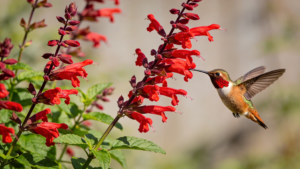
Autumn Sage, or Salvia greggii, is a small, woody shrub. It often blooms from spring through fall. The flowers are usually bright red, but some types are pink, purple, orange, or white. Hummingbirds visit these tubular flowers again and again.
Autumn Sage blooms for a long season. It can feed hummingbirds from early warm weather until the first hard frost in many areas. The plant stays fairly compact. You can tuck it into borders, along paths, or near a patio. It also works well with other hummingbird favorites, such as bee balm.
Growing Tips for Autumn Sage
- Light: Plant in full sun for the best bloom show. Light shade is fine in very hot climates.
- Soil: Choose well-drained soil. Autumn Sage can handle rocky, sandy, or average garden soil.
- Water: Water regularly during the first growing season. After that, the plant becomes fairly drought tolerant.
- Bloom time: Enjoy flowers from spring through fall. In many gardens, color is strongest during cooler weather.
Autumn Sage is one of our favorite and most reliable hummingbird plants for hot and sunny, low water gardens! The prolific, vivid flowers attract hummingbirds over a long season.
Pineapple Sage (Salvia elegans) for Hummingbirds
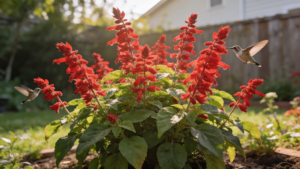
Pineapple Sage, or Salvia elegans, is a taller, softer plant. It has bright red tubular flowers that hummingbirds love. The blooms often appear from late summer to fall. In mild climates, they may last until frost.
The leaves have a sweet pineapple scent when you rub them. This makes the plant fun for kids and adults. At the same time, the flowers provide a rich nectar source for hummingbirds. A large clump of Pineapple Sage can feed many hungry birds as they prepare for migration.
Growing Tips for Pineapple Sage
- Light: Plant in full sun for strong growth and heavy flowering. In very hot areas, a little afternoon shade can help.
- Soil: Use average, well-drained soil. Keep the soil evenly moist during the growing season, but not soggy.
- Bloom time: Expect flowers from late summer into fall. In warm regions, blooms may continue until the first frost.
- Wildlife: The flowers attract hummingbirds, butterflies, and other pollinators.
How Red Salvias Support Hummingbirds
Red salvias support hummingbirds by offering nectar over many months. Autumn Sage can start blooming in spring. Pineapple Sage picks up later in summer and fall. Together, they help bridge gaps when other flowers are not blooming.
When you plant several red salvia varieties together, you create a nectar path through your garden. Hummingbirds can move from clump to clump with very little effort. As they feed, they also move pollen from flower to flower. This helps salvias set seed and spread over time.
Design Ideas for a Hummingbird Salvia Patch
To build a strong hummingbird garden, start with groups of Autumn Sage and Pineapple Sage. Place them in sunny spots with open space around the plants. This gives hummingbirds clear flight paths and good escape routes.
Plant salvias in clusters instead of single plants. Large patches are easier for hummingbirds to find and use. Avoid pesticides in and around your hummingbird beds. These chemicals can harm the birds and also the insects that share the flowers.
My article Natural Pest Control Methods for Your Hummingbird Garden shows readers they don’t have to choose between a healthy hummingbird garden and effective pest control. It explains exactly how to prevent and manage pests using natural methods—companion planting, encouraging “good bugs,” organic sprays like garlic, pepper, and neem, physical barriers, and smart traps—so they protect their plants without poisoning hummingbirds or the insects they eat. It also gives clear, season‑by‑season checklists and safety tips (like where not to spray, how to avoid harming pollinators, and how to keep pest control away from nests and feeders), making it easy to follow even if you’re new to organic gardening. If you want fewer pests, stronger plants, and a garden that’s truly safe for hummingbirds from spring through fall, this is the article for you!
Best Practices to Attract More Hummingbirds
- Plant several red salvia varieties for nectar from spring through fall, when your climate allows.
- Place salvias near windows, decks, or seating areas so you can easily watch the birds.
- Remove spent blooms to encourage new flowers and extend the blooming season.
- Use hummingbird feeders as a backup food source. Keep them clean and filled with fresh sugar water.
- Combine salvias with other nectar plants on your site, such as cardinal flower and wild columbine.
Frequently Asked Questions About Salvias and Hummingbirds
Do hummingbirds really prefer red salvias?
Yes. Hummingbirds notice red flowers quickly. Red salvias also have long, tube-shaped blooms. These match the birds’ beaks and make feeding easier.
Will salvias bloom long enough to help migrating hummingbirds?
In many climates, yes. Some salvias bloom from spring into fall. Pineapple Sage is especially helpful late in the season. It offers nectar when many other flowers are fading.
Can I grow salvias in containers for hummingbirds?
Yes. Both Autumn Sage and Pineapple Sage can grow well in large containers. Use pots with drainage holes. Give the plants plenty of sun and regular water.
Do salvias attract other pollinators too?
Yes. Red salvias attract bees, butterflies, and other pollinators. They help support a diverse and healthy garden ecosystem.
Resources for Learning More
- Salvia greggii (Autumn Sage) – Gardenia – Detailed profile, bloom season, and landscape uses.
- Autumn Sage – Planet Desert – Grower notes, quick reference guide, and care tips.
- Autumn Sage – NC State Extension – Plant ID, hardiness, and cultural information.
- Pineapple Sage – NC State Extension – Growing conditions, zones, and landscape uses.
- Salvia elegans (Pineapple Sage) – The Belmont Rooster – Notes on growth, bloom, and overwintering.
- Salvias for Fall-Migrating Hummingbirds – Black Gold – How salvias support late-season hummingbird migration.
- Salvia – A Sage Choice for Hummingbirds – The Mill – Overview of red salvias that draw hummingbirds.
- Salvias – Plant Them if You Want Hummingbirds – Container Crazy CT – Real-world notes on salvias and hummingbird visits.