Arizona Golden Currant for Supporting and Attracting Hummingbirds
What Is Arizona Golden Currant?
Arizona golden currant, or Ribes aureum, is a native shrub found across much of western North America, including Arizona.
It grows along streams, in thickets, fence rows, and open meadows where there is at least some seasonal moisture.
It is a deciduous shrub, which means it drops its leaves in winter and then leafs out again in spring.
Its bright golden-yellow spring flowers, colorful berries, and fall foliage make it attractive in wildlife gardens and natural landscapes.
Why Hummingbirds Love Golden Currant
Golden currant produces narrow, tube-shaped flowers that are rich in nectar, which is exactly what hummingbirds seek.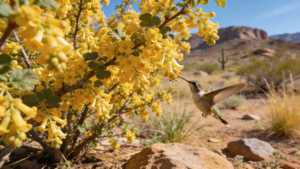
In spring, as the shrub bursts into bloom, hummingbirds often visit regularly to drink from the flowers.
These nectar-rich flowers also support butterflies and bees, so your yard becomes lively and full of motion.
Because it blooms early in the season, golden currant can act as an important nectar source when few other shrubs are flowering.
Best Places to Plant in Arizona
Golden currant naturally grows along streams, in montane meadows, and in roadside or fencerow thickets from Canada south into Arizona.
In Arizona, it is especially suitable in cooler, higher-elevation areas with some extra moisture, such as riparian corridors or irrigated gardens.
Therefore, it fits well along washes, near drip-irrigated trees, or at the edge of a lawn where water is available but the soil still drains well.
Over time, it can form a small thicket that offers both cover and food for many bird species.
Sun, Soil, and Water Needs
Golden currant handles many soil types, from rocky hillsides to richer streambank soils, as long as drainage is decent.
It prefers full sun to partial shade, and in hotter Arizona locations, some afternoon shade is especially helpful.
The shrub appreciates winter and spring moisture and can even tolerate occasional winter flooding in some locations.
Once established, it becomes fairly drought tolerant, though occasional deep watering every couple of weeks in summer will keep it looking its best.
Size, Growth Habit, and Landscape Use
Golden currant can grow up to about 5–9 feet tall, with multiple stems that spread slightly outward over time.
It works well in mixed hedgerows, along fences, or in a native shrub border where its flowers and fruit can be easily seen.
Because it can form a thicket, it also creates valuable shelter for small birds and other wildlife in your Arizona backyard.
In addition, its edible fruits add a useful bonus for gardeners who enjoy foraging.
Flowers, Fruit, and Wildlife Value
In early to mid spring, golden currant is covered with fragrant golden-yellow blooms that have a tubular base and spreading petal-like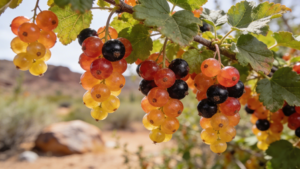 lobes.
These blossoms are packed with nectar and pollen, drawing hummingbirds, orioles, butterflies, and bees.
Later in the season, the flowers turn into orange, red, or black berries that feed many birds and other wildlife.
Historically, Native peoples also used the fruits fresh or dried, and they can still be made into jams, jellies, or pies today.
How to Plant for Hummingbirds
First, choose a site with full morning sun and light afternoon shade, especially in low desert heat, plus soil that drains well but does not dry out instantly.
Next, plant golden currant near other hummingbird favorites, such as penstemons or salvias, to create a longer season of blooms and more feeding stations.
Then, space plants several feet apart so they can spread into a loose thicket while still allowing air flow around the stems.
Finally, add a shallow water source and safe perches nearby so hummingbirds can rest between visits to the flowers.
For a comprehensive guide on using water features, check out my article: How to Use Water Features to Attract Hummingbirds. This guide will walk you through the exact kinds of misters, drippers, and shallow baths hummingbirds prefer, how deep and how strong the water flow should be, where to place everything so birds feel safe, and how to keep it all clean without spending a lot of money.
Care and Maintenance
Golden currant is considered a low-maintenance shrub once it is established, which makes it ideal for busy Arizona gardeners.
Regular irrigation every 10–14 days during the hottest part of summer will improve appearance, but the plant can survive on less once its roots are deep.
Annual pruning to remove the oldest one-third of stems helps maintain vigor, improves fruit production, and opens the center to light and air.
Because it generally thrives under moderately low fertility, you usually only need light or occasional fertilizing in very lean soils.
Benefits Beyond Hummingbirds
Although hummingbirds are key visitors, golden currant also supports bees, butterflies, fruit-eating birds, and other wildlife.
Its dense growth offers nesting sites and cover, while its berries provide high-value food later in the season.
Moreover, the shrub adds seasonal interest with spring blooms, summer fruit, and fall color, so your yard looks alive for much of the year.
By planting this species, you also help conserve a native plant that has long been part of western and Arizona ecosystems.
Related Arizona Plants for Hummingbirds
Want to give Arizona hummingbirds even more nectar and shelter? Explore these other tough, bird-friendly plants that thrive in hot, dry landscapes.
- Ocotillo (Fouquieria splendens)
- Chuparosa (Hummingbird Bush) (Justicia californica)
- Desert Willow (Chilopsis linearis)
- Hummingbird Trumpet (Epilobium canum)
- Red Bird of Paradise (Caesalpinia pulcherrima)
- Sonoran Honeysuckle (Justicia sonorae)
- Parry’s Penstemon (Penstemon parryi)
- Woolly Butterfly Bush (Buddleja marrubiifolia)
- Yucca Species
Frequently Asked Questions
Is Arizona golden currant good for hummingbirds?
Yes, Arizona golden currant is excellent for hummingbirds because its narrow, tube-shaped yellow flowers are rich in nectar and bloom in spring when many birds are returning.
Will golden currant grow in hot, dry Arizona yards?
Golden currant can adapt to hot, dry conditions once established, but it does best in sites with some moisture, partial shade, and occasional deep watering, especially at lower desert elevations.
How big does golden currant get?
Golden currant typically reaches about 5–9 feet tall and can spread into a small thicket, making it useful as a screen or wildlife hedge in Arizona gardens.
Is golden currant fruit edible?
Yes, the berries are edible and have been used historically for food; they can be eaten fresh or turned into jelly, jam, or pies, while birds and other wildlife also feed on them.
Resources on Golden Currant and Hummingbirds
Learn more about golden currant from the USDA Forest Service plant profile: Golden currant USDA Forest Service profile.
Explore how golden currant supports pollinators and fits into western native landscapes: Golden currant in the landscape.
See a nursery description focused on wildlife value, including hummingbirds and birds: Borderlands Plants golden currant info.
Read a short note about hummingbirds using golden currant in bloom: Hummingbirds enjoying golden currant.