Salmonberry: Color, Cover, and Nectar for Alaska’s Hummingbirds
Posted on March 26, 2026 by admin
Salmonberry (Rubus spectabilis) is a native shrub from the Pacific Northwest and coastal Alaska, and it brings bright spring flowers and edible berries to your yard. Because it blooms very early, it can be especially helpful in an Alaskan hummingbird garden. The pink to magenta flowers open when many birds and insects are just waking up, so they offer food at a critical time. As a result, Salmonberry can be one of the first natural food sources in an Alaskan hummingbird garden, and it quickly becomes a focal plant in spring.
You can plant Salmonberry at the back of a bed, along a forest edge, or near a stream or pond, and in each of these places it adds height and interest. In these locations, it gives height, color, and shelter; in addition, it visually ties your garden into the surrounding wild areas. When you combine it with other plants from our hummingbird gardening guide, you build a layered, wildlife‑friendly yard that is easy for hummingbirds to use and fun for you to watch.
Key Characteristics
- Zones: About 4–8 (best in coastal and milder parts of Alaska)
- Height: Usually 4–10 feet tall, although old plants in rich soil can grow taller
- Bloom Time: Spring to early summer, often April–June, depending on local climate
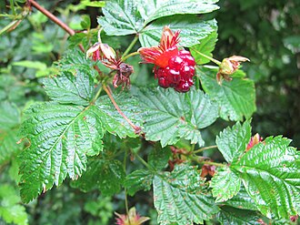
- Features: Thorny canes, maple‑like leaves, large pink flowers, and bright orange to salmon‑colored berries
The flowers of Salmonberry are fairly large and open, and they have a strong pink or magenta color that stands out. Because they are so bright, they are easy for hummingbirds and other pollinators to see from a distance. Since they bloom early, they provide nectar and pollen just as many animals are starting to feed again after winter. Later in the year, the glowing berries add a second season of interest, and they feed many kinds of wildlife. Birds, mammals, and people can all enjoy these fruits, so the shrub is useful to many species.
Natural Habitat
Salmonberry is native along the Pacific Coast from northern California to coastal Alaska, and it follows cool, wet air up and down this range. It usually grows in cool, moist places where the soil does not dry out quickly. For example, you can find it along streams, in wet woods, at bog edges, in coastal thickets, and beside shady roads. In Alaska, it is common in lowland coastal forests with spruce and hemlock, where fog and ocean air keep conditions damp. Because these areas often receive steady fog and rain, the soil rarely dries out, and Salmonberry can spread easily.
Salmonberry often forms dense thickets in these moist soils, and these thickets play an important role in the ecosystem. As a result, it helps hold streambanks and slopes in place, which reduces erosion. It commonly grows with skunk cabbage, ferns, and willows, and together these plants fill many layers of the forest understory. If you copy these conditions in your yard—cool air, rich moist soil, and some shade—Salmonberry can also do very well there. Consequently, you get a native shrub that looks natural and supports local wildlife at the same time.
Care and Maintenance
Salmonberry is simple to grow if you give it the right spot, and this makes it a good choice for low‑maintenance gardeners. It is easiest in coastal or wetter parts of Alaska; however, it can still grow inland if you can provide enough moisture. In naturally damp soil, it often needs very little extra care once it is established. For even better support for hummingbirds, you can also add clean feeders with our homemade hummingbird nectar recipe, so birds always have a backup food source.
- First, choose a site with full sun to partial shade, since both can work if the soil is moist.
- Next, use moist, well‑drained soil that is rich in organic matter, such as compost or leaf mold.
- Then water during dry spells, especially in the first two summers, so roots can grow deep.
- After planting, mulch around the base to keep roots cool and help hold moisture in the soil.
- Finally, space shrubs 4–6 feet apart if you want a hedge or thicket, or give them more space as single specimens.
Salmonberry spreads by suckers, and over time it can form a thick patch, which is great for wildlife. In a large or wild area, this is usually a benefit; however, in a small garden, you may want to slow it down so it does not crowd other plants. Fortunately, you can control it with a few simple steps.
- Each year, cut out unwanted suckers to keep the plant in bounds and protect nearby plants.
- If needed, use edging or buried barriers to limit roots, especially along paths and lawns.
- Every year or two, prune some of the oldest canes near the ground to open the shrub and refresh growth.
This type of pruning removes old wood and makes space for new shoots, so the plant stays vigorous. Therefore, the shrub remains full, flowers well, and is easier to manage over the long term. In addition, more light can reach smaller plants growing nearby, which helps the whole planting stay healthy and attractive.
Ecological Benefits
Salmonberry is very valuable for wildlife, and it supports animals in several different ways. First, its early flowers feed hummingbirds, bees, and other pollinators when few other shrubs are blooming. At that time of year, many plants are still leafing out; therefore, Salmonberry can be a key early nectar source. The bright flowers are also easy for early‑arriving hummingbirds to find, so birds quickly learn to visit the shrubs.
Next, the berries ripen from late spring into summer, and they are eaten by many animals. Many birds eat them, including robins, thrushes, and waxwings, and small mammals and bears also enjoy the fruit. People often eat Salmonberries fresh or turn them into jams, so gardeners benefit too. As a result, one shrub can support wildlife and people at the same time, which makes it a great choice for backyard habitat projects.
In addition, the dense, thorny branches give cover and nesting sites for small birds, which need safe places to hide. Thickets can shield songbirds from predators, wind, and harsh weather, and they can also provide quiet spots for nests. Because the roots help hold soil, Salmonberry also reduces erosion on wet slopes and along streams. In this way, it protects both wildlife and the land itself, especially in fragile riparian areas.
Why Salmonberry Works in an Alaskan Hummingbird Garden
Salmonberry is not a classic long, tubular hummingbird flower; however, it still plays an important part in a hummingbird‑friendly yard, especially in coastal Alaska. It offers early bloom, tall structure, and insect life, and hummingbirds can use all of these along with feeders and more specialized flowers such as Fireweed and Western Columbine. Therefore, it fills a unique role that other hummingbird plants may not cover.
- Early season bloom: Salmonberry flowers in spring, often before most garden perennials, so it gives color and nectar at the very start of the hummingbird season.
- Good for moist, cool sites: Many hummingbird plants like hot, sunny soil; by contrast, Salmonberry prefers cool, moist soil and some shade, and as a result it fills a niche in wetter Alaskan yards.
- Layered habitat: Because it is a shrub, Salmonberry adds height above perennials and below trees, which creates layers of perches, cover, and flight paths that hummingbirds use all day.
- Insects for protein: Hummingbirds also eat insects and spiders, and Salmonberry thickets host many small creatures; therefore, they give birds a source of protein, especially when feeding young.
In a planned hummingbird garden, you can place Salmonberry at the back of beds, along fences, or near a wooded edge, and then build around it. Then you can plant Western Columbine, ferns, and groundcovers underneath it to fill shady spaces. In nearby sunny spots, add Fireweed and other wildflowers to give tall color in summer. Because of this mix, your garden will offer nectar, fruit, shade, and cover through much of the growing season, and hummingbirds will have many reasons to return.
Adding Salmonberry to your shrub layer also fits the ideas in our hummingbird garden planning guide, which emphasizes layers and native plants. Over time, this kind of planting turns plain edges into rich habitat for birds and pollinators. As you watch the garden mature, you will see more species and more natural behavior every year.
What Makes Salmonberry Helpful for Hummingbirds?
Bright, Early Blooms
Salmonberry flowers are large and bright pink, and they open very early in spring. Therefore, they stand out against bare branches and dark evergreen foliage, and hummingbirds can spot them quickly. When very few flowers are blooming, these early blossoms can be an important food source for hummingbirds, especially migrants that arrive tired and hungry.
Accessible Nectar and Pollen
The flowers are open and shallow, so many pollinators can use them easily. Because of this shape, hummingbirds can hover at the blooms and sip nectar without working hard. At the same time, they pick up pollen on their faces and bills and move it to the next flower. This flower form is not as focused on hummingbirds as a deep tube; however, the openness makes the plant useful to many species at once.
Perches and Shelter
Salmonberry is a tall shrub, and as a result it provides many branches where hummingbirds can perch. Birds like to rest, preen, and watch their territory between feeding trips, so nearby branches are important. A Salmonberry thicket near feeders and flowers gives them both lookout spots and shelter from wind and rain. In addition, the thorns and dense growth help keep some predators out, which makes birds feel safer.
Insect‑Rich Microhabitat
Shrubs like Salmonberry support many insects and spiders, and this insect life is crucial for hummingbirds. For example, aphids, caterpillars, and small beetles often live on or near the canes, and spiders spin webs between branches. Hummingbirds eat these small animals for protein, especially when they are feeding nestlings. Therefore, Salmonberry helps hummingbirds in more than one way, by giving both nectar and insects.
Why Choose Salmonberry for Your Alaskan Hummingbird Garden?
Salmonberry is a strong choice if you want an Alaskan hummingbird garden with a natural woodland or coastal feel, rather than a formal look. It is native and tough; in addition, it is well adapted to cool, wet conditions that make other shrubs struggle. In a single plant, you get early flowers, summer fruit, dense cover, and roots that hold soil in place, so you gain many benefits from one planting decision.
You can use Salmonberry to form a wildlife‑friendly hedge, soften a forest edge, or anchor the back of a hummingbird border, depending on your space. First, plant it where the soil stays moist and where it has room to spread over time. Then, under and around it, add Western Columbine, native ferns, and spring ephemerals in the shade. In nearby sunny spots, use Fireweed and other wildflowers to extend bloom into late summer. Finally, step back and watch as birds begin to use all levels of the planting.
Over time, Salmonberry will help turn a simple yard edge into a rich thicket that feels like part of the natural landscape. You will see more color, more bird activity, and more seasonal change as the years go by. With basic pruning and a little control of suckers, it can be a long‑lived, low‑care backbone of your Alaska hummingbird garden, and it will keep paying you back in wildlife value season after season.
In Alaska, it really helps hummingbirds when you plant several native flowers and shrubs together. This guide is part of our Alaska hummingbird plant series, along with articles on lupine, bluebells, red elderberry, Sitka spruce, goatsbeard, western columbine and others. Together, these plants give hummingbirds nectar, insects, and shelter from spring through fall.
Salmonberry (Rubus spectabilis) – FAQ for Hummingbird Gardeners
Is Salmonberry native to Alaska?
Yes. Salmonberry (Rubus spectabilis) is native to the Pacific Coast, including coastal Alaska, and it evolved in these cool, wet regions. You can often find it in moist forests, along streams, and in coastal thickets. Because it comes from these habitats, it fits naturally into Alaskan landscapes and supports local wildlife.
Does Salmonberry attract hummingbirds?
Salmonberry is not a classic tubular hummingbird flower; even so, its bright pink spring blooms can attract hummingbirds, especially when few other flowers are open. The shrub also supports many insects and offers perches and cover, so hummingbirds can use it for more than just nectar. Hummingbirds use all of these features together with feeders and with specialized flowers such as Fireweed and Western Columbine to meet their needs.
What growing conditions does Salmonberry prefer?
Salmonberry prefers cool, moist, well‑drained soil that is rich in organic matter, and it will reward you if you provide that. It grows best in full sun to partial shade, although in drier inland spots it usually needs more shade and extra water. It is especially happy near streams, seeps, and in coastal areas with higher humidity, so those are ideal places to plant it.
How tall does Salmonberry grow, and where should I plant it?
Salmonberry commonly grows 4–10 feet tall and can form dense patches as it matures. It works well along property lines, at the back of borders, on slopes, and near woodland edges, where taller plants look natural. Give it room to spread, and prune it to keep the height and width you like, so it fits your design and your space.
Will Salmonberry spread or become a problem?
Salmonberry spreads by suckers and can form thickets over time, which is part of its natural growth pattern. In its native range, this is usually an asset because it helps wildlife and stabilizes soil. In small gardens, you may need to cut extra shoots or use barriers to limit spread, but this is straightforward once you know where it wants to go. With regular pruning and good placement, you can enjoy its flowers and fruit without letting it take over other areas.
If you’d like to dig deeper into salmonberry’s role in the ecosystem—and why hummingbirds are so drawn to its early blooms—these expert resources offer excellent, science‑backed details on growing and using salmonberry in wildlife‑friendly gardens.
Further reading and sources on salmonberry and hummingbirds
-
USDA NRCS – Plant Guide for Salmonberry (Rubus spectabilis)
For detailed information on salmonberry’s range, habitat, wildlife value, and propagation, see the USDA NRCS plant guide for salmonberry (Rubus spectabilis). -
City of Bellingham – Salmonberry Fact Sheet (PDF)
For a concise overview of habitat value, traditional uses, and wildlife benefits, including its bright pink flowers that attract hummingbirds and bumblebees, read the City of Bellingham’s salmonberry plant profile. -
Missouri Botanical Garden – Rubus spectabilis Profile
For garden‑focused details such as size, growth habit, and landscape use, see Missouri Botanical Garden’s page on Rubus spectabilis (salmonberry). -
California Native Plant Society (PDF) – Salmonberry Datasheet
For a quick horticultural reference on flower time, exposure, and water needs, you can link to the CNPS Salmonberry (Rubus spectabilis) plant sheet. -
Plant of the Month: Salmonberry – GRuB
For an accessible explanation of how salmonberry supports hummingbirds, butterflies, other wildlife, and cultural connections, see GRuB’s article “Plant of the Month: Salmonberry”.
- Create a Feeder‑Free Hummingbird Paradise – American Bird Conservancy
For broader context on using native plants like salmonberry in a feeder‑free hummingbird habitat, you can reference ABC’s guide on creating a feeder‑free hummingbird paradise.
Discover more ways to help hummingbirds
- Alaska hummingbirds and gardening
- Fireweed in Alaska for hummingbirds
- Western Columbine in Alaska for hummingbirds
- How to make hummingbird nectar
- Choosing the best hummingbird feeders