Here’s a full long‑form Pennsylvania article mirroring the Oregon structure and headings, tuned for Ruby‑throated plus vagrants.
Hummingbirds in Pennsylvania: Ruby‑throated, Feeders, and Native Plants
Pennsylvania’s hummingbird story centers on the Ruby‑throated Hummingbird, the only regular breeding species in the state, with several western hummingbirds showing up as rare fall and winter visitors at feeders. Ruby‑throateds arrive each spring, nest statewide in woodlands, suburbs, and gardens, then migrate to Central America for the winter.
Key takeaways for Pennsylvania hummingbirds
Ruby‑throated Hummingbirds breed throughout Pennsylvania and are the “default” hummingbird at feeders and flowers from April through September. Western hummingbirds such as Rufous, Black‑chinned, and others are rare but increasingly documented in fall and winter where birders keep nectar out and report unusual visitors.
Ruby‑throateds typically reach Pennsylvania in April, with most sources placing first arrivals in southern Pennsylvania around early to mid‑April and birds spreading north so that most areas have hummingbirds by late April or early May. Most Ruby‑throateds depart from late August through September, and the bulk are gone by late September or early October. Penn State Extension and other regional sources suggest putting feeders out when spring flowers first emerge in early to mid‑April, and leaving them up until September or even into early October, or at least a week or more after you stop seeing hummingbirds.
A simple 4‑to‑1 sugar‑water mix with no red dye, changed every 1–2 days in hot weather or every 3–5 days in cooler spells, plus native plants like eastern columbine, bee balm, cardinal flower, coral honeysuckle, trumpet creeper, and penstemons, will reliably attract Ruby‑throateds to Pennsylvania yards. Layered plantings, clean feeders, shallow water, and minimal pesticide use create a safe, rich habitat for hummingbirds across the state.
Pennsylvania hummingbird basics
Within Pennsylvania, Ruby‑throated Hummingbirds breed statewide, from forested northern counties to suburbs and farms in the southeast. They favor forest edges, woodlots, stream corridors, parks, orchards, and gardens that offer a mix of trees, shrubs, and flowering plants.
These tiny migrants winter in Mexico and Central America and cross the Gulf of Mexico or follow the coast before moving north through the eastern United States each spring. Their arrival in Pennsylvania broadly tracks the opening of key spring flowers and the availability of insects. Western species such as Rufous and Black‑chinned do not breed in Pennsylvania but have been recorded as rare fall and winter visitors at feeders, especially where observers keep nectar available and report unusual hummingbirds.
What hummingbirds do you get in Pennsylvania?
For backyard birders in Pennsylvania, the everyday hummingbird is the Ruby‑throated Hummingbird. It breeds statewide, visits gardens and feeders across the state, and is by far the most common species you will see.
Rufous Hummingbirds are the most frequently documented western visitor, mainly in late fall and winter, often at feeders that remain up after Ruby‑throateds have departed. Other western hummingbirds, including Black‑chinned, Calliope, Allen’s, and others, have been recorded in the broader Southeast and Mid‑Atlantic as very rare vagrants, usually as single birds at dedicated feeders that are carefully documented and often banded.
Summary for Pennsylvania:
-
Common, regular species: Ruby‑throated Hummingbird (only regular breeder).
-
Rare visitors: Rufous (most regular western vagrant), plus occasional records of Black‑chinned and others, mostly in fall and winter at feeders.
When do hummingbirds arrive and leave Pennsylvania?
Pennsylvania lies solidly within the central breeding range of Ruby‑throated Hummingbirds, so birds arrive here after the Southeast but before the far Northeast. The Pennsylvania Game Commission notes that Ruby‑throats arrive in Pennsylvania in late April and May, with males typically preceding females by about one to two weeks. Media and extension sources that track migration maps report that southern Pennsylvania often sees first arrivals around early to mid‑April, with early birds possible in the first part of April and more widespread sightings by late April.
After breeding and raising young through summer, Ruby‑throateds begin leaving Pennsylvania in late August, with many birds moving south in September. Most are gone by late September or early October as they migrate toward wintering grounds in the southeastern U.S., Mexico, and Central America. Some western hummingbirds, especially Rufous, may show up later in fall and early winter at feeders, mainly in areas where nectar is still offered and birders are looking for them.
First arrivals (typical):
-
Ruby‑throated: generally early to mid‑April in southern Pennsylvania, with most of the state seeing birds by late April into early May.
Peak season:
-
Late spring through summer, roughly May through August.
Most leave:
-
Ruby‑throated: late August through September, with most gone by late September or early October.
Western visitors:
-
Rufous and other vagrants: mostly October through winter, at feeders that remain up and are monitored by birders and banders.
When to put up and take down feeders in Pennsylvania
When to put feeders out
Penn State Extension recommends placing hummingbird feeders outside as soon as the first flowers come up in spring, since hummingbirds follow the progression of blooming plants northward. For most Pennsylvania yards, that means getting at least one feeder up in early to mid‑April so it is ready when the first Ruby‑throateds arrive. Migration tracking sites such as Hummingbird Central also suggest that southern Pennsylvania can see Ruby‑throats by mid‑April, with early birds sometimes appearing at the start of the month.
Summary:
-
Statewide: have at least one feeder up by early to mid‑April.
-
In southern Pennsylvania and warmer river valleys: consider hanging a feeder in early April if you enjoy watching for the first migrants.
When to take feeders down
Penn State Extension notes that feeders can be left up until September, when most Ruby‑throateds leave Pennsylvania for their wintering grounds. They emphasize that feeders do not prevent hummingbirds from migrating; birds cue primarily on day length, so nectar can safely remain available until birds stop using it.
A practical rule for homeowners is to keep feeders up through September and into early October, then take them down after you have gone about a week (or more) with no hummingbird visits. If you are interested in hosting and documenting rare fall or winter hummingbirds, you can keep at least one feeder up into late fall and early winter and coordinate with local bird clubs or the North Carolina Museum–style programs that track vagrants in the broader region.
Summary:
-
For most homeowners: take feeders down in late September or early October after you have seen no Ruby‑throats for at least a week.
-
For people watching for rare western visitors: keep one clean feeder going into late fall or even winter, and report unusual hummingbirds to local bird clubs or state ornithological groups.
Best hummingbird nectar recipe
The best nectar recipe for Pennsylvania is the standard mix used across the Ruby‑throated’s range: 1 part plain white sugar to 4 parts water. Bring the water to a boil, remove from heat, stir in the sugar until it dissolves, then let the nectar cool completely before filling clean feeders. Do not add red dye, honey, brown sugar, or artificial sweeteners; the red parts of the feeder are enough to attract hummingbirds, and dyes and alternative sugars are not recommended.
Because Pennsylvania can be warm and humid in summer and cool in spring and fall, you only change how often you refresh nectar, not the sugar ratio. Thicker mixes are unnecessary and can be harder on birds; the 4‑to‑1 recipe closely matches natural flower nectar concentrations Ruby‑throateds use across their breeding range.
All about nectar: how to use it effectively
Safe, homemade nectar is the single most important thing you can offer hummingbirds in Pennsylvania. Using smaller feeders (for example, 8–12 ounces) helps you keep nectar fresh by discouraging you from overfilling and leaving sugar water out too long.
During peak migration and nesting activity in May through August, you can add more feeders or fill them more fully to handle increased traffic. As activity declines in late September, scale back the number of feeders and the amount of nectar so you are still changing it frequently while serving the fewer birds that remain. Your main nectar guide can walk Pennsylvania readers through the 4‑to‑1 recipe, batch sizes, storage, and cleaning schedules by temperature so they can keep nectar safe in any weather.
A clean hummingbird feeder is a must
In Pennsylvania’s warm summers and often humid conditions, mold and fermentation can develop quickly in nectar that sits too long. Every time you change nectar, rinse the feeder with hot water and use a small brush to scrub the feeding ports, seams, and any other surfaces where residue can build. Avoid strong scented soaps and always rinse thoroughly if soap is used.
At least once a month in moderate weather—and more often in high summer—sanitize feeders by soaking them in a vinegar solution (for example, 1 part white vinegar to 2 parts water) or a diluted bleach solution (about 1 part household bleach to 10 parts water), followed by a thorough rinse and complete air‑drying. Your feeder‑cleaning guide can give Pennsylvania birders simple schedules keyed to spring, summer, and fall temperatures so feeders stay safe and attractive.
Where to hang feeders in Pennsylvania yards
Pennsylvania yards range from small city courtyards and shaded suburban lots to rural properties along fields and forests, but placement principles are similar statewide. Hang feeders near flowers, shrubs, or small trees so hummingbirds have perches and quick cover from predators, and aim for about 4–5 feet above ground for both bird safety and easy access.
Keep feeders a few feet from large windows or use decals and screens to reduce collision risk. Because summer sun and humidity can spoil nectar faster, many Pennsylvania birders prefer locations with morning sun and afternoon shade or dappled light, which keep nectar cooler while still making feeders easy for birds to find. In windy or exposed locations, choose spots sheltered by trees, fences, or structures so feeders do not swing excessively, and provide nearby perches such as thin branches or swings.
To reduce fighting among hummingbirds:
-
Use two or more small feeders instead of one large one.
-
Place feeders 10–15 feet apart or around corners so a dominant bird cannot guard them all at once.
Native plants that attract hummingbirds in Pennsylvania
Native and region‑adapted plants are one of the best ways to attract Ruby‑throated Hummingbirds to Pennsylvania yards. Hummingbirds favor tubular, nectar‑rich flowers in red, orange, and bright pink, but they also use purple, blue, and white blooms with good nectar production.
Pennsylvania conservation and gardening resources highlight these natives and region‑appropriate plants for hummingbirds:
-
Eastern columbine (Aquilegia canadensis) – Early‑blooming red‑and‑yellow flowers that provide spring nectar for newly arrived Ruby‑throateds.
-
Bee balm / wild bergamot (Monarda didyma and relatives) – Mid‑summer blooming mints with shaggy flower heads that hummingbirds and other pollinators love.
-
Cardinal flower (Lobelia cardinalis) – Brilliant red tubular flowers for moist beds, rain gardens, and stream edges; a classic hummingbird magnet.
-
Coral honeysuckle (Lonicera sempervirens) – A non‑invasive native vine with clusters of red‑orange tubular flowers that attract hummingbirds throughout the season.
-
Trumpet creeper (Campsis radicans) – A vigorous vine with large orange‑red trumpets; excellent for hummingbirds but best planted where its spread can be managed.
-
Penstemons (Penstemon digitalis and others) – Sun‑loving perennials with white or pale pink tubes that hummingbirds use, especially in mixed beds and borders.
-
Other helpful natives include Virginia bluebells, garden phlox, great blue lobelia, and native azaleas and rhododendrons.
For the best results do this:
-
Plant in groups or drifts so hummingbirds can feed efficiently at many blooms in one spot.
-
Mix early, mid‑season, and late‑blooming species so something is flowering from April through September, matching Pennsylvania’s hummingbird season.
-
Use regional native‑plant tools like Audubon’s Native Plant Database and local lists from Bird Town Pennsylvania and Heritage Conservancy to refine choices for your part of the state.
Creating a hummingbird‑friendly yard in Pennsylvania
A Pennsylvania yard can become excellent hummingbird habitat with a combination of layered native plants, clean feeders, perches, and water. Focus on creating structure (trees and shrubs), nectar (flowers and feeders), and safety (cover, limited pesticides, and clean water).
Layered planting example for a Pennsylvania yard
In a sunny or part‑sun Pennsylvania yard, you might start with a small ornamental or native tree or tall shrub—such as serviceberry, red buckeye, or native dogwood—at the back of a bed for structure and perching. In front of that, plant drifts of bee balm or wild bergamot for mid‑summer nectar, and along the front and moist spots, add eastern columbine and cardinal flower as highlighted by regional guides.
This three‑layer mix gives hummingbirds cover, perches, and nectar from spring through late summer and fits well in many Pennsylvania gardens. You can add climbing coral honeysuckle or trumpet creeper on fences or arbors nearby for additional early and mid‑season blooms.
For the best results do this:
-
Combine small trees, shrubs, vines, and perennials to create a tiered garden with cover at different heights.
-
Emphasize native and region‑adapted plants that support more insects and offer reliable nectar.
-
Place feeders near, but not inside, your densest plantings so hummingbirds can move easily between flowers, perches, and sugar‑water.
Plan for blooms from spring through fall
Include early, mid‑season, and late‑blooming plants so something is always flowering when hummingbirds are present in your part of Pennsylvania. Plant in groups or drifts rather than isolated single plants so hummingbirds can feed efficiently and find blossoms more easily. My detailed guide The Art of Attracting Hummingbirds to Your Yard offers seasonal plant lists and layering ideas, making it easy for New Mexico birders to choose a few plants for sun and shade that will keep flowers in bloom all season long.
My special guide The Art of Attracting Hummingbirds to Your Yard will provide you with lists of hummingbird-attracting plants that bloom during each season: spring, summer and fall. It makes it easy for you to select plants that will provide continuous blooms for your hummingbirds during the time they are visiting your yard until the time they leave in the fall. You will also get advice on layering plants for a successful hummingbird garden. My guide also provides plant lists for sun and shade to make it easy to select plants for your particular growing conditions. Planting a “hummingbird-friendly garden” will never be easier!
Use feeders to supplement, not replace, flowers
Feeders add a reliable nectar source alongside your plants, especially during early spring and late fall when blooms may be sparse. Hang them where they’re visible from your best flower beds so hummingbirds can move naturally between blossoms and sugar water.
“Why I recommend this feeder”
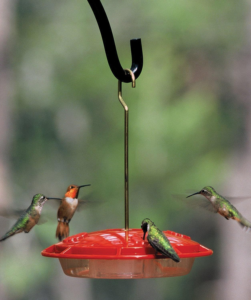 One of the best hummingbird feeders for any yard is the HummZinger Ultra 12‑oz Saucer Feeder. Its low, shallow bowl makes it easy to see the nectar level at a glance and reach every corner when you wash it, while the built‑in ant moat and included Nectar‑Guard tips help keep ants, bees, and wasps out of the sugar water. Raised flower ports divert rain so the nectar doesn’t get diluted, and a wrap‑around perch lets hummingbirds rest and feed comfortably, giving you longer, closer views. Made from durable polycarbonate in the USA and backed by Aspects with a true lifetime guarantee, it’s a feeder you can buy once and rely on season after season.
Follow good feeder hygiene—use the 4‑to‑1 sugar‑water recipe and clean often—to keep birds healthy and complement your plantings. My step‑by‑step guide to cleaning your hummingbird feeder shows you exactly how to remove mold, how often to change nectar at different temperatures, and which brushes and ant moats make the job easier, plus tips for dealing with bees and ants so your feeders stay safe and attractive.
Provide safe perches and nesting cover
Keep some shrubs, small deciduous trees, and a few dead or thin branches where hummingbirds can rest, display, and build nests. Avoid pruning everything into bare, tight shapes; a slightly softer outline with twiggy tips gives birds more places to sit and watch over feeders and flowers.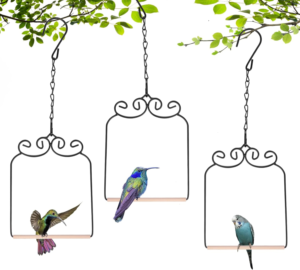
A simple hummingbird swing or decorative perch placed a few feet from your feeder brings birds into perfect view and gives them a “guard post.” Hummingbirds may spend more time perched than many people realize, using these spots to rest, preen, digest nectar, and defend their favorite feeding areas. Once birds adopt a swing or perch, they often stay in the yard longer and make more frequent, relaxed visits.
Offer water in a way hummingbirds like
Consider adding a mister. Most people focus on feeders and flowers, but the right water feature can turn your Nebraska yard into a true 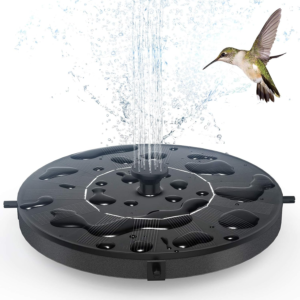 hummingbird hangout. Hummingbirds prefer shallow, moving water—fine sprays, mists, and droplets on leaves—rather than deep, still birdbaths. Add a mister, dripper, or fine spray so hummingbirds can bathe in moving droplets on leaves or in a shallow basin.
You can also install a shallow birdbath with gently sloping edges with gently sloping edges—no more than about an inch of water—gives  hummingbirds a place to sip and splash at the edge. Position water features near, but not directly over, key flower beds so birds can move easily between bathing and feeding.
Placing Water Features for Maximum Hummingbird Activity
Where you place your water features matters as much as what you choose.
-
Near cover, not in the open: Position water within a few feet of shrubs, small trees, or tall perennials so hummingbirds can retreat quickly if they feel threatened.
-
Partial shade: Light shade keeps water cooler and reduces evaporation while still allowing enough sun for droplets to sparkle.
-
Close to nectar plants and feeders: Place water features near your hummingbird‑friendly flowers and feeders so birds can easily move between feeding and bathing.
-
Safe viewing distance: Set features where you can see them from a window, patio, or garden bench, but not so close that frequent traffic scares birds away.
If you have multiple water features, spread them around to reduce territorial conflicts and give more birds access.
For a comprehensive guide on using water features, check out my article: How to Use Water Features to Attract Hummingbirds. This guide will walk you through the exact kinds of misters, drippers, and shallow baths hummingbirds prefer, how deep and how strong the water flow should be, where to place everything so birds feel safe, and how to keep it all clean without spending a lot of money.
Skip pesticides and let insects thrive
-
Avoid or greatly limit pesticides, especially systemic insecticides, because hummingbirds and their chicks rely heavily on tiny insects and spiders for protein.
- A healthy, chemical‑free yard with native plants will naturally support more insects, which means more high‑quality food for hummingbirds.
My article Natural Pest Control Methods for Your Hummingbird Garden shows readers they don’t have to choose between a healthy hummingbird garden and effective pest control. It explains exactly how to prevent and manage pests using natural methods—companion planting, encouraging “good bugs,” organic sprays like garlic, pepper, and neem, physical barriers, and smart traps—so they protect their plants without poisoning hummingbirds or the insects they eat. It also gives clear, season‑by‑season checklists and safety tips (like where not to spray, how to avoid harming pollinators, and how to keep pest control away from nests and feeders), making it easy to follow even if you’re new to organic gardening. If you want fewer pests, stronger plants, and a garden that’s truly safe for hummingbirds from spring through fall, this is the article for you!
Keep Insects Away From Your Feeder
Bees, wasps, and ant trails can quickly take over a hummingbird feeder, but you don’t have to give up and bring the feeder in. My detailed guide: How to Keep Bees and Ants Away From Your Hummingbird Feeder walks you through the safest, most effective ways to keep pests out of your nectar—using ant moats, bee‑resistant feeders, smarter placement, and even “decoy” feeders that draw insects away—so the sugar water stays clean and available for hummingbirds only. If you’re tired of fighting swarms on your feeders and want a simple plan that actually works, This guide is your proven answer!
Sometimes, small insects like ants, bees and wasps won’t be the only pests raiding your hummingbird feeder. For those times when larger critters become a problem, check out my guide: Effective Tips For Pest Control At The Hummingbird Feeder.
If you’re curious how your state compares to other parts of the country, you can see arrival and departure times for every state in my main guide, “When to Feed Hummingbirds: A State‑by‑State Guide.” It’s a handy overview if you travel, have relatives in other states, or just want to understand the bigger migration picture.
FAQ for Pennsylvania hummingbirds
What hummingbirds live in Pennsylvania?
Ruby‑throated Hummingbirds are the only regular breeding hummingbirds in Pennsylvania, and they occur statewide. Rufous and a few other western species are recorded as rare fall and winter visitors, mostly at feeders.
When do hummingbirds arrive in Pennsylvania?
Ruby‑throated Hummingbirds typically arrive in Pennsylvania from early to mid‑April in the south and by late April or early May in the north, with males often arriving before females.
When do hummingbirds leave Pennsylvania?
Most Ruby‑throated Hummingbirds leave Pennsylvania from late August through September, and the majority are gone by late September or early October.
When should I put out hummingbird feeders in Pennsylvania?
Put your feeders out in early to mid‑April, when spring flowers first emerge, so they are ready for the earliest Ruby‑throated arrivals.
When should I take down hummingbird feeders in Pennsylvania?
A common recommendation is to take feeders down in late September or early October if you have not seen any Ruby‑throateds for about a week, while birders watching for western vagrants may keep at least one feeder up longer.
What is the best hummingbird nectar recipe for Pennsylvania?
Use 1 part plain white sugar to 4 parts water, boiled and cooled, with no red dye or other additives.
How often should I change hummingbird nectar in Pennsylvania?
In warm summer weather, change hummingbird nectar every 1–2 days; in cooler spring and fall weather, change it every 3–5 days, and always replace it immediately if it looks cloudy or shows any mold.
Which hummingbird feeder styles work best in Pennsylvania?
Small 8‑ to 12‑ounce saucer‑style feeders are a good choice because they are easy to clean, resist leaks, and let you offer fresh nectar in modest amounts.
What plants attract hummingbirds in Pennsylvania?
Eastern columbine, bee balm, cardinal flower, coral honeysuckle, trumpet creeper, penstemons, garden phlox, Virginia bluebells, and great blue lobelia are among the best plants to attract Ruby‑throateds in Pennsylvania.
Where can I learn more about hummingbirds in Pennsylvania?
Resources such as the Pennsylvania Game Commission, Penn State Extension, Bird Town Pennsylvania, Heritage Conservancy, and Audubon’s native‑plant and hummingbird‑yard guides offer detailed information on timing, habitat, and plant choices.
Further resources for Pennsylvania hummingbird watchers
These expert resources offer more detail on hummingbird identification, timing, and native plants in Pennsylvania:
Pennsylvania Game Commission – Hummingbirds in Pennsylvania
Pennsylvania Game Commission – Ruby-throated Hummingbird wildlife note (PDF)
Penn State Extension – Attracting Hummingbirds (timing, feeders, and plants)
Centre Daily Times/Penn State experts – Best practices for your hummingbird feeder in Pennsylvania
GANT News – Your Guide to Hummingbird Season in Pennsylvania
Lycoming Audubon – Leave Your Hummingbird Feeder Out Into the Fall and Winter
Heritage Conservancy – 5 Native Plants That Attract Ruby-throated Hummingbirds
Audubon Field Guide – Ruby-throated Hummingbird (only regular breeder in Pennsylvania)
Audubon – How to Create a Hummingbird-Friendly Yard
Audubon Native Plant Database – Find bird-friendly native plants by Pennsylvania ZIP code