Hummingbirds in Alabama: Gulf Coast Arrivals, Feeders, and Native Plants
Key takeaways for Alabama hummingbirds
-
Ruby‑throated Hummingbird is the only common breeding hummingbird in Alabama; several western and southern species show up as rare fall and winter visitors at feeders.
-
Ruby‑throats usually arrive around the second week of March (a bit earlier on the Coast) and are most active from late spring through early fall.
-
Most Ruby‑throats leave by late October or early November; put feeders up by the first week of March and take them down in mid‑November if no birds have visited for about two weeks.
-
Simple 4‑to‑1 sugar‑water nectar in easy‑to‑clean feeders, plus frequent cleaning in Alabama’s heat and humidity, keeps birds healthy.
-
Layered plantings with coral honeysuckle, bee balm, cardinal flower, and other native tubular blooms provide nectar, insects, and cover from spring through fall.
Alabama sits in the heart of Ruby‑throated Hummingbird country, so most yards can see hummingbird activity from early spring into fall. Ruby‑throated Hummingbirds are the only hummingbirds that commonly live and breed in Alabama, nesting in wood edges, yards, and along rivers and creeks across the state. They arrive in March, raise one or two broods, then migrate out again in fall. In addition, Alabama is known among birders for hosting several western or southern hummingbirds as rare fall and winter visitors at feeders.
What hummingbirds do you get in Alabama?
For almost everyone in Alabama, Ruby‑throated Hummingbird is the 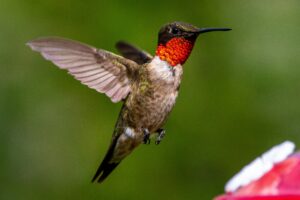 everyday hummingbird at feeders and flowers. It’s the smallest breeding bird in the state, with males showing the familiar ruby‑red throat and forked tail, and females and juveniles a clean green‑and‑white pattern without the red gorget. Outdoor Alabama notes that Ruby‑throateds nest widely in the state and can raise two or sometimes three broods per season when conditions are good.
But Alabama’s hummingbird list is much longer than just
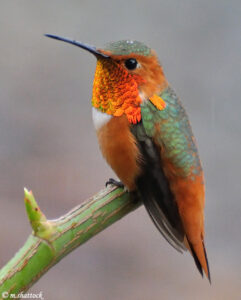
Ruby‑throats. Hummingbird specialist lists show that Rufous and Black‑chinned Hummingbirds winter “rarely but regularly” in Alabama, and other species such as Buff‑bellied, Allen’s, Calliope, Broad‑tailed, Anna’s, Rivoli’s, Costa’s, Broad‑billed, and Mexican Violetear have all been recorded as rarities. Most of these extra species show up at late‑fall or winter feeders, especially when people keep at least one feeder going and watch carefully for anything that doesn’t look like a Ruby‑throat.
Summary:
-
Common, regular species: Ruby‑throated Hummingbird (breeds statewide).
-
Rare fall/winter visitors: Rufous and Black‑chinned regularly but rarely, plus occasional Allen’s, Buff‑bellied, Calliope, Broad‑tailed, Anna’s, Rivoli’s, Costa’s, Broad‑billed, and Mexican Violetear.
When do hummingbirds arrive and leave Alabama?
Because Alabama is in the lower South, it sees Ruby‑throated Hummingbirds relatively early. BirdWatching Daily notes that Ruby‑throats arrive in Alabama “about the 2nd week of March.” Outdoor Alabama says hummingbirds typically migrate into Alabama in March, with numbers building through spring and peaking again just before fall migration. Southern region guides and migration videos describe coastal Alabama as part of the earliest arrival zone, where a few Ruby‑throats can show up by late February in warm years, but mid‑March is the reliable window for most of the state.
Peak hummingbird activity usually runs from late spring through early fall. Outdoor Alabama mentions higher numbers in June and July when young birds are present, and then another surge in August and September as Ruby‑throats fuel up for migration. BirdWatching Daily reports that most Ruby‑throats depart Alabama around the first week of November, although Outdoor Alabama also notes that many birds appear to leave by September or early October, especially away from the Coast.
-
First arrivals: mostly mid‑March, with a few early birds possible in late February in southern/coastal Alabama.
-
Peak season: late spring through early fall, with strong activity in June–July and again in August–September.
-
Most leave: by late October to early November; many inland areas see numbers drop by late September or early October.
When to put up and take down feeders in Alabama
When to put feeders out
For a state‑specific rule, BirdWatching Daily recommends that Alabama birders “put out your hummingbird feeders by the first week of March.” Outdoor Alabama states that hummingbirds typically migrate into the state in March, and regional hummingbird timing guides show Alabama in the “late February to mid‑March” arrival band. Many local birders simply aim for March 1 as an easy date to remember.
-
Put at least one feeder out by the first week of March across Alabama.
-
If readers are on or very near the Gulf Coast and don’t mind getting ready early, suggest hanging a feeder in late February to catch the earliest migrants.
When to take feeders down
BirdWatching Daily advises taking down feeders in Alabama “in mid‑November if you haven’t seen any hummingbirds in 2 weeks.” Outdoor Alabama notes that hummingbirds typically leave the state by September or early October, but that’s focused on the main migration rather than the rare wintering birds. Because Alabama regularly hosts winter hummingbirds, people who enjoy watching for rarities often keep at least one feeder up and coordinate with local birding groups if something unusual appears.
Suggestion:
-
For most homeowners: it’s fine to take feeders down in mid‑November once no hummingbirds have visited for about two weeks.
-
For people who enjoy winter hummingbirds: keep at least one feeder up and report any non‑Ruby‑throats or late birds to local birding groups.
Remind readers that migration is controlled by changing day length and internal changes, not feeders, so leaving feeders up does not prevent hummingbirds from migrating.
What to look for in a feeder
-
Saucer (dish) design for easy cleaning and less leaking
Saucer‑style feeders are low‑profile, resist wind, rarely leak, and are among the easiest to scrub, which encourages frequent cleaning. -
Glass or high‑quality plastic you can see through
Glass reservoirs don’t warp or discolor, are easier to keep clean, and warm more slowly than thin plastic; either clear glass or clear plastic lets you see nectar levels and cloudiness. -
Bee guards and an ant moat
Raised, bee‑resistant ports plus a built‑in or add‑on ant moat keep insects out while your layered plantings draw lots of pollinators. -
Small–medium capacity (8–16 oz)
In Connecticut, a 12–16 oz feeder is ideal near your flower beds—you’ll want to change nectar every 1–3 days anyway, so huge “big gulp” feeders aren’t necessary unless you have heavy traffic. -
Perches at each port
Circular perches let hummingbirds rest while feeding and make it easier for you to watch them working your layered planting.
Best nectar recipe for Alabama hummingbirds
The ideal hummingbird nectar recipe is the same in Alabama as everywhere else.
Use this mix:
-
1 part white granulated sugar
-
4 parts clean water
Instructions:
-
Bring the water to a brief boil.
-
Stir in sugar until completely dissolved.
-
Let it cool to room temperature, then fill your feeders.
-
Store any extra nectar in the refrigerator for up to a week.
Important tips:
-
Do use only plain white table sugar (sucrose).
-
Do not use honey, brown sugar, raw sugar, or artificial sweeteners.
-
Do not add red dye; the feeder’s red parts are enough to attract birds.
Here’s a good video on making hummingbird nectar with a lot of good information
How often to clean feeders in Alabama
Alabama summers can be warm and humid, which makes nectar spoil faster.
Cleaning schedule:
-
In cooler spring and fall weather, change nectar and clean feeders every 3–4 days.
-
In hot, humid summer weather, change nectar every 1–2 days to prevent mold and fermentation.
Cleaning steps:
-
Empty any leftover nectar.
-
Rinse thoroughly with warm or hot water.
-
Scrub all surfaces with a bottle brush; use a small brush for feeding ports.
-
For stubborn mold, soak in a mild vinegar‑and‑water solution (about 1:4), then rinse very well and let dry before refilling.
How to be sure your nectar is always fresh
It’s very important to keep fresh nectar in the feeder. Hummingbirds won’t feed at a dirty feeder and spoiled hummingbird nectar can be harmful to the hummingbirds. Sooner or later, the sugar in the nectar will ferment. The temperature of the outside air is what will determine how long the hummingbird food will stay fresh. The hotter the temperature, the sooner it will ferment and the sooner the nectar will have to be changed. Once the nectar starts to ferment it won’t be long before black specks of mold can be seen in the nectar and mold would be seen growing on your feeder. As a general rule, if the temp. is in the 60’s, the nectar should last about a week before needing changing. When the temp. gets out of the 60’s it will need changing sooner. Below is a chart that you can use as a guide to help keep your nectar fresh.
High temperatures…………Change nectar after
71-75……………………………6 days
76-80……………………………5 days
81-84……………………………4 days
85-88……………………………3 days
89-92……………………………2 days
93+………………………………change daily
This chart is only meant to be a general guide. It’s better to change the nectar a little sooner than to change it later, after the sugar starts to ferment. Along with the chart, a visual inspection of the nectar will tell you if it needs to be changed. Once the nectar starts to look cloudy, it needs to be changed. If it looks cloudy and has black specks of mold in it, you have waited too long. Moldy hummingbird food containing bacteria, can be harmful to the hummingbirds.
Where to hang feeders in Alabama yards
Alabama yards range from shady, wooded lots to sunny open lawns, but the placement basics are similar:
-
Hang feeders near flowers, shrubs, or small trees so hummingbirds have perches and quick cover from predators.
-
Aim for about 4–5 feet above the ground, where birds feel safe and you can easily reach the feeders.
-
Keep feeders a few feet away from large windows, or use decals/screens, to reduce collision risk.
- Because heat is a big factor in Alabama, I suggest placing feeders where they get morning sun and afternoon shade to keep nectar from spoiling as quickly. In storm‑prone areas, choose spots somewhat sheltered from wind so feeders don’t swing wildly in thunderstorms.
- Adding a few thin branches, wires, or swings nearby gives hummingbirds places to rest and watch over the feeders between visits.
To reduce fighting among hummingbirds:
-
Use two or more small feeders rather than one big one.
-
Place feeders 10–15 feet apart or around corners so a territorial male can’t guard them all at once.
Learn how hummingbird aggression impacts your backyard. This video explores territorial behavior and offers practical solutions for attracting more hummingbirds to your feeders. Discover several helpful strategies to encourage a more harmonious environment.
I also wrote a more in‑depth guide on how to choose the best place to hang your hummingbird feeder.Discover exactly where to hang your hummingbird feeder for the best results. This complete guide walks you through sunlight and shade, height, distance from windows, wind and predator protection, and how close to place feeders to flowers so hummingbirds feel safe and visit often. You’ll also get practical tips on window feeders, hanging hardware, cleaning schedules by temperature, and simple tricks to stop ants and other pests.Check out the article for everything you need to turn one well‑placed feeder into a busy hummingbird hot spot.
Native plants that attract hummingbirds in Alabama
Alabama has excellent native plants that offer both nectar and insects for hummingbirds, especially if you focus on tubular red, orange, or deep‑pink blooms. Native vines, perennials, and wildflowers are better for hummingbirds than many common exotics because they tend to be richer in nectar and support more insects and spiders that hummingbirds eat.
Some top Alabama natives to highlight:
-
Coral honeysuckle (Lonicera sempervirens) – A well‑behaved native vine with long red tubular flowers that bloom over a long season; Alabama native‑plant advocates repeatedly recommend it as one of the best hummingbird vines for the state.
-
Cardinal flower (Lobelia cardinalis) – Tall spikes of glowing red flowers for moist or low‑lying spots; native‑plant designers in Alabama describe it as a “magnet” for hummingbirds and note that planting several together creates a powerful nectar patch.
-
Scarlet bee balm / beebalm (Monarda didyma and related Monarda spp.) – Showy red or pink flower clusters in mid‑summer that are favorites for both hummingbirds and bees.
-
Red columbine (Aquilegia canadensis) – Early‑spring nodding red‑and‑yellow flowers that provide nectar when Ruby‑throats are just returning.
-
Crossvine (Bignonia capreolata) – A Southeast native vine with orange‑red trumpets that bloom heavily in spring and often rebloom later; Alabama gardeners recommend it alongside coral honeysuckle for strong hummingbird pull.
It is important to plant these in layers and in small groups or drifts rather than as single specimens so hummingbirds can feed efficiently and quickly find them. You can also remind them that avoiding pesticides on these plants leaves more small insects for hummingbirds to catch, turning an Alabama flower bed into a full‑service hummingbird buffet.
Creating a hummingbird‑friendly yard in Alabama
Here’s how to turn a typical Alabama yard into true hummingbird habitat, with the right mix of flowers, feeders, perches, and water so Ruby‑throated and winter hummingbirds feel safe enough to visit often and stay longer.
Plant layers of native vegetation
Combine small trees, shrubs, vines, and flowering perennials to create a tiered garden with cover and perches at different heights. Native plants support more insects and spiders for hummingbirds to eat and offer nectar‑rich, tubular flowers the birds are naturally drawn to.
Layered planting example for an Alabama yard
In a sunny Alabama yard, you can build a layered planting that keeps hummingbirds coming back from early spring through fall. Along a fence or the back of a bed, train coral honeysuckle (Lonicera sempervirens) up a simple trellis or arch to provide a tall wall of red tubular flowers that bloom over a long season. In front of that, mass scarlet bee balm or scarlet beebalm (Monarda didyma) and similar bee balms every 18–24 inches to give mid‑summer color and nectar. Along the front edge and in moist spots, plant groups of cardinal flower (Lobelia cardinalis), which Alabama native‑plant advocates consistently cite as one of the most reliable hummingbird magnets. This three‑layer mix works in suburban borders or rural yards and gives hummingbirds safe cover, perches, and nectar from spring through late summer.
Plan for blooms from spring through fall
Include early, mid‑season, and late‑blooming plants so something is always flowering when hummingbirds are present in Alabama. Plant in groups or drifts rather than single plants so hummingbirds can feed efficiently and find flowers more easily.
My special guide, The Art of Attracting Hummingbirds to Your Yard, gives you ready‑made lists of hummingbird‑attracting plants that bloom in spring, summer, and fall. It makes it simple to choose plants that keep nectar available from the time the first hummingbirds arrive until the last migrants leave in the fall, with suggestions for both sun and shade so you can match your own growing conditions.
Use feeders to supplement, not replace, flowers
Feeders are a great backup food source, especially during cold snaps or when natural blooms are between flushes. Hang them where they’re visible from flower beds so hummingbirds can move naturally between nectar plants and sugar water.
One of the best hummingbird feeders that’s easy to take apart and 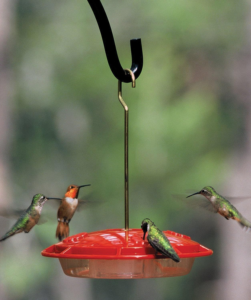 clean is the HummZinger Ultra 12‑oz Saucer Feeder. The saucer design makes it simple to see the nectar level at a glance and to reach every corner when you wash it, which is a big help during warm spells when nectar must be changed often. Its patented Nectar Guard tips are flexible membranes over each port that keep flying insects out while still allowing hummingbirds to feed freely, so you spend less time fighting bees and wasps around the feeder. A built‑in ant moat stops crawling insects before they reach the nectar, and the raised flower ports help divert rainwater so the nectar stays fresh longer.
Follow good feeder hygiene—use the 4‑to‑1 sugar‑water recipe and clean often—to keep birds healthy and complement your plantings. My step‑by‑step guide to cleaning your hummingbird feeder shows you exactly how to remove mold, how often to change nectar at different temperatures, and which brushes and ant moats make the job easier, plus tips for dealing with bees and ants so your feeders stay safe and attractive.
Provide safe perches and nesting cover
Keep some shrubs, small deciduous trees, and a few dead or thin branches where hummingbirds can rest, display, and build nests. Avoid pruning everything into neat, bare shapes; a slightly softer outline with twiggy tips gives birds more places to sit.
A hummingbird perch or swing is an easy way
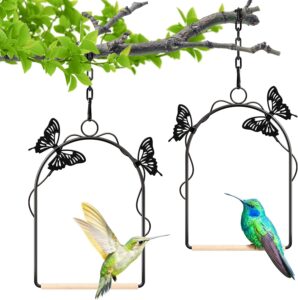
to bring hummingbirds to a particular spot near your feeder. Hummingbirds may look like they’re always in motion, but they actually spend a surprising amount of time sitting still between feeding bouts, using perches to rest, preen, digest nectar, and keep watch over their favorite food sources. A simple swing or decorative perch placed a few feet from your feeder gives them a comfortable “guard post” and brings them right into view where you can enjoy them up close. Many people find that once birds adopt a swing as their regular lookout perch, they stay in the yard longer and make more frequent, relaxed visits.
Avoid heavy pruning during nesting season and leave a few “messy” corners with twigs, lichens, and spider webs that birds use for nest building.
Offer water in a way hummingbirds like
Most people focus on feeders and flowers, but the right water feature can turn your yard into a hummingbird hangout. Hummingbirds prefer shallow, moving water—fine sprays, mists, and droplets on leaves—over deep, still birdbaths. Add a mister, dripper, or fine spray so hummingbirds can bathe in moving droplets on leaves or in a shallow basin.
Consider adding a mister to create a gentle cloud of moving water; 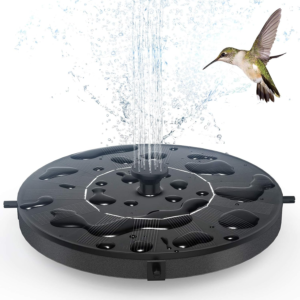 hummingbirds often fly back and forth through the mist, spreading their wings and tails to bathe without getting waterlogged. Place misters near shrubs or small trees so the droplets collect on leaves, giving birds multiple places to sip and bathe.
You can also install a shallow bi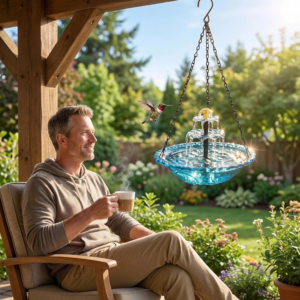 rdbath with gently sloping edges—aim for no more than about an inch of water—so hummingbirds can stand safely at the edge or in very shallow water while they drink or splash.
Position water features near, but not directly over, key flower beds so birds can move easily between bathing and feeding.
My detailed guide, How to Use Water Features to Attract Hummingbirds, walks you through the exact kinds of misters, drippers, and shallow baths hummingbirds prefer, how deep and how strong the water flow should be, where to place everything so birds feel safe, and how to keep it all clean without spending a lot of money.
Skip pesticides and let insects thrive
-
Avoid or greatly limit pesticides, especially systemic insecticides, because hummingbirds and their chicks rely heavily on tiny insects and spiders for protein.
- A healthy, chemical‑free yard with native plants will naturally support more insects, which means more high‑quality food for hummingbirds.
This article Natural Pest Control Methods for Your Hummingbird Garden shows readers they don’t have to choose between a healthy hummingbird garden and effective pest control. It explains exactly how to prevent and manage pests using natural methods—companion planting, encouraging “good bugs,” organic sprays like garlic, pepper, and neem, physical barriers, and smart traps—so they protect their plants without poisoning hummingbirds or the insects they eat. It also gives clear, season‑by‑season checklists and safety tips (like where not to spray, how to avoid harming pollinators, and how to keep pest control away from nests and feeders), making it easy to follow even if you’re new to organic gardening. If you want fewer pests, stronger plants, and a garden that’s truly safe for hummingbirds from spring through fall, this is the article for you!
Keep Insects Away From Your Feeder
- Bees, wasps, and ant trails can quickly take over a hummingbird feeder, but you don’t have to give up and bring the feeder in. This guide How to Keep Bees and Ants Away From Your Hummingbird Feeder walks you through the safest, most effective ways to keep pests out of your nectar—using ant moats, bee‑resistant feeders, smarter placement, and even “decoy” feeders that draw insects away—so the sugar water stays clean and available for hummingbirds only. If you’re tired of fighting swarms on your feeders and want a simple plan that actually works, This guide is your proven answer!
Effective Tips For Pest Control At The Hummingbird Feeder
You will be lucky if ants, bees and wasps are the only pests that visit your hummingbird feeder. Here are steps you can take to control those much larger unwanted pests!
FAQ for Alabama hummingbirds
- What hummingbirds live in Alabama?
Ruby‑throated Hummingbirds are the only hummingbirds that commonly live and breed in Alabama. A few western species—especially Rufous and Black‑chinned—are rare fall and winter visitors at feeders, along with occasional other vagrant species.
-
When do hummingbirds arrive in Alabama?
Ruby‑throated Hummingbirds usually arrive in Alabama around the second week of March, with some coastal and southern areas seeing birds a little earlier and northern areas a bit later. -
When should I put out hummingbird feeders in Alabama?
Have at least one feeder up by the first week of March so it’s ready when the first Ruby‑throats pass through. Many Alabama birders simply aim for “around March 1” and keep feeders filled from then on. -
When do hummingbirds leave Alabama?
Most Ruby‑throated Hummingbirds leave Alabama by late October or early November. A few birds, including rare Rufous and Black‑chinned Hummingbirds, may remain through late fall or winter at well‑maintained feeders. -
When should I take down hummingbird feeders in Alabama?
General advice is to take feeders down in mid‑November if you haven’t seen any hummingbirds for about two weeks. If you enjoy watching for rare winter hummingbirds, you can leave at least one feeder up longer and report any unusual visitors to local birding groups. -
What is the best hummingbird nectar recipe?
Use 1 part plain white sugar to 4 parts water, boiled and then cooled before filling feeders. Do not add red dye; clear nectar in a feeder with red parts is all you need. -
Which native plants attract hummingbirds in Alabama?
Excellent Alabama natives for hummingbirds include coral honeysuckle, cardinal flower, and scarlet bee balm, along with other tubular, nectar‑rich flowers like red columbine and spotted jewelweed.
If you’re curious how your state compares to other parts of the country, you can see arrival and departure times for every state in my main guide, “When to Feed Hummingbirds: A State‑by‑State Guide.” It’s a handy overview if you travel, have relatives in other states, or just want to understand the bigger migration picture.
Resources for Alabama Hummingbirds
-
BirdWatching Daily – “Hummingbird Season: When To Put Up & Take Down Your Feeders” (includes Alabama timing section).
https://www.birdwatchingdaily.com/beginners/birding-faq/hummingbird-season/ -
Outdoor Alabama – Ruby‑throated Hummingbird species account.
https://www.outdooralabama.com/swifts/ruby-throated-hummingbird -
Outdoor Alabama – Nongame Wildlife FAQs (includes general hummingbird migration/timing info).
https://www.outdooralabama.com/nongame-wildlife-program/nongame-wildlife-faqs -
Hummingbirds listed by state (Alabama section; species list).
http://www.hummingbirds.net/states.html -
Coral honeysuckle profile (native hummingbird vine recommended for the Southeast and Alabama).
https://theplantnative.com/plant/coral-honeysuckle/ -
“Creating a Pollinator‑Friendly Landscape in Alabama: Best Native Plants and Design Ideas” (includes hummingbird‑friendly natives).
https://www.riplandscapes.com/post/creating-a-pollinator-friendly-landscape-in-alabama-best-native-plants-and-design-ideas -
Troy University Arboretum – “Planting for Hummingbirds: Go Native!” (Alabama‑focused native plant suggestions).
https://www.facebook.com/troyarboretum/posts/planting-for-hummingbirds-go-native-hummingbirds-are-among-the-most-exciting-vi/937799168433446