Hummingbirds in Michigan: When They Arrive, Feeders, and Native Plants
Key takeaways for Michigan hummingbirds
-
Ruby‑throated Hummingbird is Michigan’s only common hummingbird; several western species (like Rufous) are rare fall visitors at feeders.
-
Ruby‑throats arrive in Michigan from mid‑April to early May, with peak numbers in the southern Lower Peninsula in mid‑May and slightly later farther north.
-
Most hummingbirds leave between late August and mid‑September; keep at least one feeder up into late September for stragglers and possible western vagrants.
-
Use a simple 4‑to‑1 sugar‑water recipe in easy‑to‑clean feeders and change nectar every 1–3 days depending on temperature to keep birds healthy.
-
Plant native or well‑adapted hummingbird flowers—such as wild columbine, bee balm, blazing star, cardinal flower, penstemon, and great blue lobelia—in layered beds so something is blooming from spring through late summer.
Michigan sits near the northern edge of Ruby‑throated Hummingbird country, so when they arrive it really feels like spring. Ruby‑throated Hummingbirds are the only hummingbirds that regularly breed in Michigan and the species most backyard birdwatchers will see. They move north into the state from late April through May, nest across both peninsulas, and then migrate out again by late summer. A handful of western hummingbirds also turn up as rarities, so a lucky Michigan birder may occasionally host something other than a Ruby‑throat at fall or winter feeders.
What hummingbirds do you get in Michigan?
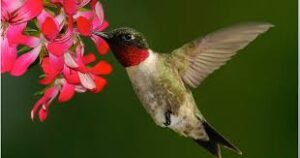
For your readers, the core message is simple: Ruby‑throated Hummingbird is Michigan’s common, regular hummingbird. It’s the only species known to breed in the state and is found from southern farm country all the way north into the Upper Peninsula wherever there are flowers, trees, and small bodies of water. Adult males show the familiar iridescent ruby throat and forked dark tail, while females and young birds are green above with whitish underparts and lack the red gorget.
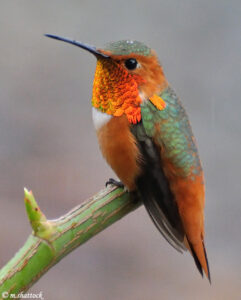
Several western or southern species have been documented in Michigan as vagrants. Conservation groups note records of Rufous, Broad‑billed, Green Violet‑ear, and White‑eared Hummingbirds, with Rufous the most frequently reported of these rarities. These birds are exciting, but they are truly occasional visitors compared to the everyday Ruby‑throat, so it’s helpful to understand that most Michigan yards will see just one hummingbird species.
-
Common, regular species: Ruby‑throated Hummingbird (breeds statewide).
-
Rare visitors: Rufous (most likely), plus occasional Broad‑billed, Green Violet‑ear, and White‑eared Hummingbirds reported at Michigan feeders.
When do hummingbirds arrive and leave Michigan?
Ruby‑throated Hummingbirds reach Michigan after moving up through the central and eastern United States each spring. Migration maps and Michigan news reports show first sightings in the southern Lower Peninsula around late April, especially in the Detroit area and along the Lake Michigan shoreline, with birds spreading north through May. Males tend to arrive a bit earlier than females, as is typical for Ruby‑throats.
Peak hummingbird activity in Michigan runs from mid‑May through August, when birds are nesting, raising young, and feeding heavily. Most Ruby‑throats leave by late August to mid‑September, with the latest birds departing the northern parts of the state around mid‑September. A few individuals may linger into late September, and rare western hummingbirds can appear at feeders in fall, especially where people keep nectar out later into the season.
You can turn this into a clear timing box:
-
First arrivals in southern Michigan: late April.
-
First arrivals farther north and in the U.P.: early to mid‑May.
-
Peak season: mid‑May through August.
-
Most leave: late August to mid‑September.
When should you put out hummingbird feeders in Michigan?
Because migration into northern states can vary with weather, it’s smart for Michigan readers to have feeders ready before the very first birds arrive. Spring migration trackers and local media suggest that Ruby‑throats reach southern Michigan in the second half of April, with an average first arrival date around April 18 in some areas. National experts recommend having nectar out by late April in northern states so birds can refuel as soon as they show up.
-
Hang at least one feeder by mid‑April in southern Michigan and by the last week of April farther north.
-
If readers prefer a simple rule, say: “Put your feeders out by late April to be ready for the first hummingbirds.”
When should you take feeders down?
Many people worry that feeders might delay migration, but studies and expert groups emphasize that migration is driven by changing day length and hormones, not by feeder availability. In Michigan, it’s helpful to keep nectar out into early fall so late migrants and young birds can top off their energy before crossing long distances.
-
Keep feeders up through at least mid‑September in most of Michigan.
-
If you don’t mind watching a bit longer, it’s advisable to leave one feeder up into late September in case of stragglers or rare western hummingbirds.
Once no hummingbirds have visited for about two weeks, it’s safe to take feeders down until the following spring.
Best hummingbird nectar recipe for Michigan
The best nectar recipe in Michigan is the same simple mix you recommend everywhere else: 1 part plain white sugar to 4 parts water. Boil the water, stir in the sugar until it dissolves, let it cool completely, then fill clean feeders. National organizations stress that you should not add red dye, because clear nectar in a feeder with red parts is all hummingbirds need and avoids unnecessary additives.
Don’t forget to:
-
Clean feeders with hot water (and, if desired, a little vinegar) every few days in cool weather and every 1–2 days during hot spells.
-
Discard cloudy or moldy nectar right away and refill with fresh solution.
Where to hang feeders in Michigan yards
Michigan has a mix of suburban neighborhoods, rural farmsteads, and lake cottages, but the basic placement principles are similar. Place feeders:
-
Near flowers, shrubs, or small trees so birds have perches and quick cover from predators.
-
About 4–5 feet off the ground, where hummingbirds feel secure but you can still reach feeders easily.
-
A few feet away from large windows, or use decals/screens on glass, to cut down on collisions.
Because parts of Michigan are windy and exposed—especially around the Great Lakes—suggest placing feeders where they are somewhat sheltered so they don’t swing wildly in strong winds. Adding a few thin branches or wires nearby gives birds perches to rest on between feedings.
Yard‑type sections: Michigan examples
Hummingbird tips for Michigan suburban yards
Suburban yards around Detroit, Grand Rapids, Lansing, and other cities are perfect for Ruby‑throats with just a bit of planning. Use two or three feeders in different parts of the yard—one near the back garden, one by a side fence, and one visible from a favorite window—so birds can spread out and be less aggressive. In sunny beds, plant bee balm, garden phlox, salvias, and columbine along fences or patios to create regular hummingbird “routes” through the yard. Keep at least one feeder close enough to enjoy from inside, but still a few feet from big windows to protect birds.
Hummingbird tips for Michigan lake cottages and shorelines
Lake‑edge and cottage properties are natural hummingbird magnets because they combine water, trees, and open sky. Put one feeder near your deck or main sitting area and another closer to shoreline shrubs or natural vegetation so birds can move between cover and feeding spots. Choose deep‑rooted, wind‑tolerant perennials like bee balm, lobelias, and agastache for exposed spots where wind off the lake could topple flimsy plants or blow feeders around. If there is a treeline or mixed woods behind the cottage, hang an extra feeder at the wood edge to intercept migrants moving along that corridor.
Hummingbird tips for rural and small‑town Michigan yards
Rural Michigan yards and small‑town lots often have more space to blend gardens, trees, and open areas. Suggest pairing the vegetable garden with hummingbird borders: line garden edges or fence lines with columbine, bee balm, penstemon, and blazing stars so birds cruise the property while people work in the garden. Use native shrubs and small trees like serviceberry, redbud, and dogwoods as a backdrop, then tuck hummingbird‑friendly perennials in front. Place feeders where they are easy to watch from porches or kitchen windows, but still within quick reach of trees and shrubs so birds can escape from hawks or neighborhood cats.
Native plants that attract hummingbirds in Michigan
Michigan gardeners can lean on many of the same Midwest natives that work well in nearby states. Midwest native‑plant guides highlight a set of tubular, nectar‑rich flowers that fit Michigan’s climate and soils while supporting Ruby‑throats and other pollinators.
Top choices to feature:
-
Wild columbine (Aquilegia canadensis) – early‑spring red and yellow flowers for woodland edges and part shade.
-
Bee balm / bergamot (Monarda didyma, M. fistulosa) – summer clusters of red or pink blooms that are classic hummingbird plants in the Midwest.
-
Cardinal flower (Lobelia cardinalis) – tall red spikes for late summer, especially in wetter or low‑lying spots.
- Great blue lobelia (Lobelia siphilitica) – blue tubular flowers that pair well with cardinal flower in damp soils.
-
Penstemon (e.g., Penstemon digitalis) – white tubular flowers that do well in a range of soils and attract hummingbirds and other pollinators.
- Blazing star / gayfeather (Liatris spp.) – tall purple spikes that appeal to both hummingbirds and butterflies in sunny spots.
-
It is better to avoid invasive non‑native vines and instead rely on these native or regionally appropriate plants that support a broader community of wildlife.
Creating a hummingbird‑friendly yard in Michigan
-
Plant layers of native vegetation
Combine small trees, shrubs, vines, and flowering perennials to create a tiered garden with cover and perches at different heights. Whenever possible, choose locally native plants, which support more insects and spiders for hummingbirds to eat and provide the flower shapes they evolved with.
-
Layered planting example for a Michigan yard
In a typical Michigan yard with a mix of sun and part shade, you can build a layered planting that keeps hummingbirds coming back all season. Along a sunny fence or garage wall, plant tall spikes of blazing star (Liatris spp.) and a row of cardinal flower (Lobelia cardinalis) in the dampest spots to provide late‑summer nectar and height. In front of these, mass bee balm (Monarda didyma or M. fistulosa) and penstemon (Penstemon digitalis) every 18–24 inches so flowers overlap in early and mid‑summer. Closer to the front edge and near paths or patios, tuck in clumps of wild columbine (Aquilegia canadensis) for early‑spring blooms and great blue lobelia (Lobelia siphilitica) for mid‑ to late‑season color in wetter pockets. This three‑layer mix fits easily into a suburban border, cottage lakefront, or rural garden edge and gives Ruby‑throated Hummingbirds safe cover, perches, and nectar from spring through early fall.
-
Plan for blooms from spring through fall
Include early, mid‑season, and late‑blooming plants so something is always flowering when hummingbirds are present in your area. Plant in groups or drifts rather than single plants so hummingbirds can feed efficiently and find flowers more easily.
My special guide, The Art of Attracting Hummingbirds to Your Yard, gives you ready‑made lists of hummingbird‑attracting plants that bloom in spring, summer, and fall. It makes it simple to choose plants that keep nectar available from the time the first hummingbirds arrive until the last migrants leave in the fall, with suggestions for both sun and shade so you can match your own growing conditions.
Use feeders to supplement, not replace, flowers
Feeders provide a reliable nectar source alongside your plants, especially in early spring and late summer when wild blooms may be sparse because of drought or temperature swings. Hang them where they’re visible from your best flower beds so hummingbirds can move naturally between blossoms and sugar water.
Here is my favorite feeder and why I recommend this feeder: HummZinger Ultra 12‑oz Saucer Feeder.
If you’re tired of leaky bottle feeders and constant insect problems, this video explains why a simple saucer‑style Aspects feeder is my go‑to choice. You’ll see how the low, shallow 12‑ounce bowl helps you mix only what your hummingbirds can use before it spoils, while the built‑in ant moat, raised ports, and included Nectar‑Guard tips work together to keep ants, bees, and wasps out of the nectar. The drip‑proof design and twist‑off cover make cleaning and refilling quick and easy, so it’s realistic to keep nectar fresh even in warm weather. Made from tough, UV‑stabilized polycarbonate in the USA and backed by a true lifetime guarantee, this is a “buy it once” feeder you can count on year after year
Provide safe perches and nesting cover
Keep some shrubs, small deciduous trees, and a few dead or thin branches where hummingbirds can rest, display, and build nests. Avoid pruning everything into neat, bare shapes; a slightly “softer” outline with twiggy tips gives birds more places to sit.
A hummingbird perch or swing is an easy way to bring hummingbirds to a particular spot near your feeder. Hummingbirds may look like they’re always in motion, but they actually spend a surprising amount of time sitting still between feeding bouts, using perches to rest, preen, digest nectar, and keep watch over their favorite food sources. A simple swing or decorative perch placed a few feet from your feeder gives them a comfortable “guard post” and brings them right into view where you can enjoy them up close. Many people find that once birds adopt a swing as their regular lookout perch, they stay in the yard longer and make more frequent, relaxed visits.
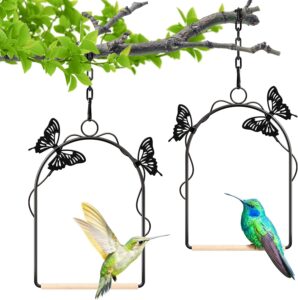
Click here to see a selection of hummingbird swings and perches that work well next to feeders and flower beds, so you can choose a style that fits your yard and brings the birds into easy viewing range.
Avoid heavy pruning during nesting season and leave a few “messy” corners with twigs, lichens, and spider webs that birds use for nest building.
Offer water in a way hummingbirds like
Most people focus on feeders and flowers, but the right water feature can turn your yard into a hummingbird hangout. Hummingbirds prefer shallow, moving water—fine sprays, mists, and droplets on leaves—over deep, still birdbaths. Add a mister, dripper, or fine spray so hummingbirds can bathe in moving droplets on leaves or in a shallow basin.
Consider adding a mister to create a gentle cloud of moving water; 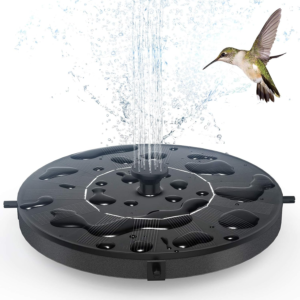 hummingbirds often fly back and forth through the mist, spreading their wings and tails to bathe without getting waterlogged. Place misters near shrubs or small trees so the droplets collect on leaves, giving birds multiple places to sip and bathe.
You can also install a shallow birdbath with gently sloping edges
aim for no more than about an inch of water—so hummingbirds can stand safely at the edge or in very shallow water while they drink or splash.
Position water features near, but not directly over, key flower beds so birds can move easily between bathing and feeding.
My detailed guide, How to Use Water Features to Attract Hummingbirds, walks you through the exact kinds of misters, drippers, and shallow baths hummingbirds prefer, how deep and how strong the water flow should be, where to place everything so birds feel safe, and how to keep it all clean without spending a lot of money.
Skip pesticides and let insects thrive
-
Avoid or greatly limit pesticides, especially systemic insecticides, because hummingbirds and their chicks rely heavily on tiny insects and spiders for protein.
- A healthy, chemical‑free yard with native plants will naturally support more insects, which means more high‑quality food for hummingbirds.
My article Natural Pest Control Methods for Your Hummingbird Garden shows readers they don’t have to choose between a healthy hummingbird garden and effective pest control. It explains exactly how to prevent and manage pests using natural methods—companion planting, encouraging “good bugs,” organic sprays like garlic, pepper, and neem, physical barriers, and smart traps—so they protect their plants without poisoning hummingbirds or the insects they eat. It also gives clear, season‑by‑season checklists and safety tips (like where not to spray, how to avoid harming pollinators, and how to keep pest control away from nests and feeders), making it easy to follow even if you’re new to organic gardening. If you want fewer pests, stronger plants, and a garden that’s truly safe for hummingbirds from spring through fall, this is the article for you!
Keep Insects Away From Your Feeder
Bees, wasps, and ant trails can quickly take over a hummingbird feeder, but you don’t have to give up and bring the feeder in. This guide How to Keep Bees and Ants Away From Your Hummingbird Feeder walks you through the safest, most effective ways to keep pests out of your nectar—using ant moats, bee‑resistant feeders, smarter placement, and even “decoy” feeders that draw insects away—so the sugar water stays clean and available for hummingbirds only. If you’re tired of fighting swarms on your feeders and want a simple plan that actually works, This guide is your proven answer!
FAQ About Michigan Hummingbirds
-
What hummingbirds live in Michigan?
Ruby‑throated Hummingbirds are the only hummingbirds that commonly live and breed in Michigan. A few western species, such as Rufous, Broad‑billed, Green Violet‑ear, and White‑eared Hummingbirds, have been recorded as rare visitors at feeders.
-
When do hummingbirds arrive in Michigan?
Ruby‑throated Hummingbirds usually arrive in southern Michigan in late April and move north through the state in May. Migration trackers and local reports put the average first arrival date in some areas around mid‑ to late April. -
When should I put out hummingbird feeders in Michigan?
Put at least one feeder out by mid‑April in southern Michigan and by the last week of April farther north. This ensures nectar is ready when the first migrants pass through. -
When do hummingbirds leave Michigan?
Most Ruby‑throated Hummingbirds leave Michigan between late August and mid‑September. A few stragglers may linger into late September, and rare western hummingbirds can appear at feeders in fall. -
Should I leave my feeders up in the fall?
Yes. Leaving at least one feeder up into late September will not keep hummingbirds from migrating and can help late migrants and rare visitors. Migration timing is controlled by changing day length, not by feeder availability. -
What is the best hummingbird nectar recipe?
Use 1 part plain white sugar to 4 parts water, boiled and then cooled before filling feeders. Do not add red dye; clear nectar in a red‑accented feeder is all you need. -
Which native plants attract hummingbirds in Michigan?
Great native or regionally appropriate plants include wild columbine, bee balm, cardinal flower, great blue lobelia, penstemon, and blazing star, along with other tubular, nectar‑rich flowers that grow well in Midwest gardens.
If you’re curious how Michigan compares to other parts of the country, you can see arrival and departure times for every state in my main guide, “When to Feed Hummingbirds: A State‑by‑State Guide.” It’s a handy overview if you travel, have relatives in other states, or just want to understand the bigger migration picture.
Further resources for Michigan hummingbird watchers
Hummingbirds in Michigan (species overview and timing) Plain‑language summary of common and rare hummingbirds in Michigan, including Ruby‑throats as the only regular breeder plus western vagrants. https://avibirds.com/hummingbirds-in-michigan/
Hummingbird annual migration reaches Michigan (Michigan Public) – Short piece on when Ruby‑throated Hummingbirds reach Michigan each spring and how they move through the state.
https://www.michiganpublic.org/environment-climate-change/2025-04-26/hummingbird-annual-migration-reaches-michigan
Attract Hummingbirds to Your Midwest Garden (native plant guide) – Midwest‑focused list of native plants such as columbine, bee balm, cardinal flower, penstemon, and blazing star that work well in Michigan gardens.
https://naturalcommunities.net/blogs/news/attract-hummingbirds-to-your-midwest-garden-native-illinois-plant-guide