Idaho: Attracting and Feeding Hummingbirds – A Complete Guide
Idaho’s mix of mountains, valleys, and high desert makes it prime habitat for several western hummingbird species.
Rufous, Calliope, Broad‑tailed, and Black‑chinned Hummingbirds all use Idaho during the breeding season or migration, especially in the central and northern mountains and along river corridors.
Key takeaways
-
Idaho regularly hosts Rufous, Calliope, Broad‑tailed, and Black‑chinned Hummingbirds; Anna’s appears rarely.
-
Put feeders out by mid‑May and keep them up into September to match mountain‑west timing.
-
Use the standard 4‑to‑1 sugar‑water recipe and clean feeders often in summer heat.
-
Native plants like penstemons, hummingbird trumpet, western hyssops, and native columbines are excellent for Idaho hummingbirds.
What hummingbirds live in Idaho?
Idaho’s hummingbirds are all migratory, moving between Mexico/Central America and western breeding areas.
You can highlight:
-
Rufous Hummingbird – A fiery orange species known for long migrations; passes through Idaho and can be common in mid‑ to late summer, especially at feeders.
-
Calliope Hummingbird – The smallest breeding bird in North America; breeds and migrates through Idaho’s mountains and foothills.
-
Broad‑tailed Hummingbird – Breeds in Idaho’s higher‑elevation habitats (up to around 10,500 feet); males have a loud wing trill in flight.
-
Black‑chinned Hummingbird – The most common hummingbird at lower elevations in Idaho; breeds along rivers and in towns and valleys.
-
Anna’s Hummingbird – Occasional visitor; Idaho Fish and Game notes it only rarely appears in the state.
You can say simply that many Idaho backyards will mainly see Black‑chinned at lower elevations and Rufous, Calliope, and Broad‑tailed in mountain or foothill areas.
When do hummingbirds visit Idaho?
Because of Idaho’s elevation and northern latitude, hummingbirds arrive later than in the Southeast but can be intense summer visitors.
Migration and timing:
-
Spring arrival
- Broad‑tailed Hummingbirds reach Idaho by late May, after moving through the Southwest and Rockies in March–April.
-
Rufous Hummingbirds tend to reach Washington, Oregon, Idaho, and western Montana around May, staying for the breeding season in parts of the region.
-
Black‑chinned and Calliope Hummingbirds also arrive in late spring; Idaho Fish and Game notes Idaho as summer habitat for these species.
Summer nesting and peak activity
June through August are peak hummingbird months, especially in mountain and foothill habitats where Broad‑tailed, Rufous, and Calliope feed on wildflowers and visit feeders.
Late‑summer and fall migration
-
Rufous and Broad‑tailed Hummingbirds begin heading south by August, often following the Rockies in late summer.
- The Idaho–Montana–North Dakota habitat guide notes that hummingbirds leave for wintering grounds in Mexico starting around August, with migration continuing through early fall.
Feeder timing for Idaho
-
For most Idaho locations, put feeders out by mid‑May to be ready for Broad‑tailed, Rufous, and Black‑chinned arrivals.
-
Keep feeders up through September, watching for migrants, especially Rufous and Calliope, as they move south.
You can suggest setting feeders out about two weeks before you expect birds, as general advice from experts recommends.
Best nectar recipe for Idaho hummingbirds
Use the same nectar recipe you recommend in other states.
Standard mix:
-
1 part white granulated sugar
-
4 parts clean water
Instructions:
-
Bring water to a brief boil.
-
Stir in sugar until fully dissolved.
-
Let the solution cool, then fill feeders.
-
Store extra nectar in the refrigerator and use within a week.
Important points:
-
Do use only plain white table sugar.
-
Do not use honey, brown sugar, raw sugar, or artificial sweeteners.
-
Do not add red dye; red feeder parts are enough.
How often to clean feeders in Idaho
Idaho’s climate ranges from hot, dry valleys to cooler mountains.
Cleaning schedule:
-
In cooler spring and mountain conditions, change nectar and clean feeders every 3–4 days.
-
In hot, sunny valley summers, change nectar every 1–2 days, especially if feeders get direct afternoon sun.
Cleaning basics:
-
Empty any remaining nectar.
-
Rinse with warm or hot water.
-
Scrub reservoir and base with a bottle brush; use a small brush for ports.
-
For stubborn residue, soak in a mild vinegar‑and‑water solution (about 1:4), rinse thoroughly, and let dry before refilling.
Where to hang hummingbird feeders in Idaho
Idaho feeders need to handle sun, wind, and sometimes cool nights.
Placement tips:
-
Choose morning sun and afternoon shade or bright open shade to keep nectar cooler and slow spoilage.
-
Hang feeders near flower beds, native shrubs, or wildflower patches, especially in foothill and mountain gardens where hummingbirds follow bloom lines.
-
Place feeders about 4–6 feet off the ground and away from dense cover where predators might hide.
-
Shelter feeders from strong prevailing winds where possible, especially in exposed ridges or open valleys.
To handle multiple species and territorial Rufous males:
-
Use several small feeders spaced around your yard or on different sides of the house, so one aggressive bird can’t control all the food.
Native plants that attract hummingbirds in Idaho
Native plants are crucial in Idaho’s short growing season and varying elevations.
The Idaho–Montana–North Dakota hummingbird habitat guide and western plant lists highlight good options:
Excellent native or regionally native plants for Idaho include:
-
Early/mid‑season wildflowers
-
Penstemon species – tubular flowers packed with nectar, attractive to hummingbirds and native pollinators; found from desert to mountain habitats.
-
-
Native columbines – western or Sitka columbine where suitable; red and yellow tubular flowers that line up with spring/summer arrivals.
Mid‑ to late‑season perennials and groundcovers
-
Hummingbird trumpet / Epilobium canum ssp. garrettii – scarlet‑orange flowers, regionally native to Utah, Wyoming, and Idaho; thrives in full sun and well‑drained soil.
-
Western hyssops (Agastache species) – thin, tubular flowers providing late‑season nectar for migrating hummingbirds, best at lower elevations.
-
Wild bergamot / Monarda fistulosa – native mint with pom‑pom flowers that attract hummingbirds and bees.
Shrubs / structure
-
Western Trumpet (Orange Honeysuckle): Known for its gorgeous red and orange coloration, this plant is a natural attraction for hummingbirds.
-
Sitka Columbine (Red Columbine): This flower is extremely attractive to hummingbirds and butterflies, offering a rich source of nectar.
-
Tiger Lily: This flower features yellow, orange, and red spots, making it a fabulous choice for hummingbirds and butterflies.
-
Pacific Bleeding Heart: This plant is a favorite among hummingbirds, bees, and butterflies, and has a beneficial relationship with ants.
Creating a hummingbird‑friendly yard in Idaho
Idaho yards can act as mountain‑west fueling stations for multiple hummingbird species.
Key habitat ideas:
-
Layered planting – Combine low wildflowers (penstemons, hummingbird trumpet), medium shrubs (currants, other natives), and taller trees/snags for perches and nesting cover.
In an Idaho yard, you can design a layered hummingbird bed along a 10‑ to 15‑foot fence or slope. In the back layer, use existing conifers or plant taller natives such as spruce, fir, or aspen to provide perches, light shade, and nesting cover. In front of those, add a middle row of native shrubs like currants or gooseberries spaced 4–6 feet apart to supply blossoms, berries, and insect life. Along the front edge in the sunniest strip, mass clumps of penstemon, hummingbird trumpet, western hyssops, and native columbines every 18–24 inches so something is blooming from early summer into fall. This three‑layer layout fits both mountain and valley settings and gives Rufous, Calliope, Broad‑tailed, and Black‑chinned Hummingbirds safe cover plus a continuous nectar buffet at several heights.
Plan for blooms from spring through fall
Include early, mid‑season, and late‑blooming plants so something is always flowering when hummingbirds are present in Idaho. Plant in groups or drifts rather than single plants so hummingbirds can feed efficiently and find flowers more easily.
My special guide, The Art of Attracting Hummingbirds to Your Yard, gives you ready‑made lists of hummingbird‑attracting plants that bloom in spring, summer, and fall. It makes it simple to choose plants that keep nectar available from the time the first hummingbirds arrive until the last migrants leave in the fall, with suggestions for both sun and shade so you can match your own growing conditions.
Use feeders to supplement, not replace, flowers
Feeders are a great backup food source, especially during cold snaps or when natural blooms are between flushes. Hang them where they’re visible from flower beds so hummingbirds can move naturally between nectar plants and sugar water.
One of the best hummingbird feeders that’s easy to take apart and 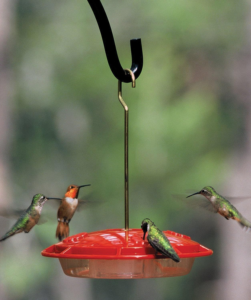 clean is the HummZinger Ultra 12‑oz Saucer Feeder. The saucer design makes it simple to see the nectar level at a glance and to reach every corner when you wash it, which is a big help during warm spells when nectar must be changed often. Its patented Nectar Guard tips are flexible membranes over each port that keep flying insects out while still allowing hummingbirds to feed freely, so you spend less time fighting bees and wasps around the feeder. A built‑in ant moat stops crawling insects before they reach the nectar, and the raised flower ports help divert rainwater so the nectar stays fresh longer.
Follow good feeder hygiene—use the 4‑to‑1 sugar‑water recipe and clean often—to keep birds healthy and complement your plantings. My step‑by‑step guide to cleaning your hummingbird feeder shows you exactly how to remove mold, how often to change nectar at different temperatures, and which brushes and ant moats make the job easier, plus tips for dealing with bees and ants so your feeders stay safe and attractive.
Provide safe perches and nesting cover
Keep some shrubs, small deciduous trees, and a few dead or thin branches where hummingbirds can rest, display, and build nests. Avoid pruning everything into neat, bare shapes; a slightly softer outline with twiggy tips gives birds more places to sit.
A hummingbird perch or swing is an easy way
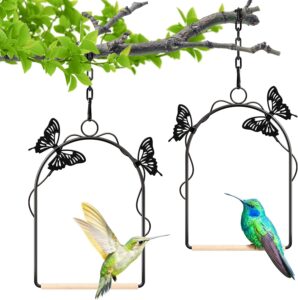
to bring hummingbirds to a particular spot near your feeder. Hummingbirds may look like they’re always in motion, but they actually spend a surprising amount of time sitting still between feeding bouts, using perches to rest, preen, digest nectar, and keep watch over their favorite food sources. A simple swing or decorative perch placed a few feet from your feeder gives them a comfortable “guard post” and brings them right into view where you can enjoy them up close. Many people find that once birds adopt a swing as their regular lookout perch, they stay in the yard longer and make more frequent, relaxed visits.
Avoid heavy pruning during nesting season and leave a few “messy” corners with twigs, lichens, and spider webs that birds use for nest building.
Offer water in a way hummingbirds like
Most people focus on feeders and flowers, but the right water feature can turn your yard into a hummingbird hangout. Hummingbirds prefer shallow, moving water—fine sprays, mists, and droplets on leaves—over deep, still birdbaths. Add a mister, dripper, or fine spray so hummingbirds can bathe in moving droplets on leaves or in a shallow basin.
Consider adding a mister to create a gentle cloud of moving water; 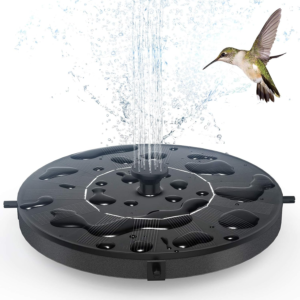 hummingbirds often fly back and forth through the mist, spreading their wings and tails to bathe without getting waterlogged. Place misters near shrubs or small trees so the droplets collect on leaves, giving birds multiple places to sip and bathe.
You can also install a shallow birdbath with gently sloping edges with gently sloping edges—no more than about an inch of water—gives hummingbirds a place to sip and splash at the edge. Position water features near, but not directly over, key flower beds so birds can move easily between bathing and feeding.
Position water features near, but not directly over, key flower beds so birds can move easily between bathing and feeding.
My detailed guide,How to Use Water Features to Attract Hummingbirds, walks you through the exact kinds of misters, drippers, and shallow baths hummingbirds prefer, how deep and how strong the water flow should be, where to place everything so birds feel safe, and how to keep it all clean without spending a lot of money.
Skip pesticides and let insects thrive
-
Avoid or greatly limit pesticides, especially systemic insecticides, because hummingbirds and their chicks rely heavily on tiny insects and spiders for protein.
- A healthy, chemical‑free yard with native plants will naturally support more insects, which means more high‑quality food for hummingbirds.
This article Natural Pest Control Methods for Your Hummingbird Garden shows readers they don’t have to choose between a healthy hummingbird garden and effective pest control. It explains exactly how to prevent and manage pests using natural methods—companion planting, encouraging “good bugs,” organic sprays like garlic, pepper, and neem, physical barriers, and smart traps—so they protect their plants without poisoning hummingbirds or the insects they eat. It also gives clear, season‑by‑season checklists and safety tips (like where not to spray, how to avoid harming pollinators, and how to keep pest control away from nests and feeders), making it easy to follow even if you’re new to organic gardening. If you want fewer pests, stronger plants, and a garden that’s truly safe for hummingbirds from spring through fall, this is the article for you!
Keep Insects Away From Your Feeder
- Bees, wasps, and ant trails can quickly take over a hummingbird feeder, but you don’t have to give up and bring the feeder in. This guide How to Keep Bees and Ants Away From Your Hummingbird Feeder walks you through the safest, most effective ways to keep pests out of your nectar—using ant moats, bee‑resistant feeders, smarter placement, and even “decoy” feeders that draw insects away—so the sugar water stays clean and available for hummingbirds only. If you’re tired of fighting swarms on your feeders and want a simple plan that actually works, This guide is your proven answer!
Common hummingbird questions in Idaho
When should I put out hummingbird feeders in Idaho?
Because hummingbirds arrive later in the Mountain West, aim to have feeders out by mid‑May, which aligns with guidance for Rocky Mountain states and the timing for Broad‑tailed and Rufous arrivals.
When do hummingbirds leave Idaho?
Most hummingbirds begin leaving by August, with migration continuing through early fall as they head toward wintering grounds in Mexico and Central America.
Which hummingbirds am I most likely to see at my Idaho feeders?
At lower elevations, Black‑chinned and Rufous are common; in higher‑elevation and mountain areas, Broad‑tailed and Calliope are frequent visitors, especially in summer.
Do feeders keep hummingbirds from migrating?
No. Idaho hummingbirds are migratory, and their movements are driven by day length and internal cues, not by feeders. Feeders simply provide extra energy during breeding and migration.
If you’re curious how your state compares to other parts of the country, you can see arrival and departure times for every state in my main guide, “When to Feed Hummingbirds: A State‑by‑State Guide.” It’s a handy overview if you travel, have relatives in other states, or just want to understand the bigger migration picture.
Expert Hummingbird Resources For Idaho
For Idaho‑specific information on hummingbird species, migration, and wintering behavior, see Idaho Fish & Game’s “Hummingbirds” wildlife education PDF at https://idfg.idaho.gov/sites/default/files/we-june-2023-final.pdf
and the Intermountain Bird Observatory article “Idaho’s Winter Warrior: The Anna’s Hummingbird” at https://www.boisestate.edu/ibo/2020/11/25/idahos-winter-warrior-the-annas-hummingbird/.
For habitat and plant ideas suited to Idaho and the northern Rockies, use Pollinator Partnership’s regional guide “Maintaining and Improving Habitat for Hummingbirds in Idaho, Montana, and North Dakota” at https://pollinator.org/PDFs/Guides/Hummingbird_Guide_ID-MT-ND.pdf
along with broader western native‑plant suggestions (penstemon, columbine, wild bergamot, hummingbird trumpet, hyssop, and western salvias) from Audubon Rockies’ article “Nine Native Plants to Attract Hummingbirds in Colorado, Utah, and Wyoming” at https://www.audubon.org/rockies/news/nine-native-plants-attract-hummingbirds-colorado-utah-and-wyoming