Key Takeaways: Witch Hazel for Hummingbird Gardens
-
Late‑season wildlife support: Witch hazel blooms from roughly October into November, offering rare late nectar and pollen for moths, gnats, and small bees when almost nothing else flowers.
-
High habitat value shrub: This native understory shrub (about 10–20 feet tall, Zones 3–8) hosts 60+ moth and butterfly species, feeds birds with its seeds, and provides year‑round cover and structure near your nectar beds.
Easy fit in Northeastern yards: Witch hazel thrives in moist, well‑drained, acidic to neutral soils in full sun to partial shade, making it perfect for woodland edges and mixed native shrub borders behind your main hummingbird flowers.
Witch Hazel: A Fall‑Blooming Native Shrub for Hummingbird Gardens
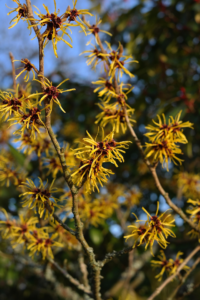
Most hummingbird plants hit their stride in spring and summer, but witch hazel is different. American witch hazel (Hamamelis virginiana) is a native understory shrub or small tree that blooms in late fall—often October into November in the Northeast—with fragrant, bright yellow, ribbon‑petaled flowers that appear after the leaves turn and fall. Those blooms provide some of the very last nectar and pollen of the year for insects, and the shrub’s dense branching, caterpillar‑hosting foliage, and seeds add to the habitat that supports hummingbirds indirectly.
In a Northeastern hummingbird garden, witch hazel won’t be a top nectar source like cardinal flower or trumpet honeysuckle. Instead, it functions as a four‑season supporting shrub in the same category as serviceberry, chokeberry, American hazelnut, ninebark, and highbush blueberry: it feeds the food web, offers cover, and extends interest well beyond the main hummingbird season.
Native Range, Size, and Year‑Round Interest
American witch hazel is native to forests and woodland edges across much of eastern North America, including the Northeastern United States. It’s commonly found in the understory of mixed hardwood forests, along stream banks, and at woodland margins, often forming loose colonies.
Typical stats:
-
Height: Usually 10–20 feet tall; can reach around 25 feet as a small tree in good conditions.

-
Spread: About 10–15 feet, with a multi‑stemmed, vase‑shaped habit.
-
Hardiness: Roughly USDA Zones 3–8, easily hardy throughout the Northeast.
Seasonal interest:
-
Spring: Fresh, sometimes slightly bluish or bronze‑tinged leaves; emerging seeds from last year’s flowers.
-
Summer: Dense green foliage, providing shade, cover, and insect habitat.
-
Fall: Bright yellow foliage followed—or overlapped—by fragrant, spidery yellow flowers on bare or nearly bare branches.
-
Winter: Persistent seed capsules that eventually snap open and eject glossy black seeds, plus zig‑zag twigs and branching that add structure.
That combination makes witch hazel one of the few shrubs that truly offers something interesting in every season, which is ideal for a garden you want to enjoy year‑round, not just during peak hummingbird bloom.
Wildlife Value That Supports Hummingbirds
Witch hazel’s wildlife value runs deeper than its modest flowers might suggest.
Late‑Season Nectar and Pollen
American witch hazel blooms surprisingly late—typically October and November in much of the Northeast. The small yellow flowers produce both nectar and pollen and have been documented as being visited primarily by:
-
Flies
-
Small bees
-
Noctuid moths and other late‑flying moths
This late bloom provides one of the last foraging opportunities before winter for insects that are still active when most other flowers are gone. While Ruby‑throated Hummingbirds generally depart the Northeast by late September, those insects become part of the food web that will support birds and other wildlife into winter and help jump‑start activity again in spring.
Insects and Caterpillars
American witch hazel is reported as a host plant for more than 60 species of moths and butterflies, including the Witch Hazel Dagger moth and other specialist species. Caterpillars feeding on its leaves provide critical protein for nesting and migratory birds. Hummingbirds don’t eat witch hazel foliage directly, but they do rely heavily on small insects and spiders to feed themselves and their young, so a shrub that produces this much “bug life” is a major asset.
Seeds, Cover, and Structure
Witch hazel’s hard seed capsules mature the year after flowering and then burst open, ejecting seeds several feet away with an audible “pop.” These seeds are eaten by birds such as wild turkeys and by small mammals. The dense, multi‑stemmed structure provides hiding spots and potential nesting cover for songbirds and small wildlife, especially when integrated into a hedgerow or woodland edge.
In a hummingbird garden context, witch hazel helps:
-
Increase overall bird activity and diversity.
-
Provide safe cover near nectar plants and feeders.
-
Bolster the insect base that hummingbirds hunt.
So, while witch hazel won’t be covered in hummingbirds like a patch of bee balm or trumpet honeysuckle, it absolutely plays a supporting role in a larger, wildlife‑rich planting.
Growing Conditions and Care in the Northeast
Witch hazel is relatively easy to grow in Northeastern conditions if you match it to an appropriate site.
Light
-
Best: Full sun to part shade.
-
In nature: Often an understory shrub at woodland edges, so it can handle light shade.
-
For bloom and fall color: More sun typically means heavier flowering and brighter foliage color, especially in cooler climates.
A good compromise in many Northeastern gardens is morning sun with afternoon shade, or high, filtered shade along a woodland edge.
Soil
-
Prefers moist, well‑drained, slightly acidic to neutral soils rich in organic matter.
-
Tolerates clay and erosion and will grow in heavier soils as long as they don’t dry out severely.
-
Does not like prolonged drought; extremely dry locations are best avoided.
Adding compost and a 2–3 inch layer of mulch helps retain soil moisture, which is particularly important because witch hazel dislikes drying out in summer.
Water and Establishment
-
Water regularly during the first couple of years to encourage deep root development.
-
-
Once established, witch hazel can handle average moisture and some short dry spells, but it will perform best with consistent moisture.
Pruning and Maintenance
Witch hazel tends to have a naturally attractive, vase‑shaped form and needs minimal pruning.
-
If pruning is needed, do it right after flowering or in very early spring, removing crossing, damaged, or inward‑growing branches.
-
Avoid heavy shearing; it ruins the natural shape and can reduce flowering.
-
If you want more of a small tree form, gradually thin lower stems and select a few main trunks.
Pest and disease issues are typically minor; witch hazel is considered low‑maintenance and resistant to most serious problems.
Designing Witch Hazel into a Hummingbird Garden
Because witch hazel blooms in fall and functions primarily as a habitat shrub, design it as backbone rather than a front‑and‑center nectar focal point.
Layered Shrub Edge
Along a property line, woodland edge, or the back of a hummingbird bed:
-
Plant witch hazel as part of a mixed native shrub row, alongside American hazelnut, serviceberry, chokeberry, ninebark, New Jersey tea, and highbush blueberry.
-
This shrub spine gives you a long season of bloom, berries, insects, and cover, with witch hazel adding the late‑season flower and fragrance that most shrubs lack.
In front of that shrub line, you can mass the classic nectar plants from your Best Hummingbird Plants for Northeastern United States guide—bee balm, wild bergamot, cardinal flower, fire pink, royal catchfly, great blue lobelia, butterfly weed, fringeleaf wild petunia, garden phlox, etc.
Woodland‑Edge Hummingbird Corner
Along a shady to part‑shade edge:
-
Use witch hazel as the understory anchor, taking advantage of its natural affinity for woodland margins.
-
Pair it with shade‑tolerant hummingbird perennials like eastern red columbine, Indian pink, and wild blue phlox.
-
Thread trumpet honeysuckle up into the sunnier, outer edge of that corner for a vine layer.
This creates a “woodland hummingbird room” with structure, spring nectar, summer cover, and fall fragrance from witch hazel.
Near a Path or Window for Fall Interest
Because witch hazel’s flowers are subtle up close but stunning when back‑lit, it’s worth placing at least one specimen where you actually see it in fall:
-
Near a path you use often in October and November.
-
Within view of a window, so you catch the yellow fall foliage and flowers against low autumn light.
Even though hummingbirds will be gone by the time it blooms, you’ll be reminded that your hummingbird garden is still doing important work—feeding late insects and supporting wildlife on the shoulder of winter.
FAQ: Witch Hazel in Northeastern Hummingbird Gardens
Is witch hazel a good plant for hummingbirds?
Not directly. Witch hazel’s late, small flowers are used mainly by flies, bees, and moths rather than hummingbirds, which have usually migrated before peak bloom in the Northeast. However, as a native shrub that hosts many moths and supports birds, it indirectly strengthens the habitat your hummingbirds depend on.
Where is American witch hazel native?
Hamamelis virginiana is native across much of eastern North America, including the Northeastern U.S., where it grows in forest understories, along streams, and at woodland edges.
How big does witch hazel get, and will it fit in a small yard?
American witch hazel usually grows 10–20 feet tall and 10–15 feet wide, forming a multi‑stemmed, vase‑shaped shrub or small tree. It can be too large for very tight foundation beds but works well along property lines, woodland edges, and in larger mixed shrub borders.
What light and soil conditions does witch hazel need?
Witch hazel performs best in full sun to part shade, in moist, well‑drained, slightly acidic to neutral soils with plenty of organic matter. It tolerates clay and erosion but dislikes prolonged drought.
Does witch hazel require a lot of maintenance?
No. Once established, it is low‑maintenance: just provide consistent moisture, a layer of mulch, and occasional light pruning to remove crossing or damaged branches or to refine shape.
Hummingbirds and Habitat Resources
-
Audubon – Hummingbird habitat guide
How to create a hummingbird‑friendly yard, with emphasis on native plants and habitat structure.
USDA Forest Service – Hummingbird habitat in the East (PDF)
“Maintaining and Improving Habitat for Hummingbirds in the Eastern United States.” Good for big‑picture habitat guidance.