Key Takeaways: Ninebark for Hummingbirds
-
Supports the whole habitat: Native ninebark adds cover, nesting sites, and insect life that help Ruby‑throated Hummingbirds and other birds thrive around your nectar plants.
-
Tough, adaptable shrub: Grows in sun to light shade and handles clay, rocky, or average soils, along with periods of drought or extra moisture, making it ideal for challenging spots and rain‑garden edges.
-
Perfect backdrop for nectar stars: Use ninebark as a structural backdrop behind high‑impact bloomers from your Best Hummingbird Plants for Northeastern United States list and in layered designs from Shrubs for Hummingbirds in the Northeast: Building a Layered Garden.
Ninebark (Physocarpus opulifolius) won’t replace your showiest red, tubular flowers, but it’s an excellent supporting shrub in a Northeastern hummingbird garden, adding structure, cover, and insect life around your true nectar magnets. Its spring flower clusters feed bees and other pollinators, its dense branches shelter birds and insects, and its peeling bark adds winter interest in the background of your hummingbird beds. Because it’s native, hardy, and adaptable, ninebark is an easy way to make your garden feel more like a layered habitat and less like a flat flower patch.
If you’re just starting to plan your planting list, it pairs perfectly with the high‑octane nectar plants in your Best Hummingbird Plants for Northeastern United States guide, especially bee balm, cardinal flower, and other red bloomers.
How Ninebark Helps Hummingbirds
Ninebark’s individual flowers are small and not as dramatically tubular as something like cardinal flower, but the shrub still supports hummingbirds in several important ways. In late spring to early summer, ninebark produces rounded clusters of white to pinkish blooms that attract native bees, butterflies, flies, and other pollinators, creating a rich hunting ground for hummingbirds that also rely on insects for protein. Hummingbirds may sip at the blossoms, especially when early nectar is limited, but they benefit even more from the insect activity the shrub draws in.
The shrub’s dense branching and arching habit give hummingbirds safe perches where they can rest and watch over your patches of bee balm, wild bergamot, Indian pink, and other nectar plants. That same thicket‑like form also provides quick, close cover when birds need to dive out of the open to avoid predators or bad weather.
Native Range, Size, and Seasonal Interest
Common or Eastern ninebark is native to a wide swath of central and eastern North America, including much of the Northeast and Mid‑Atlantic where Ruby‑throated Hummingbirds nest and migrate. In the wild, it grows along streambanks, on rocky outcrops and slopes, in moist thickets, and on river bluffs, showing just how adaptable it is. In a yard, that translates into a shrub that can thrive in many of the same tough spots where gardeners often struggle to get other plants established.
Most ninebark plants in gardens reach about 5–10 feet tall and wide, though modern cultivars range from around 3 feet to 8 feet. The seasonal show typically looks like this:
-
Spring: Fresh foliage and rounded clusters of white to pinkish flowers along the branches.
-
Summer: Dense, leafy cover and developing papery seed clusters.
-
Fall: Good yellow, orange, or reddish foliage color on many forms, plus ripening seed capsules.
-
Winter: Peeling, multi‑layered bark on older stems that adds visual texture after leaves drop.
In your broader planting plan, ninebark plays a similar structural role to shrubs like serviceberry and chokeberry: spring bloom, insect support, bird cover, and four‑season interest around your nectar perennials.
Wildlife Benefits Beyond Hummingbirds
Ninebark is a solid all‑around wildlife shrub, which matters because hummingbirds thrive in gardens that support the broader food web. Its flowers provide nectar and pollen for native bees (including mining bees), butterflies, and flies, contributing to pollinator diversity in your yard. The shrub is also a host plant for numerous moth and butterfly species, with caterpillars that become crucial food for nesting songbirds and their young.
The papery seed clusters may not rival highbush blueberry in bird appeal, but they still provide some food for small birds, while the dense branches offer nesting and winter cover. That cover complements other wildlife‑friendly shrubs in your Shrubs for Hummingbirds in the Northeast: Building a Layered Garden hub, such as buttonbush, New Jersey tea, and native azaleas.
Ninebark is generally considered deer‑resistant, which is a bonus in many Northeastern yards, though some grazing can still occur where deer pressure is heavy.
Growing Conditions and Basic Care
Ninebark is popular with native‑plant gardeners partly because it tolerates a wide range of conditions with very little fuss. It performs best in full sun to part shade, with full sun usually giving the richest foliage color and heaviest bloom, especially in purple, bronze, or orange‑leaf cultivars. In hot southern or exposed sites, a bit of afternoon shade can help keep foliage looking fresh and reduce stress.
Soil‑wise, ninebark prefers moderately moist, well‑drained soil but will tolerate clay, rocky, or even poorer soils, as well as short periods of both drought and wetness once established. That makes it a good candidate for edges of rain gardens, the back of swales where water occasionally collects, or slopes where runoff can be a problem. For truly wet spots, you might pair it with wetter‑soil stars like swamp milkweed and buttonbush nearby.
Water new plants regularly during their first season, then shift to occasional deep watering during prolonged dry spells; established ninebark is quite drought‑tolerant. A 2–3 inch layer of mulch around, but not touching, the stems helps conserve moisture and keep weeds down. Heavy fertilizing isn’t necessary; in average garden soil, a yearly top‑dressing of compost is usually sufficient.
Pruning and Long‑Term Maintenance
Ninebark looks best when allowed to keep its natural arching form with only light pruning. Since it blooms on old wood, do any shaping just after flowering rather than in fall or early spring, or you’ll remove the coming season’s blooms. A good long‑term strategy is renewal pruning: every year or two, remove up to a third of the oldest stems at ground level in early spring or right after bloom to encourage vigorous new growth and better air circulation.
In gardens where the shrub has become overgrown or leggy, you can cut it back more severely during dormancy to rejuvenate it, but you’ll sacrifice flowering for a season and temporarily lose some winter bark display. Proper spacing (usually 5–10 feet between full‑size plants) and periodic thinning help reduce issues like powdery mildew by improving airflow through the canopy.
Choosing Cultivars for Your Yard
For maximum ecological value, many wildlife gardeners prefer the straight species of Eastern ninebark, but there are also many cultivars that blend habitat function with ornamental foliage. Popular named forms include deep purple, bronze, or orange‑leaf types, and dwarf selections that fit more comfortably into smaller beds. Typical height and spread ranges from about 3–4 feet for compact types to 8–10 feet for larger shrubs.
When choosing, match mature size to your space so you’re not forced into hard pruning every year. If your main goal is to support hummingbirds and other wildlife, use at least one straight‑species or larger, full‑size cultivar in the mix to provide the most cover, flowering, and insect habitat, then tuck smaller or colored‑leaf forms around it for contrast.
Design Ideas with Your Existing Hummingbird Plants
Ninebark works best as the backbone shrub behind the high‑impact nectar plants featured in your Best Hummingbird Plants for Northeastern United States article. One classic layout is:
-
Back row: Ninebark and other structural shrubs from your Shrubs for Hummingbirds in the Northeast: Building a Layered Garden hub, such as serviceberry, chokeberry, buttonbush, and New Jersey tea.
-
Middle: Bold nectar perennials like bee balm, wild bergamot, fire pink, royal catchfly, jewelweed, and great blue lobelia.
-
Front: Lower, edging‑type hummingbird plants like fringeleaf wild petunia, butterfly weed, sweet William, wild blue phlox, and garden phlox.
Near arbors or fences with trumpet honeysuckle / coral honeysuckle or trumpet vine, ninebark can sit at the base or to the side, filling in the lower tier so the whole vertical space—from groundcover to vine—is useful hummingbird and bird habitat. In partial shade or woodland‑edge settings, you can pair ninebark with shade‑tolerant hummingbird favorites like eastern red columbine, Indian pink, and wild blue phlox to extend nectar options into less sunny corners.
If you have room, repeating ninebark and a few of your other shrubs (like highbush blueberry and native azaleas) along a property line can create a living hedge that blocks wind, screens views, and turns the entire edge of your yard into a hummingbird corridor.
Quick FAQ: Ninebark in Your Hummingbird Garden
Is ninebark a top hummingbird nectar plant?
No. It’s not in the same league as cardinal flower, bee balm, or trumpet honeysuckle for nectar, but it still supports hummingbirds with some nectar, lots of insects, and excellent cover.
Where should I place ninebark in my hummingbird planting?
Use ninebark in the back or middle layer, behind the herbaceous nectar superstars featured in your Best Hummingbird Plants for Northeastern United States article, and alongside the structural shrubs in Shrubs for Hummingbirds in the Northeast: Building a Layered Garden.
How many ninebark shrubs do I need?
In a small yard, one well‑placed shrub can anchor a corner or bed; in larger spaces, groups of three or more, spaced 5–10 feet apart depending on the cultivar, create a more natural, thicket‑like feel that birds and hummingbirds love.
Does ninebark work with wet‑soil hummingbird plants?
Yes. It’s a good companion near rain gardens, swales, or lower spots where you might already be growing swamp milkweed, buttonbush, or jewelweed, because it tolerates periods of extra moisture once established.
A few additions that will make any garden more hummingbird friendly
Provide nesting materials like cotton or plant fibers. You can place these materials in suet cages or spread them around your garden.
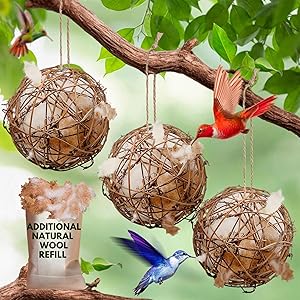
A major component of any successful hummingbird garden is a dependable hummingbird feeder that is easy to take apart and clean and doesn’t leak.
One of the best Hummingbird feeders that’s easy to take apart and clean is the HummZinger Ultra.
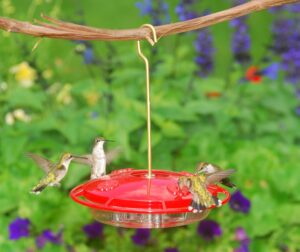
Aspects 12oz HummZinger Ultra With Nectar Guard.
The HummZinger Ultra 12oz Saucer Feeder is one of the best options for a hummingbird feeder that’s both easy to clean and maintain. This top-tier feeder features patented Nectar Guard tips—flexible membranes on the feeding ports that keep flying insects out while still allowing hummingbirds to feed freely. Plus, it comes with an integrated ant moat to prevent crawling insects from reaching the nectar, and the raised flower ports help divert rain, keeping the nectar fresh.
With a 12 oz capacity, this mid-size feeder offers plenty of space and can be hung or mounted on a post using the included hardware. It has four feeding ports and is made from durable, unbreakable polycarbonate. Whether you’re concerned about bees, wasps, or ants, this feeder is built for easy cleaning and insect protection.
If you already have a hummingbird feeder, and you want to protect it from ants and other crawling insects, the ant moat below will do the job.
Trap-It Ant Moat for Hummingbird Feeders
Using an ant moat for your hummingbird feeder is an effective way to keep ants away from the sweet nectar. These tiny creatures are drawn to
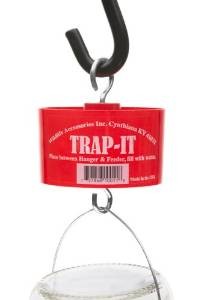
the sugar water, and without a barrier, they will quickly infest your feeder, preventing the birds from enjoying the nectar. An ant moat works by creating a barrier of water that ants can’t cross. Positioned above the feeder, it effectively blocks the ants’ path, keeping them from reaching the nectar.
This simple solution also ensures that your hummingbird feeder remains clean and accessible for the birds, rather than becoming a breeding ground for ants or other pests. It’s a small addition that can make a big difference in maintaining a healthy, inviting space for hummingbirds, while also reducing the need for chemical ant deterrents.
The first and still the best to protect your Hummingbird and Oriole feeder from ants and other crawling insects. Insert between hanger and feeder and fill with water, providing a barrier to crawling pests. Red color to attract hummingbirds.
In addition to nectar, hummingbirds need water and safe spaces to rest. By providing a birdbath or misting system, you can ensure they have everything they need.
Water Sources
Hummingbirds enjoy fresh water to drink and bathe. A shallow birdbath with a fine spray from a mister is ideal. Just make sure the water is changed regularly to keep it clean.
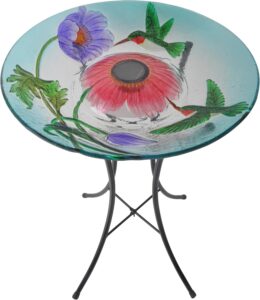
Here’s a solar powered bird bath.
Hummingbird misters at Amazon.com
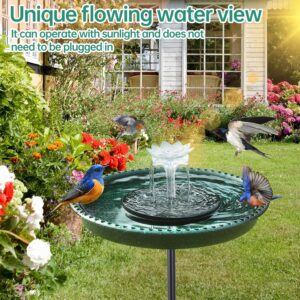
Install shallow bird baths with gently sloping edges. Hummingbirds prefer water sources that are no more than 1-1.5 inches deep.
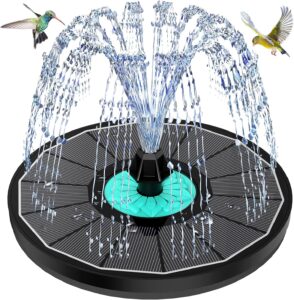
Consider adding a mister or dripper to create moving water, which attracts hummingbirds. They often enjoy flying through fine sprays of water.
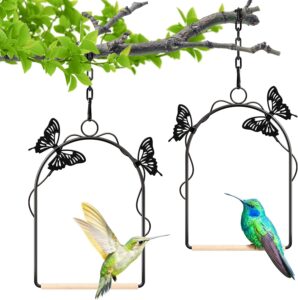
A hummingbird perch is a good way to attract hummingbirds to a particular spot near your feeder
Use Songbird Essentials Nectar Aid Self Measuring Pitcher and never measure ingredients again. Make any amount and the ingredients are measured for you.
 |
Column 2 |
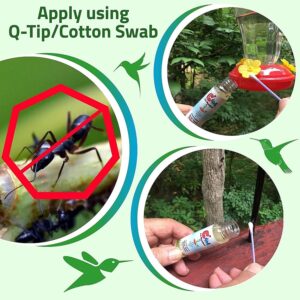
Nectar Fortress™ Natural Ant Repellent
CREATED FOR HUMMINGBIRD FEEDERS: Stop ants fast and keep them away from the bird feeder altogether. Use it on poles or hooks and create a barrier with a scent ants hate. Useful with ant moats or eliminate the moat entirely.
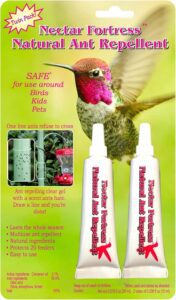
C’ANT, Ant and Bee Repellent for Hummingbird Nectar Feeders and Outdoor Bird Seed Feeders – Works with Shepherds Hook and Ant Moat – 1 oz.
Hummingbird resources to help make your garden a success
Here’s a complete guide to attracting hummingbirds to your yard. It lists plants, vines and shrubs that are in bloom for spring, summer and fall. Your hummingbirds will always have flowers to feed on.
Here’s a great article that tells everything you need to know about how to choose the best place to hang your hummingbird feeder.
Here’s the best designed hummingbird feeder to use. It’s leak proof, so it won’t attract insects and it’s easy to take apart and clean.
Here’s a comprehensive guide to help you clean your hummingbird feeder for those times when the nectar is not changed soon enough and mold starts to grow.
More Hummingbird Resources
U.S. Fish and Wildlife Service – Hummingbird Conservation
This site offers detailed information about various hummingbird species, their habitats, and conservation efforts. It also provides resources on how to protect these fascinating birds.
National Park Service – Hummingbird Resources
The National Park Service offers insights into hummingbird species found in national parks, their behaviors, and their role in ecosystems, along with tips for observing them.
Smithsonian National Museum of Natural History – Birds: Hummingbirds
This resource provides educational materials on the role of hummingbirds in pollination and biodiversity, backed by scientific research and exhibits from the Smithsonian.