The Northeastern United States is rich in native plants that provide nectar and habitat for hummingbirds, particularly the Ruby-throated Hummingbird. These plants thrive in the region’s temperate climate and are perfect for creating hummingbird-friendly gardens.
Here’s why native plants are so important.
A whole ecosystem is dependent on the native plants growing in that region. This video shows you how to fill your landscape with native flowers, bushes and trees that you don’t have to water or fertilize, and which support the wildlife and biodiversity of your area — from pollinators to birds and beyond. Featuring: serviceberry tree, joe pye, azalea, golden ragwort, rhododendron, oakleaf hydrangea, yellow and coral trumpet honeysuckle, obedient plant, hoary skullcap, American wisteria and more (zone 7).
Native Flowers
Here are 20 good native (or regionally native) hummingbird‑attracting plants suitable for the northeastern U.S.
Spring into early summer
Eastern red columbine (Aquilegia canadensis) – classic early‑spring nectar plant timed with ruby‑throat arrival.
Bleeding heart (Dicentra eximia) – native Eastern dicentra with arching stems and nectar‑bearing, pendant hearts.
Sweet William (Dianthus barbatus) is a classic cottage garden plant known for its dense clusters of richly colored flowers and spicy, clove-like fragrance. The flowers of Sweet William are nectar rich and favored by hummingbirds.
Wild blue phlox (Phlox divaricata) is a graceful woodland perennial treasured for its soft, fragrant flowers that blanket shady spaces in spring.
Foxglove beardtongue (Penstemon digitalis) – white tubular spikes in late spring; widely noted as a hummingbird plant.
Summer standouts
Bee balm / Oswego tea (Monarda didyma) – is a standout native plant for attracting hummingbirds, thanks to its vibrant blooms and specialized floral features. This perennial wildflower offers a combination of traits that make it irresistible to these energetic pollinators.
Wild bergamot (Monarda fistulosa) – also known as Bee Balm, is a native perennial with several unique traits that make it highly appealing to hummingbirds. Its tubular flowers, abundant nectar, and adaptability contribute to its success as a hummingbird magnet.
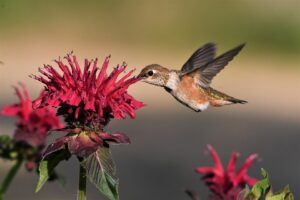
Cardinal Flower (Lobelia cardinalis) – frequently ranked among the very best hummingbird plants. It’s a standout native plant for attracting hummingbirds, thanks to its vibrant red blooms and specialized floral structure. This perennial wildflower has evolved unique traits that make it particularly appealing to these energetic pollinators.
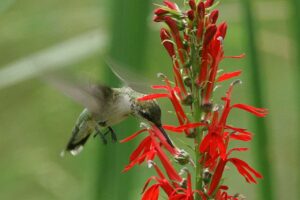
Fire pink (Silene virginica) – bright red, narrow‑tubed blooms specialized for hummingbirds.
Butterfly weed (Asclepias tuberosa) – orange milkweed with nectar that hummers will use in sunny, drier areas.
Late‑season fuel for hummingbirds and moist‑area plants
Great blue lobelia (Lobelia siphilitica) – late‑season blue spikes; valuable for migrating ruby‑throats.
Swamp milkweed (Asclepias incarnata) – moist‑soil milkweed with clusters of nectar‑rich pink flowers.
Jewelweed / spotted touch‑me‑not (Impatiens capensis) – key late‑summer native, heavily used by hummingbirds.
Obedient plant (Physostegia virginiana) – late‑blooming pink/purple tubes; a good fall nectar source.
Rough blazing star (Liatris aspera) is a striking native perennial known for its bold spikes of fluffy purple flowers that light up sunny gardens from late summer into fall.
Additional native or regionally native perennials
Purple coneflower (Echinacea purpurea) is a classic North American wildflower beloved for its daisy-like purple petals and bold, spiky central cones
Garden phlox (Phlox paniculata), also called summer phlox, is a classic perennial known for its tall stems topped with large, fragrant flower clusters in mid to late summer.
Royal catchfly (Silene regia) is a stunning native wildflower famous for its brilliant, scarlet-red blooms that look like tiny stars held high on slender stems. In full flower, it’s one of the most dramatic plants in a summer garden, standing 3–4 feet tall and drawing the eye from across a yard or prairie planting.
Indian pink (Spigelia marilandica) – Indian pink is consistently ranked as one of the top hummingbird plants for shade and woodland gardens. Its flowers combine all the classic features of a hummingbird-adapted bloom:
Fringeleaf wild petunia (Ruellia humilis) – The tubular, flared flowers of fringeleaf wild petunia are well-suited to small pollinators and, in some gardens, hummingbirds. The blossoms are nectar-producing, and their open-throated form allows access to small bees, butterflies, and skippers.
Native Shrubs
Here’s a general list of native hummingbird‑attracting shrubs suitable for most of the northeastern United States (roughly USDA Zones 4–6).
Buttonbush (Cephalanthus occidentalis) – Moist‑soil shrub with round white “powder‑puff” flower balls in summer that draw many pollinators, including hummingbirds.
New Jersey tea (Ceanothus americanus)-Hummingbirds are drawn to New Jersey tea indirectly. The shrub itself produces small, white, non-tubular flowers—not classic hummingbird blooms—but the dense insect activity around the flowers provides a reliable hunting ground. Hummingbirds will work the shrub both for its small nectar resources and, more importantly, for the tiny insects gathered among the blossoms.
American elderberry (Sambucus canadensis) -Elderberry’s flowers are not tubular, so they’re not classic hummingbird blooms, but the shrub still plays a useful role in a hummingbird-friendly landscape. The large flower clusters are loaded with nectar and pollen and are highly attractive to bees, flies, beetles, butterflies, and other insects. Hummingbirds will visit the shrub both to sip small amounts of nectar and, importantly, to hunt insects among the blossoms.
Witch hazel (Hamamelis virginiana) – Fall‑blooming shrub/small tree with spidery yellow flowers that extend nectar availability late in the year.
Ninebark (Physocarpus opulifolius) – Tough shrub with clusters of small white or pinkish flowers that support insects and provide good cover and perches.
Native azaleas / deciduous rhododendrons (such as Rhododendron viscosum, R. periclymenoides, R. canadense) – Tubular, often fragrant blooms in spring–early summer that hummingbirds readily use.
Serviceberry / shadbush (Amelanchier species) – Early white blossoms that support insects and provide structure, perches, and fruit in late spring.
Chokeberry (Aronia melanocarpa, A. arbutifolia) – White spring flowers and abundant fruit; good insect support and dense cover in a hummingbird garden.
Why American Hazelnut Belongs in a Hummingbird Garden – American hazelnut (Corylus americana) doesn’t feed hummingbirds with nectar, but it’s a powerhouse “habitat shrub” that supports the insects, cover, and overall structure your hummingbird garden needs.
Weigela: A Showy Shrub for Hummingbird Fans in the Northeast– Weigela (most commonly Weigela florida and its hybrids) is a deciduous shrub originally from East Asia. In spring, it produces clusters of funnel‑shaped flowers along the previous year’s stems. Those flowers are the main reason hummingbird gardeners plant it.
Suggestion: gardeners can pair several of these shrubs with native flowering perennials (like bee balm, cardinal flower, and columbine) to create layered, season‑long hummingbird habitat across the Northeast.
Native Vines
Here’s a concise, Northeast‑friendly list of native (or regionally native) hummingbird‑attracting vines.
Trumpet honeysuckle / coral honeysuckle (Lonicera sempervirens) – Native to the eastern U.S.; produces long, coral‑red tubular flowers from late spring through summer that are classic hummingbird magnets.
Trumpet vine / trumpet creeper (Campsis radicans) – Vigorous woody vine with large orange‑red trumpet‑shaped flowers in summer that hummingbirds flock to. (Best for bigger spaces or wild edges because it spreads strongly.)
Crossvine: A Native Powerhouse Vine for Hummingbirds – Wildlife and horticulture sources repeatedly call crossvine one of the best native vines for hummingbirds, and observers note Ruby‑throated Hummingbirds working the blooms intensively when the vine is in flower.
Virginia Creeper’s Importance in Hummingbird Gardens (Parthenocissus quinquefolia) – When gardeners think about vines for hummingbirds in the Northeastern United States, they usually picture bold, tubular blooms like trumpet honeysuckle / coral honeysuckle or trumpet creeper. Virginia creeper looks different—five‑leaf clusters, small greenish flowers, and blue berries—but it quietly supports an enormous amount of wildlife.
Note: trumpet honeysuckle is the safest, most “backyard‑friendly” hummingbird vine, and trumpet vine and crossvine need sturdy supports and room to roam.
For hummingbird vines like trumpet honeysuckle, trumpet vine, and crossvine, the key is strong, vertical supports with something thin for the stems to grab.
Best types of supports
Heavy trellis or panel on a wall or fence
Use a sturdy wood or metal trellis, lattice, or welded‑wire panel securely fastened to posts, a fence, or a wall.
This works well for trumpet honeysuckle and crossvine; they weave through the slats or wire and can be lightly tied at first.
Pergola, arbor, or arch
Ideal for large, vigorous vines like trumpet vine or crossvine that can reach 20–30 feet and get heavy with age.
Use 4×4 or larger posts and strong crossbeams so the structure can handle weight and wind over many years.
Free‑standing post with crossbar (“T‑post trellis”)
A single 4×4 post with a short crossbar at the top, plus eye‑screws and wire, makes a compact support that shows off a coral honeysuckle vine without taking much space.
Good for smaller yards or to place near hummingbird feeders.
What vines need from the support
Strength and depth: posts should be set at least 2 feet into the ground in concrete or tamped gravel so they do not lean as the woody vine thickens.
Climbing “rungs”: add horizontal wires, garden netting, or thin battens every 8–12 inches so young stems have something to twine around; many honeysuckles prefer thin supports like wire or string over big, flat boards.
Access and containment: avoid letting trumpet vine climb trees, siding, or gutters, since its aerial roots and suckers can damage structures and spread aggressively; give it its own strong frame instead.
Simple setup example
Drive two 4×4 posts about 6–8 feet apart, 2+ feet deep, and connect them at the top with a 2×4 crosspiece.
Stretch galvanized wire or cattle‑panel between the posts to form a grid, then plant coral honeysuckle or crossvine at the base and loosely tie new shoots to the lower wires until they climb on their own.
This kind of structure is strong enough for vigorous native vines, lets flowers hang where hummingbirds can easily reach them, and keeps the vine from taking over nearby trees or buildings.
Plant them in sunny, weed‑free beds, match each species to its preferred soil and moisture, and group plants in patches so hummingbirds can feed efficiently.
When to plant in the Northeast
For potted perennials like bee balm, wild bergamot, great blue lobelia, butterfly weed, obedient plant, fire pink, foxglove beardtongue, cardinal flower, and eastern red columbine, the best times are spring (after the soil is workable) or late summer–early fall, about 6 weeks before your first frost. In the Northeast, fall planting usually runs from late August to mid‑October; spring planting can begin once the ground has thawed and is not waterlogged. Annual jewelweed is usually easiest from seed scattered on bare soil in fall or very early spring so it can naturally stratify.
Site prep and spacing
Choose mostly full‑sun spots for bee balm, wild bergamot, butterfly weed, obedient plant, foxglove beardtongue, and fire pink; use part‑shade to moist areas for cardinal flower, great blue lobelia, jewelweed, and columbine. Remove grass and weeds thoroughly, then lightly loosen the top few inches of soil; for natives, you usually do not need to add lots of compost or fertilizer. For a hummingbird bed, space most perennials about 12–24 inches apart and plant at least 5–8 of each species together so they form visible, nectar‑rich clumps.
How to set each plant
Dig a hole just wide enough for the root ball and plant so the crown (where stems meet roots) is at or slightly above soil level, then firm soil and water deeply. Keep new plants consistently moist for the first season, especially moisture‑lovers like cardinal flower, great blue lobelia, jewelweed, and obedient plant; butterfly weed and wild bergamot should not sit in soggy soil once established. Mulch lightly (1–2 inches) with shredded leaves or bark to hold moisture and suppress weeds, but keep mulch away from the plant crowns.
Making it hummingbird‑friendly
Aim for continuous bloom: columbine and foxglove beardtongue in spring; bee balm, wild bergamot, butterfly weed, fire pink, and jewelweed in summer; great blue lobelia and obedient plant into late summer and early fall. Avoid pesticides, since hummingbirds also eat small insects from these plants, and add a small water source plus a few perches (small trees, brushy edges) near your flower patches.
Creating a Shade Garden for Hummingbirds: A Complete Guide
If you are interested in a hummingbird shade garden, click on the link above.
Natural Pest Control Methods for Your Hummingbird Garden
Creating a thriving hummingbird garden is a rewarding experience. However, maintaining it while keeping pests at bay can be challenging. Fortunately, there are numerous natural pest control methods that can protect your garden’s delicate ecosystem. Click the link above to find out how to naturally control pests in your hummingbird garden.