Serviceberry / Shadbush (Amelanchier Species): Four-Season Native Shrubs for Birds, Pollinators, and Hummingbird Gardens
Key Takeaways: Serviceberry in Hummingbird Gardens
-
Supports the whole food web: Serviceberry’s early blooms, caterpillar‑hosting foliage, and summer fruit feed pollinators, birds, and small mammals, strengthening the habitat your hummingbirds depend on.
-
Perfect small tree for layers: This native shrub‑tree (about 10–25 feet tall) anchors a layered hummingbird planting without overwhelming a typical Northeastern yard.
-
Pairs with top nectar plants: Serviceberry works best behind nectar powerhouses like cardinal flower, bee balm, eastern red columbine, and trumpet honeysuckle, creating a continuous nectar and shelter corridor.
Serviceberries (Amelanchier species) are native multi-stemmed shrubs or small trees that light up the landscape with white spring blossom, wildlife-loved berries, brilliant fall color, and graceful winter structure. They’re sometimes called shadbush or shadblow because their bloom often coincides with shad runs in spring. In a hummingbird-focused habitat, serviceberries shine as structural and food-producing shrubs that support birds, butterflies, bees, and even some hummingbird nectar visits, all around your core nectar plants.
If you’re building a layered habitat in the Northeast, serviceberries fit perfectly into the framework I describe in Shrubs for Hummingbirds in the Northeast: Building a Layered Nectar and Shelter Garden, adding early flowers, fruit, and cover behind or beside your hummingbird vines and perennials.
What Is Serviceberry / Shadbush?
“Serviceberry” (or shadbush, shadblow, Juneberry) refers to a group of closely related Amelanchier species native across much of North America. In the Northeast, commonly used species include:
-
Downy or common serviceberry (Amelanchier arborea): Small tree to about 15–25 feet; often called shadbush.
-
Eastern or Canadian serviceberry (Amelanchier canadensis): Upright, suckering shrub or small tree to around 20 feet, native to eastern North America, often in moist sites.
-
Smooth or Allegheny serviceberry (Amelanchier laevis): Narrow, multi-stemmed shrub or small tree, about 25 feet tall and 5–10 feet wide.
All share some key features:
-
Deciduous, with attractive branching and smooth gray bark.
-
Showy clusters of white star-like flowers in early spring, often before or with the leaves.
-
Small, sweet, edible berries that ripen from green to red to blue-purple in early summer (“Juneberries”).
-
Excellent fall color in shades of yellow, orange, and red, depending on species and site.
-
Serviceberry in a Hummingbird Garden
Serviceberry (Amelanchier spp.) is a native small tree or large shrub that adds structure, early flowers, fruit, and wildlife value to hummingbird gardens. In Northeastern yards, it pairs perfectly with tube‑flowered perennials like cardinal flower, bee balm, and eastern red columbine for a season‑long buffet.
For more plant ideas by bloom time and site conditions, see Best Hummingbird Plants for Northeastern United States.
Do Hummingbirds Use Serviceberry?
Serviceberry’s clusters of white spring blossoms offer nectar and pollen to bees, butterflies, and visiting hummingbirds early in the season. Ruby‑throated hummingbirds will sample these blooms, especially when serviceberry grows near more nectar‑rich flowers and feeders.
Compared to heavy‑hitters like cardinal flower, jewelweed, bee balm, and trumpet honeysuckle, serviceberry is a supporting nectar plant rather than a primary magnet. Its biggest contribution in a hummingbird garden is how it feeds the broader food web that hummingbirds depend on.
Why Serviceberry Still Belongs in Your Hummingbird Yard
Early-season food: Serviceberry is one of the earlier flowering shrubs, providing nectar and pollen for pollinators when few other plants are blooming. That early flush of life in the garden helps hummingbirds and other wildlife settle in after migration.
Caterpillars for baby birds: The foliage hosts caterpillars of many moths and butterflies, which become essential baby bird food for nesting songbirds. More insects means more activity, more birds, and a healthier hummingbird habitat overall.
Fruit for birds and mammals: By early summer, blue‑purple fruits feed robins, catbirds, cedar waxwings, orioles, and small mammals. Watching birds gorge on serviceberries near your hummingbird beds keeps the show going even when nectar plants take a breather.
Shelter and perches: Multi‑stemmed serviceberries offer perches, cover, and occasional nesting sites in a size that fits most home gardens. Hummingbirds often pause in shrubs and small trees between feeding bouts, especially when feeders and flowers are within a short, direct flight.
For more shrubs that provide nectar, insects, and cover, see Shrubs for Hummingbirds in the Northeast: Building a Layered Garden.
How to Use Serviceberry in a Layered Hummingbird Planting
Serviceberry works best as a small “anchor tree” or large shrub at the back or side of your hummingbird bed. It typically grows 10–25 feet tall in gardens and tolerates full sun to light shade, with the best flowering and fruiting in sunnier spots.
Good placements include:
-
Near a viewing area so you can watch birds using it for perching and feeding.
-
At the back of a mixed border, layered with shrubs and perennials in front.
-
Along a woodland edge where it can get some sun but still feel natural.
-
Wildlife and Hummingbird Benefits
Serviceberries are wildlife powerhouses, especially for birds and early-season pollinators.
For Birds and Other Wildlife
-
Early summer berries are relished by American robins, catbirds, cedar waxwings, mockingbirds, cardinals, and many other birds; fruits often disappear quickly, sometimes before they’re fully ripe.
-
Mammals such as squirrels, foxes, raccoons, and other small animals also feed on the fruit.
-
Serviceberries are documented host plants for well over 100 species of Lepidoptera caterpillars (butterflies and moths), providing critical food for nesting birds.
-
Dense multi-stemmed forms offer cover and perching sites in small yards, helping birds feel safe as they forage.
For Pollinators and Hummingbirds
-
Early spring blossoms provide nectar and pollen for bees, butterflies, and other emerging pollinators, often in April when few other shrubs are in bloom.
-
Sources note that nectar-rich flowers attract adult butterflies, bees, and sometimes hummingbirds and other pollinators.
For Ruby-throated Hummingbirds, serviceberries are best seen as supporting plants: they’re not in the same nectar league as your tubular red flowers, but they:
-
Offer occasional nectar sips during early spring bloom.
-
Support insect populations that hummingbirds prey on for protein.
-
Provide perches and cover near feeders and high-nectar flowers.
That’s exactly how they fit into the broader design in Shrubs for Hummingbirds in the Northeast, where they sit behind or beside vines like trumpet honeysuckle and trumpet vine and in front of taller canopy trees.
Key Characteristics
Although each species varies, most serviceberries share these traits:
-
Size: 10–25 feet tall and often similar in spread; some cultivars smaller (e.g., 3–6 feet) for limited spaces.
-
Form: Multi-stemmed large shrub or small tree with an upright to spreading habit and rounded crown.
-
Flowers: White 5-petaled flowers in showy clusters (racemes), blooming early in spring.
-
Fruit: ¼–½ inch berries that ripen to dark reddish-purple or blue-black, sweet and edible for both people and wildlife.
-
Leaves: Oval leaves with bronzy purple or reddish new growth, maturing to green, then turning yellow-orange to red in fall.
They’re ideal “four-season interest” plants for wildlife gardens because they rarely have a boring time of year.
Growing Conditions and Site Selection
Serviceberries are generally easy to grow when their basic preferences are met.
Light
-
Prefer full sun to part shade.
-
Flower and fruit best in full sun, but will tolerate some shade, especially as understory trees or shrubs.
Soil
-
Naturally woodland plants; they like moist, well-drained, slightly acidic soils rich in organic matter.
-
Will tolerate a variety of conditions if not extremely dry or compacted, but consistent moisture improves flowering and fruiting.
Moisture
-
Do best with medium, even moisture; they don’t like to sit in waterlogged soil but also dislike prolonged drought.
-
Some species (like Amelanchier canadensis) occur naturally in moist sites, bogs, and swamps.
Hardiness and Climate
-
Many serviceberries are hardy through a wide range (often zones 3–9, species-dependent), making them suitable across much of the Northeast and beyond.
Planting and Basic Care
Planting
-
Plant in autumn if possible to give roots time to establish; spring planting is also fine but may require more watering.
-
Dig a wide planting hole as deep as the root ball and loosen surrounding soil.
-
Set the plant at or slightly above the surrounding soil level.
-
Backfill with native soil (you can work in some compost if your soil is very poor).
-
Water deeply to settle the soil and mulch the root zone.
Watering and Mulching
-
Keep newly planted serviceberries consistently moist for the first 1–2 years.
-
Once established, water during extended dry spells, especially in full sun.
-
Apply 2–3 inches of mulch around the root zone to conserve moisture, moderate soil temperature, and improve soil structure.
Fertilizing
-
Generally not heavy feeders; if soil is reasonably fertile and mulched, additional fertilizer may not be necessary.
-
If needed, apply a light, balanced, slow-release fertilizer in early spring.
Pruning
-
Prune in late winter or early spring while plants are dormant.
-
Remove dead, damaged, or crossing branches.
-
For multi-stemmed shrubs, thin older stems periodically to maintain good air flow and a graceful shape.
-
Many species can be kept as shrubs or pruned up into small trees, depending on your needs.
Design Ideas for Hummingbird and Wildlife Gardens
Serviceberries are extremely versatile and fit beautifully into a Northeast hummingbird and wildlife garden.
Where to Use Serviceberry
-
As a small native “ornamental” tree near patios, paths, or windows where you can enjoy flowers, birds, and fall color.
-
In mixed native shrub borders along property edges, with viburnums, dogwoods, elderberries, witch hazel, and native azaleas.
-
As a transition plant between taller canopy trees and lower perennials, helping create the layered structure hummingbirds and other birds prefer.
Companion Plants
Companion plants around serviceberry
Surround serviceberry with strong nectar producers to create a hummingbird corridor from ground to canopy.
-
Spring: Eastern red columbine, wild blue phlox, woodland phlox.
-
Summer: Bee balm, wild bergamot, cardinal flower, foxglove beardtongue, garden phlox, fire pink, Indian pink, and trumpet honeysuckle.
-
Late season: Rough blazing star, great blue lobelia, butterfly weed, swamp milkweed, purple coneflower, and obedient plant.
In the structural layout described in Shrubs for Hummingbirds in the Northeast: Building a Layered Nectar and Shelter Garden, serviceberries are excellent mid-sized “anchor shrubs” or small trees that give birds and hummingbirds somewhere safe to perch while they travel between feeders and nectar flowers.
How Serviceberry Compares to Your Hummingbird Vines
Here’s how serviceberries relate to your key hummingbird vines in a habitat design:
| Feature | Serviceberry (Amelanchier spp.) | Trumpet Honeysuckle (L. sempervirens) | Trumpet Vine (Campsis radicans) |
|---|---|---|---|
| Plant type | Shrub/small tree, deciduous | Twining woody vine | Woody vine with clinging rootlets |
| Primary value | Early nectar, berries, caterpillars, cover | Major nectar vine, long bloom for hummingbirds | Intense mid–late summer nectar, very vigorous |
| Bloom timing | Early spring | Late spring–summer with repeats | Mid–late summer–early fall |
| Space needs | Small tree/shrub, good for modest yards | Good for trellises, fences, smaller supports | Needs large space and strong structures |
Together, they create a year-round support system: serviceberries help kick off spring and feed nesting birds, while trumpet honeysuckle and trumpet vine carry the nectar show through summer for hummingbirds.
For placement ideas that combine all of these in one coherent design, see Shrubs for Hummingbirds in the Northeast: Building a Layered Nectar and Shelter Garden, and then dive into your detailed vine guides Trumpet Honeysuckle: A Classic Great Native Hummingbird Vine and Trumpet Vine / Trumpet Creeper: A Hummingbird Magnet That Needs Space for plant-specific care.
Serviceberry in Hummingbird Gardens: Quick FAQ
Is serviceberry a good plant for hummingbirds?
Serviceberry isn’t a top nectar plant like cardinal flower or bee balm, but hummingbirds will visit its early spring blooms and use the shrub for perching and hunting insects.
Why should I include serviceberry in a hummingbird garden?
Serviceberry supports the whole food web by feeding pollinators, hosting caterpillars, producing fruit for birds, and providing shelter—all of which make your garden richer habitat for hummingbirds.
Where should I plant serviceberry in my yard?
Plant serviceberry in full sun to light shade at the back or side of a hummingbird bed, near windows or seating areas where you can watch birds use it.
What plants pair well with serviceberry for hummingbirds?
Great companions include eastern red columbine, wild blue phlox, bee balm, wild bergamot, cardinal flower, fire pink, and trumpet honeysuckle.
Can I eat the berries from my serviceberry?
Yes. The blue‑purple fruits are edible and can be eaten fresh or used in pies, jams, and syrups, though birds often get to them quickly.
A few additions that will make any garden more hummingbird friendly
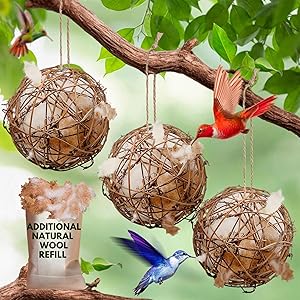
Provide nesting materials like cotton or plant fibers. You can place these materials in suet cages or spread them around your garden.
A major component of any successful hummingbird garden is a dependable hummingbird feeder that is easy to take apart and clean and doesn’t leak.
One of the best Hummingbird feeders that’s easy to take apart and clean is the HummZinger Ultra.
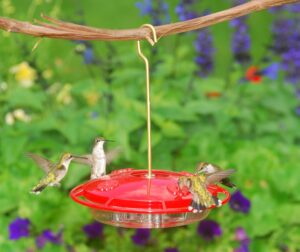
Aspects 12oz HummZinger Ultra With Nectar Guard.
The HummZinger Ultra 12oz Saucer Feeder is one of the best options for a hummingbird feeder that’s both easy to clean and maintain. This top-tier feeder features patented Nectar Guard tips—flexible membranes on the feeding ports that keep flying insects out while still allowing hummingbirds to feed freely. Plus, it comes with an integrated ant moat to prevent crawling insects from reaching the nectar, and the raised flower ports help divert rain, keeping the nectar fresh.
With a 12 oz capacity, this mid-size feeder offers plenty of space and can be hung or mounted on a post using the included hardware. It has four feeding ports and is made from durable, unbreakable polycarbonate. Whether you’re concerned about bees, wasps, or ants, this feeder is built for easy cleaning and insect protection.
If you already have a hummingbird feeder, and you want to protect it from ants and other crawling insects, the ant moat below will do the job.
Trap-It Ant Moat for Hummingbird Feeders
Using an ant moat for your hummingbird feeder is an effective way to keep ants away from the sweet nectar. These tiny creatures are drawn to
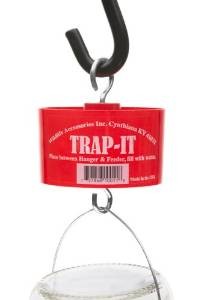
the sugar water, and without a barrier, they will quickly infest your feeder, preventing the birds from enjoying the nectar. An ant moat works by creating a barrier of water that ants can’t cross. Positioned above the feeder, it effectively blocks the ants’ path, keeping them from reaching the nectar.
This simple solution also ensures that your hummingbird feeder remains clean and accessible for the birds, rather than becoming a breeding ground for ants or other pests. It’s a small addition that can make a big difference in maintaining a healthy, inviting space for hummingbirds, while also reducing the need for chemical ant deterrents.
The first and still the best to protect your Hummingbird and Oriole feeder from ants and other crawling insects. Insert between hanger and feeder and fill with water, providing a barrier to crawling pests. Red color to attract hummingbirds.
In addition to nectar, hummingbirds need water and safe spaces to rest. By providing a birdbath or misting system, you can ensure they have everything they need.
Water Sources
Hummingbirds enjoy fresh water to drink and bathe. A shallow birdbath with a fine spray from a mister is ideal. Just make sure the water is changed regularly to keep it clean.
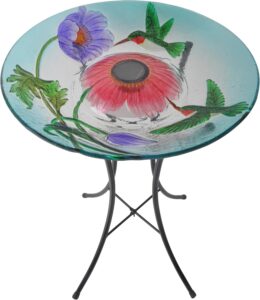
Here’s a solar powered bird bath.
Hummingbird misters at Amazon.com
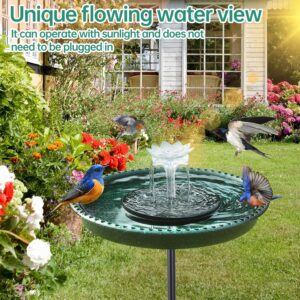
Install shallow bird baths with gently sloping edges. Hummingbirds prefer water sources that are no more than 1-1.5 inches deep.
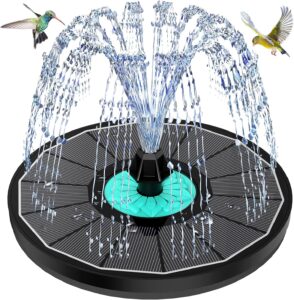
Consider adding a mister or dripper to create moving water, which attracts hummingbirds. They often enjoy flying through fine sprays of water.
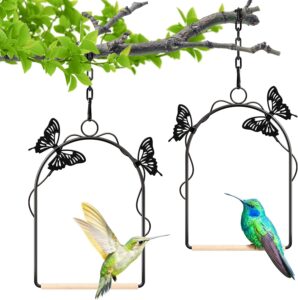
A hummingbird perch is a good way to attract hummingbirds to a particular spot near your feeder
Use Songbird Essentials Nectar Aid Self Measuring Pitcher and never measure ingredients again. Make any amount and the ingredients are measured for you.
 |
Column 2 |
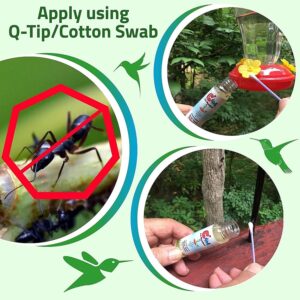
Nectar Fortress™ Natural Ant Repellent
CREATED FOR HUMMINGBIRD FEEDERS: Stop ants fast and keep them away from the bird feeder altogether. Use it on poles or hooks and create a barrier with a scent ants hate. Useful with ant moats or eliminate the moat entirely.
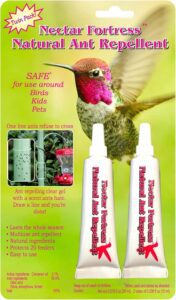
C’ANT, Ant and Bee Repellent for Hummingbird Nectar Feeders and Outdoor Bird Seed Feeders – Works with Shepherds Hook and Ant Moat – 1 oz.
Hummingbird resources to help make your garden a success
Here’s a complete guide to attracting hummingbirds to your yard. It lists plants, vines and shrubs that are in bloom for spring, summer and fall. Your hummingbirds will always have flowers to feed on.
Here’s a great article that tells everything you need to know about how to choose the best place to hang your hummingbird feeder.
Here’s the best designed hummingbird feeder to use. It’s leak proof, so it won’t attract insects and it’s easy to take apart and clean.
Here’s a comprehensive guide to help you clean your hummingbird feeder for those times when the nectar is not changed soon enough and mold starts to grow.
More Hummingbird Resources
U.S. Fish and Wildlife Service – Hummingbird Conservation
This site offers detailed information about various hummingbird species, their habitats, and conservation efforts. It also provides resources on how to protect these fascinating birds.
National Park Service – Hummingbird Resources
The National Park Service offers insights into hummingbird species found in national parks, their behaviors, and their role in ecosystems, along with tips for observing them.
Smithsonian National Museum of Natural History – Birds: Hummingbirds
This resource provides educational materials on the role of hummingbirds in pollination and biodiversity, backed by scientific research and exhibits from the Smithsonian.