Red Elderberry (Sambucus racemosa) for Alaska Hummingbirds
Red elderberry is a hardy native shrub that fits very well in cool, wet parts of Alaska. Its flowers and berries support many birds, insects, and other wildlife. In a hummingbird garden, it can be one of your best larger shrubs.
Why Red Elderberry Matters in Alaska
Red elderberry grows naturally from Southeast Alaska down through much of the Pacific Northwest. It likes moist forests, stream banks, meadows, and other cool sites, which are common in many Alaska regions. Because of this, it is a smart, climate-ready choice for an Alaska hummingbird yard.
Even more important, Alaska’s Rufous Hummingbirds help pollinate wild berries such as elderberry. So, when you plant red elderberry, you not only attract hummingbirds, but you also support local berry production for people and wildlife.
How Red Elderberry Helps Hummingbirds
First, red elderberry offers clusters of small, creamy white flowers in spring. These blossoms produce nectar and pollen that attract hummingbirds, 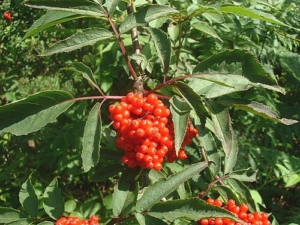 butterflies, and other pollinators. Hummingbirds visit the flowers while they search the area for more nectar-rich plants.
Then, later in summer, the flowers turn into bright red fruit clusters. Many birds eat these berries, including thrushes, grouse, and other songbirds. Because of this, your hummingbird garden will also become a busy bird feeding station.
In addition, the shrub itself offers cover and nesting spots for small birds and other creatures. This shelter helps build a richer habitat, which usually means more insects and more natural food for hummingbirds.
Plant Description
Red elderberry is a deciduous shrub that can grow about 7 to 20 feet tall. It often forms a large, vase-shaped or pyramidal mass with several upright stems. The leaves are divided into leaflets with toothed edges and turn coarse and leathery as they mature.
In mid to late spring, branch tips hold cone-shaped clusters of tiny, fragrant white or cream flowers. By mid-summer, these become dense, showy bunches of bright red berries. The stems have soft, pithy centers that also provide nesting space for beneficial insects like mason bees.
Best Site Conditions in Alaska
Red elderberry prefers moist to wet soils and cool conditions. It grows well along streams, at forest edges, and in moist meadows or ditches. So, in Alaska, it works well near natural drainages, rain garden edges, and the back of a damp border.
It can handle sun or part shade, but it usually does best with some protection from hot, drying winds. In cooler coastal and northern climates, it can take more sun, as long as the soil does not dry out. Because the roots like moisture, the shrub can also help with minor erosion control on gentle slopes.
Planting Tips for Hummingbird Gardens
When you plant red elderberry, choose a spot with room to grow, since the shrub can become large. Place it toward the back or side of your hummingbird garden so it can rise behind smaller flowers and feeders. This layered design gives hummingbirds safe perches near their nectar sources.
Dig a wide hole and loosen the soil, then set the shrub at the same depth it grew in the pot. Water it well after planting, and keep the soil moist, especially during the first couple of summers. Adding a layer of mulch can help hold moisture and keep roots cool.
Care and Maintenance
Once established, red elderberry is fast growing and fairly easy to care for. It does not need heavy feeding; in fact, too much fertilizer can make it weak and floppy. Instead, you can top-dress with compost in spring to keep the soil rich and healthy.
The shrub can get leggy or overgrown with age, but it responds well to pruning. You can remove a few of the oldest stems every couple of years to keep fresh growth coming. Late winter or very early spring is usually the best time to do this, before new leaves emerge.
Safety and Toxicity Notes
Red elderberry is mainly a wildlife and ornamental plant, not a casual snack for people. The raw berries, leaves, stems, and seeds contain compounds that can be harmful if eaten. Some sources note that properly cooked fruit can be used, but caution is always advised.
Because of this, teach children not to eat the berries straight from the shrub. Also, if you have pets that chew plants, try to place the shrub where they are less likely to nibble on it. Remember, birds and other wildlife are the main berry users here, and they handle the fruit just fine.
Companion Plants for Hummingbirds in Alaska
Red elderberry works very well as part of a mixed native planting for hummingbirds. You can combine it with native berry bushes like salmonberry and blueberry that also benefit from hummingbird pollination. Together, these shrubs create a long season of flowers and fruit for wildlife.
In front of red elderberry, add native perennials and wildflowers that offer rich nectar. Then, place hummingbird feeders nearby, but not right over the shrubs, to keep cleaning easy. This way, your elderberry plants act as shelter, background color, and an extra food source in the same space.
To round out your Alaska hummingbird habitat, pair your existing Sitka spruce or nearby forest edge with native nectar plants and shade-tolerant companions. For bold summer color and rich nectar, see our article on Fireweed (Chamerion angustifolium). For elegant, nodding blooms in partly shaded spots, read about Western Columbine (Aquilegia formosa). And for tall, feathery flower spikes that light up woodland edges, learn more about Goatsbeard (Aruncus dioicus), another helpful hummingbird-friendly native.
Frequently Asked Questions about Red Elderberry and Hummingbirds
Does red elderberry attract hummingbirds?
Yes. Its spring flower clusters provide nectar and pollen that hummingbirds use, along with butterflies and bees.
Is red elderberry native to Alaska?
Red elderberry occurs naturally from Southeast Alaska south through the Pacific Northwest in moist, cool habitats.
Is red elderberry safe to eat?
No, it is not safe to eat raw. The raw berries and other plant parts contain compounds that can be toxic, and it is mainly grown for wildlife and ornamental value.
How big does red elderberry get?
Red elderberry usually grows about 7 to 20 feet tall and can form a large, multi-stemmed shrub or small tree.
Where should I plant red elderberry in my yard?
Plant it in a moist spot with sun to part shade, such as near a stream, at a forest edge, or at the back of a rain garden or border.
Resources on Red Elderberry and Hummingbirds
- Pacific Red Elderberry wildlife value (Real Gardens Grow Natives)
- Red elderberry overview and habitat (UW Bothell)
- Maintaining and Improving Habitat for Hummingbirds in Alaska (Pollinator Partnership PDF)
- Red elderberry growing and care tips (Gardenia)
- Native nursery info on red elderberry wildlife support