Red Bird of Paradise and Hummingbirds in Arizona
The Red Bird of Paradise, Caesalpinia pulcherrima, is a favorite shrub in sunny Arizona yards. Its bright orange, red, and yellow flowers bloom for many months in the heat. Because of this long bloom time, it can become a reliable nectar stop for hungry hummingbirds.
What Is Red Bird of Paradise?
Red Bird of Paradise is a warm‑loving, perennial shrub with feathery green leaves and big clusters of showy flowers. It is native to 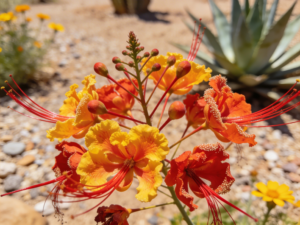 tropical parts of the Americas, but it has been widely planted and naturalized in warm places, including Arizona, Texas, and parts of California. In low‑desert areas, it can grow about 6 to 9 feet tall and wide, so it quickly becomes a bold accent in the landscape.
In Arizona’s deserts, this shrub usually drops its leaves in winter, especially after frost. Then, in spring, it sends up fresh green growth and soon covers itself in colorful blooms again. Because it handles extreme heat and poor soils, it is used often in xeriscape and low‑water gardens.
Why Hummingbirds Love Red Bird of Paradise
First, the flowers are rich in nectar, and they form showy clusters held above the foliage, which makes them easy for hummingbirds to find. Next, the orange, red, and yellow petals act like bright flags that attract hummingbirds from a distance. Also, the plant blooms from late spring through fall in Arizona, giving hummingbirds a steady food source during the hottest months.
Moreover, the shrub’s open, branching shape offers perches and some cover. Hummingbirds can dart in to drink, then rest on nearby branches while they watch their feeding area. Because the flowers also attract butterflies and bees, your yard becomes a busy wildlife hotspot, which many hummingbirds seem to enjoy.
Best Places to Plant It in Arizona
In Arizona, Red Bird of Paradise grows best in full sun with at least six hours of direct light each day. Therefore, choose a hot, open spot, such as along a west‑facing wall, near a driveway, or in the center of a sunny bed. For hummingbirds, place it where you can see it from a window or patio, so you can enjoy the action.
Because the shrub can get large, allow several feet of space on all sides. You can plant it as a single focal point or, instead, use a row of three or more to form a colorful hedge. When you mix it with other hummingbird plants, like desert salvia or penstemon, you create a nectar corridor that draws birds across your entire yard.
Soil, Water, and Sun Needs
Red Bird of Paradise is not picky about soil, as long as the soil drains well and does not stay soggy. It grows in sandy, rocky, or even poor urban soils that many other plants cannot handle. At planting time, loosen the soil and, if needed, mix in some compost to help roots spread, but do not over‑amend in desert clay.
During the first growing season, water deeply about once a week in hot weather so the roots can grow strong. After the plant is established, you can cut back to low or moderate watering, giving a deep soak every 5 to 10 days in summer, depending on heat and soil type. Too much water can reduce flowering and may cause root problems, so let the soil dry a bit between waterings. Because it thrives in full sun and heat, there is usually no need for shade cloth in typical low‑desert yards.
Pruning and Seasonal Care
In colder parts of Arizona, Red Bird of Paradise often freezes back, so many gardeners prune it hard in late winter. You can cut the stems down to 1 foot or even to near ground level before new growth starts. Then, by early summer, it usually grows back thick and full, ready to bloom again for hummingbirds.
Through the growing season, you may trim lightly to remove any dead or crossing branches and to keep the plant from blocking walkways. However, avoid heavy pruning in mid‑season, because large cuts can reduce flowers for a while. Fertilizer is rarely needed; in fact, too much fertilizer can increase leafy growth at the expense of blooms. Instead, focus on proper sun and deep, infrequent water to support strong flowering for your hummingbirds.
Using Red Bird of Paradise in Hummingbird Gardens
Red Bird of Paradise works well as a backdrop for smaller hummingbird plants. Place shorter nectar plants in front so hummingbirds 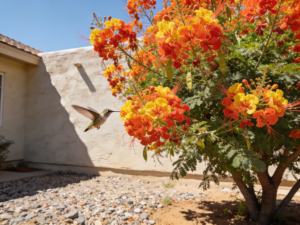 have many bloom levels to visit. Also, consider planting it near a hummingbird feeder, so birds can move easily between natural nectar and your feeder station.
Because the shrub has low litter and very small prickles, it fits nicely around patios, pool areas, and along garden borders. When you repeat Red Bird of Paradise in several spots in your yard, you create bright “flower islands” that help hummingbirds move safely from place to place. Over time, this pattern can encourage more hummingbirds to claim your garden as part of their daily route.
Tips to Make It Even More Hummingbird‑Friendly
- Plant several Red Bird of Paradise shrubs so blooms are always in reach somewhere in the yard.
- Combine it with other long‑blooming nectar plants that like heat and sun.
- Add a water source, such as a mister or shallow fountain, near the shrubs to give hummingbirds a place to drink and bathe.
- Leave some branches for perches, so hummingbirds can rest and guard their feeding territory.
- Avoid pesticides on or near the plant, because hummingbirds also eat small insects for protein.
More Arizona Hummingbird Plant Guides
Ready to add even more hummingbird‑friendly plants to your Arizona garden? Explore these helpful guides next:
- Best Hummingbird Plants for Arizona
- Hummingbird Trumpet: Arizona’s Fiery Nectar Magnet
- Desert Willow Trees and Hummingbirds in Arizona
Frequently Asked Questions about Red Bird of Paradise and Hummingbirds
Does Red Bird of Paradise really attract hummingbirds in Arizona?
Yes, its nectar‑rich flowers and long bloom season are known to attract hummingbirds in Arizona and other warm regions.
How long does Red Bird of Paradise bloom for hummingbirds?
In low‑desert areas, it can bloom from about late spring through fall, giving hummingbirds months of steady nectar.
How much sun does Red Bird of Paradise need?
It performs best in full sun and heat, which makes it perfect for most Arizona yards.
Is Red Bird of Paradise drought tolerant?
Yes, once it is established, it is considered low to moderate in water use and works well in xeriscape gardens.
Is Red Bird of Paradise safe to plant near walkways?
It has small prickles but generally low litter, so it is widely used along paths, around pools, and in front yards when given enough space.
Helpful Resources on Red Bird of Paradise
- University of Arizona Campus Arboretum – Caesalpinia pulcherrima plant profile
- Arizona‑Sonora Desert Museum – Red Bird‑of‑Paradise care sheet (PDF)
- Arizona Living Landscape & Design – Red Bird of Paradise in Arizona landscapes
- Horticulture Unlimited – Red Bird of Paradise overview