Ocotillo: A Desert Favorite for Hummingbirds in Arizona
Ocotillo, or Fouquieria splendens, is a tall, spiky desert shrub that looks like a bundle of dry sticks for much of the year. Yet, when it blooms, it turns into a bright red torch that hummingbirds in Arizona cannot resist.
What Is Ocotillo?
Ocotillo is native to the hot, dry deserts of the Southwest, including much of Arizona. It grows on rocky slopes, mesas, and well-drained 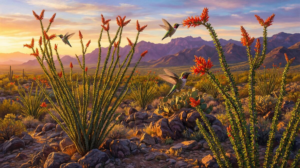 desert grasslands, usually in full sun. In Arizona, you often see it scattered across Sonoran Desert hillsides, standing like tall whips reaching for the sky.
This shrub can grow up to about 20 feet tall, with many long, skinny stems rising from the base. These stems are covered in sharp spines and small leaves that appear quickly after rain, then drop off again when the soil dries.
Ocotillo Flowers and Hummingbirds
At the tips of the stems, ocotillo produces clusters of bright red, tube-shaped flowers. These flowers usually bloom in spring, from about March through June in Arizona, and sometimes again after summer rains. Because the flowers are long and tubular, they are perfectly shaped for a hummingbird’s slender bill and tongue.
In fact, ocotillo flowers are a key nectar source for migrating hummingbirds in southern Arizona. As hummingbirds move north in spring, ocotillo often blooms right on time to feed them, even in dry years when other desert flowers fail. This reliable nectar helps hummingbirds refuel, gain energy, and continue their long trip.
Why Ocotillo Matters So Much in Arizona
Ocotillo plays a special role in Arizona’s desert food web. First, its bright red blooms attract hummingbirds, orioles, bees, and butterflies, but hummingbirds are among the most important pollinators. As they sip nectar, they pick up pollen and carry it from flower to flower, helping the plant make seeds.
Second, dense stands of ocotillo can create rich feeding zones for migrating hummingbirds in Arizona mountains and deserts. In some years, when other nectar plants do poorly, ocotillo may be the only desert shrub that still blooms heavily and supports these tiny birds.
Growing Ocotillo for Hummingbirds in Arizona Yards
If you live in Arizona’s low to mid-elevation desert, you can plant ocotillo to help hummingbirds. It grows well in USDA zones 8 to 11, which 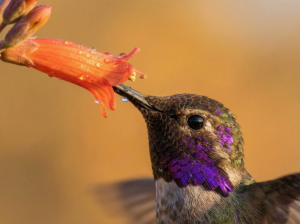 includes many flat and rocky desert areas of the state. However, it does best when conditions are hot, sunny, and dry, much like its natural habitat.
Site and Soil
Choose a spot with full sun and very well-drained soil. Rocky slopes, raised beds, or gravelly areas are ideal, because ocotillo naturally grows on rocky, fast-draining ground. Avoid low, soggy spots or heavy clay, since standing water can cause root rot and plant decline.
Water and Care
Once established, ocotillo is very drought-tolerant and needs only minimal watering. In fact, too much water can harm it, so it is better to water deeply but rarely, then let the soil dry out completely. After rains or gentle irrigation, you will often see fresh leaves appear within a few days, then drop when it dries.
Because the stems are spiny and tall, plant ocotillo where people and pets will not brush against it. Over time, it will form a striking vertical accent that looks dramatic against the sky and provides high, safe flowers for hummingbirds.
Helping Hummingbirds with Ocotillo
To get the most hummingbird activity, plant ocotillo where you can see the flowering tips from a window, patio, or favorite chair. Then, combine it with other hummingbird plants that bloom at different times, such as penstemons, salvias, or chuparosa, so nectar is available through more of the year.
Because ocotillo can bloom multiple times in response to rain, it can help bridge gaps between other flowering plants. In this way, it supports both resident hummingbirds and long-distance migrants moving through Arizona.
Wildlife Beyond Hummingbirds
While this shrub is famous for feeding hummingbirds, its flowers and structure also support other wildlife. Orioles, carpenter bees, and other pollinators visit the red flower clusters for nectar and pollen. In some areas, carpenter bees can even become major pollinators when hummingbirds visit less often.
Moreover, birds sometimes perch on ocotillo stems to rest or watch for insects, using the spines as protection from predators. So, by planting ocotillo, you are building a small desert habitat that helps many species, not just hummingbirds.
Is Ocotillo Right for Your Arizona Garden?
Ocotillo is best for gardeners who love native, low-maintenance plants and have hot, dry, sunny spaces. It is not a good choice for lawns, 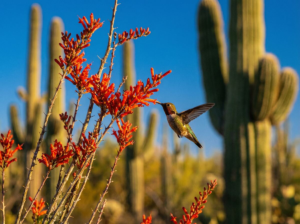 shady courtyards, or well-watered, highly landscaped yards, because it prefers desert-style conditions. However, in a natural desert or xeriscape garden, it can be a stunning centerpiece that also feeds hummingbirds year after year.
If you want to support Arizona hummingbirds with native plants, ocotillo deserves a place near the top of your list. With the right site, a careful planting, and a little patience, it will reward you with fiery spring blooms and constant aerial shows from hungry hummingbirds.
Resources for Learning More
- USDA Plant of the Week: Ocotillo – Detailed natural history, flowering, and habitat information.
- Southeastern Arizona Bird Observatory: Ocotillo Profile – Notes on size, bloom time, and pollinators in Arizona.
- Arizona-Sonora Desert Museum Ocotillo Fact Sheet – Simple description of habitat and desert adaptations.
- Desert Museum: Ocotillo and Hummingbirds – In-depth discussion of hummingbird pollination and migration.
- Attract Hummingbirds Without a Feeder: Ocotillo – Practical tips for using ocotillo in hummingbird gardens.
Frequently Asked Questions About Ocotillo and Hummingbirds
When does ocotillo bloom for hummingbirds in Arizona?
In Arizona, ocotillo usually blooms in spring, from about March through June, and may bloom again after summer rains. This timing overlaps with the northward migration of many hummingbirds.
Do hummingbirds really depend on ocotillo?
Hummingbirds use ocotillo as an important nectar source in Arizona, especially during spring migration and dry years when other flowers are scarce. However, they also visit many other native flowering plants.
Can I grow ocotillo in my Arizona yard?
You can grow ocotillo if you have full sun, fast-draining soil, and a hot, dry climate, such as much of desert Arizona. It is best suited to xeriscape or natural desert gardens, not watered lawns.
How much water does ocotillo need?
After it is established, ocotillo needs very little water and is highly drought-tolerant. Too much irrigation can damage it, so water deeply but infrequently and let the soil dry completely between waterings.
Is ocotillo safe to plant near walkways?
Because ocotillo stems are tall and spiny, it is better to plant it away from paths, play areas, and driveways. This placement protects people and pets while still giving hummingbirds easy access to the flowers.