New Jersey tea (Ceanothus americanus) is a small, deciduous native shrub valued for its glossy green foliage, frothy white summer flowers, and remarkable drought tolerance. Typically growing about 2–3 feet tall and wide, it forms a rounded mound that fits easily into small gardens, prairie edges, and dry, sunny slopes. In early to mid-summer, it’s covered in clusters of tiny, fragrant white blooms that look like miniature bottlebrushes and buzz with pollinators.
This species is native to central and eastern North America, where it occurs in prairies, oak savannas, open woodlands, sandplains, and rocky hillsides. It evolved in lean, well-drained soils and disturbance-prone habitats, including fire-adapted barrens. A deep, woody taproot anchors the plant, allows it to resprout after fire, and makes it extremely drought tolerant—but also difficult to transplant once established.
Key Characteristics
-
Height: About 2–3 feet tall
-
Spread: About 2–4 feet wide, forming a low, rounded shrub
-
Bloom Time: Late spring to early/mid-summer (often May–July, sometimes into August)
-
Light Requirements: Full sun to light partial shade (best flowering in full sun)
-
Soil Preference: Dry to medium, well-drained soils; thrives in sandy, rocky, or lean loams
-
Zones: Generally hardy in USDA zones 3–8 (often listed up to 9 depending on source)
New Jersey tea has dark green, oval to lance-shaped leaves with a slightly rough or downy underside. In bloom, the shrub is covered with small, creamy-white flower clusters at the ends of short stems. In late summer, the flowers mature into tiny, three-part capsules that turn brown as the seeds ripen. In fall, the leaves drop to reveal attractive, sometimes reddish or yellowish stems.
Historically, the dried leaves were used as a tea substitute during the American Revolution, giving the plant its common name. Today, it’s mainly grown for its ornamental value and strong wildlife benefits.
Why New Jersey Tea Is Attractive to Hummingbirds and Pollinators
New Jersey tea is a pollinator powerhouse. Its many small flowers are rich in nectar and pollen and are highly attractive to a wide variety of insects. Bumblebees, small native bees, wasps, flies, and numerous butterflies visit the blooms, often covering the shrub on sunny days.
It’s also a documented host plant for several butterfly species, including mottled duskywing and the azure butterflies (spring and summer azures). Their caterpillars feed on the foliage, linking the shrub directly into the local food web.
Hummingbirds are drawn to New Jersey tea indirectly. The shrub itself produces small, white, non-tubular flowers—not classic hummingbird blooms—but the dense insect activity around the flowers provides a reliable hunting ground. Hummingbirds will work the shrub both for its small nectar resources and, more importantly, for the tiny insects gathered among the blossoms.
Natural Habitat and Growing Conditions
In the wild, New Jersey tea is found in:
-
Dry prairies and sandplains
-
Oak savannas and open woodlands
-
Rocky slopes, barrens, and pine barrens
-
Other disturbance-prone, well-drained sites
It naturally thrives where soils are sandy, rocky, or shallow and where moisture is limited or quickly drained away. It is also adapted to fire and heavy browsing, often resprouting from its deep root after top growth is damaged.
In the garden, it does best when you mimic these conditions:
-
Light: Full sun is ideal and produces the heaviest flowering. Light partial shade is tolerated, especially in hot climates, but dense shade will reduce bloom and vigor.
-
Soil: Prefers well-drained sandy or rocky soils and tolerates poor, lean conditions. Rich, heavy, or consistently moist soils can lead to weak growth or root problems.
-
Moisture: Average to dry soils are best. Once established, New Jersey tea is very drought tolerant and prefers not to sit in wet soil.
Because of its deep taproot, it is excellent for stabilizing dry slopes and sandy banks, and it’s a natural fit in prairie and savanna-style plantings.
Care and Maintenance
New Jersey tea is low-maintenance if planted in the right spot.
-
Watering: Water consistently during the first growing season to help establish the deep root system. After that, it typically needs only occasional watering during prolonged droughts.
-
Feeding: This shrub is a nitrogen fixer and thrives in poor soils, so it rarely needs fertilizer. Overly rich soils can actually be detrimental, encouraging soft, weak growth. If desired, a light top-dressing of compost in spring is enough.
-
Mulching: A thin layer of organic mulch (such as shredded leaves) can help preserve soil moisture and moderate temperature, but avoid heavy mulches in very dry, sandy habitats where the plant is naturally adapted. Keep mulch away from the stems to prevent rot.
-
Pruning: Little pruning is necessary. In late winter or early spring, you can lightly shape the shrub and remove any dead or crossing stems. Avoid hard cutting to the ground unless you are intentionally rejuvenating an older plant; even then, give it time to resprout from the root.
Because of its deep, woody taproot, New Jersey tea does not transplant well once established. It’s best to plant young and plan for it to stay in the same location long-term.
Ecological Benefits
New Jersey tea contributes significantly to garden ecology:
-
Pollinator magnet: The small, fragrant flower clusters supply abundant nectar and pollen to bees, wasps, flies, and butterflies during late spring and early summer.
-
Butterfly host plant: It serves as a larval host for several butterflies, including mottled duskywing and azure species, supporting their full life cycles.
-
Bird value: The dense, twiggy structure provides cover for small birds, and seed capsules may be used by some bird species.
-
Nitrogen fixation: As a nitrogen-fixing shrub, New Jersey tea can enrich poor, sandy soils over time, subtly improving conditions for nearby plants.
When used in native, prairie, or dry pollinator gardens, it helps create a resilient, low-input planting that supports a wide array of insects and other wildlife.
Why Grow New Jersey Tea
New Jersey tea is an excellent choice if you need a compact, drought-tolerant, wildlife-friendly shrub for sunny, dry spots.
1. Compact Size for Small Spaces
At about 2–3 feet tall and wide, New Jersey tea fits easily into foundation plantings, front-of-border positions, and small gardens. It offers the structure of a shrub without overwhelming tight spaces.
2. Thrives in Dry, Poor Soils
If you garden on sandy, rocky, or lean soil and struggle to find plants that thrive without constant watering or fertilizer, New Jersey tea is a great candidate. Once established, it’s highly drought tolerant and well-suited to water-wise landscapes.
3. Strong Pollinator and Butterfly Value
With its profusion of small white blossoms, New Jersey tea is alive with insect activity when in bloom. It feeds pollinators, hosts butterfly larvae, and indirectly supports birds and other wildlife that prey on those insects.
4. Naturalistic Beauty and Native Character
This shrub looks right at home in prairie-style and native plantings, especially when combined with grasses and sun-loving perennials. It adds regional character and a sense of place to gardens in its native range.
5. Historical Interest
As a traditional tea substitute used during the American Revolution, New Jersey tea brings a bit of American history into the garden. While it’s not commonly used this way today, its story adds an extra layer of interest.
Planting Tips
Site Selection:
Choose a sunny site with well-drained soil—sandy, gravelly, or rocky conditions are ideal. Avoid locations that stay wet after rains or where irrigation is frequent.
Soil Preparation:
Heavy amendment is not necessary and can even be counterproductive. If you have very heavy clay, consider loosening the soil and incorporating some grit or sand to improve drainage, or plant on a slight slope or berm.
Spacing:
Space plants about 2–3 feet apart. This allows each shrub to develop its natural rounded form while still forming a cohesive planting in groups.
Watering:
Water thoroughly at planting and keep soil evenly moist (not soggy) through the first season. After the shrub shows strong new growth and has been through a season or two, gradually reduce watering so it can rely on its deep root system.
Establishment from Seed or Plugs:
Because older plants transplant poorly, many growers prefer to establish New Jersey tea from seed or small plugs. Seed often requires special treatment (such as scarification and cold stratification) and may take a few years to reach flowering size, but the resulting plants are well adapted to their site.
Unique Characteristics of New Jersey Tea That Make It Special
New Jersey tea has several distinctive traits:
Deep, Woody Taproot
The thick, tree-like taproot can reach deep into the soil, allowing the shrub to survive drought, fire, and browsing. This makes it extremely resilient but also makes moving mature plants very difficult.
Fire and Browse Adaptation
In natural habitats, New Jersey tea is often top-killed by fire but resprouts vigorously from its rootstock. It is also adapted to heavy browsing by herbivores, further underscoring its toughness.
Nitrogen-Fixing Shrub
Unlike many ornamentals, New Jersey tea can fix atmospheric nitrogen, allowing it to prosper in poor, sandy soils and gradually improve soil fertility in its immediate vicinity.
Frequently Asked Questions
Is New Jersey tea native?
Yes. New Jersey tea (Ceanothus americanus) is native to central and eastern North America, where it grows in prairies, sandplains, oak savannas, open woods, and rocky slopes.
Does New Jersey tea attract hummingbirds and pollinators?
It is excellent for pollinators, especially bees and butterflies. Hummingbirds are drawn mainly to the insects around the flowers and may also sip some nectar, so the shrub supports them indirectly as a feeding station.
How much sun does New Jersey tea need?
It flowers best in full sun but can tolerate light partial shade. In too much shade, flowering declines and plants may become leggy.
Is New Jersey tea drought tolerant?
Yes. Once established, it is very drought tolerant and well suited to dry, sandy, or rocky soils. It prefers average to dry moisture and does not like chronically wet conditions.
Can New Jersey tea be transplanted?
Mature plants are difficult to transplant because of their deep taproots. It’s best to plant young and choose the final location carefully, or start from seed or small plugs directly in the intended site.
Is New Jersey tea good for small gardens?
Yes. Its compact size, drought tolerance, and wildlife value make it ideal for small sunny gardens, front-yard native plantings, and foundation beds with well-drained soil.
Conclusion
New Jersey tea (Ceanothus americanus) is a compact, tough, and ecologically rich native shrub that thrives in dry, sunny, well-drained sites. Its frothy white blooms support a wide range of pollinators and butterflies, while its deep root system provides drought resilience and helps stabilize poor soils.
By giving it full sun, lean, well-drained soil, and time to establish, you can enjoy a long-lived shrub that adds structure, seasonal interest, and strong wildlife value to your garden—especially in prairie-style, dry border, and native plant designs.
A few additions that will make any garden more hummingbird friendly
Provide nesting materials like cotton or plant fibers. You can place these materials in suet cages or spread them around your garden.
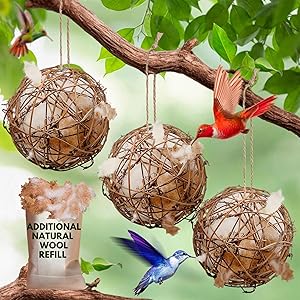
A major component of any successful hummingbird garden is a dependable hummingbird feeder that is easy to take apart and clean and doesn’t leak.
One of the best Hummingbird feeders that’s easy to take apart and clean is the HummZinger Ultra.
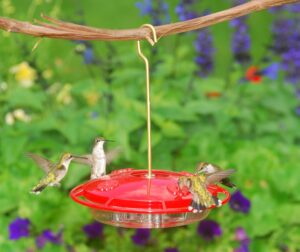
Aspects 12oz HummZinger Ultra With Nectar Guard.
The HummZinger Ultra 12oz Saucer Feeder is one of the best options for a hummingbird feeder that’s both easy to clean and maintain. This top-tier feeder features patented Nectar Guard tips—flexible membranes on the feeding ports that keep flying insects out while still allowing hummingbirds to feed freely. Plus, it comes with an integrated ant moat to prevent crawling insects from reaching the nectar, and the raised flower ports help divert rain, keeping the nectar fresh.
With a 12 oz capacity, this mid-size feeder offers plenty of space and can be hung or mounted on a post using the included hardware. It has four feeding ports and is made from durable, unbreakable polycarbonate. Whether you’re concerned about bees, wasps, or ants, this feeder is built for easy cleaning and insect protection.
If you already have a hummingbird feeder, and you want to protect it from ants and other crawling insects, the ant moat below will do the job.
Trap-It Ant Moat for Hummingbird Feeders
Using an ant moat for your hummingbird feeder is an effective way to keep ants away from the sweet nectar. These tiny creatures are drawn to
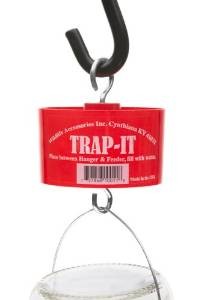
the sugar water, and without a barrier, they will quickly infest your feeder, preventing the birds from enjoying the nectar. An ant moat works by creating a barrier of water that ants can’t cross. Positioned above the feeder, it effectively blocks the ants’ path, keeping them from reaching the nectar.
This simple solution also ensures that your hummingbird feeder remains clean and accessible for the birds, rather than becoming a breeding ground for ants or other pests. It’s a small addition that can make a big difference in maintaining a healthy, inviting space for hummingbirds, while also reducing the need for chemical ant deterrents.
The first and still the best to protect your Hummingbird and Oriole feeder from ants and other crawling insects. Insert between hanger and feeder and fill with water, providing a barrier to crawling pests. Red color to attract hummingbirds.
In addition to nectar, hummingbirds need water and safe spaces to rest. By providing a birdbath or misting system, you can ensure they have everything they need.
Water Sources
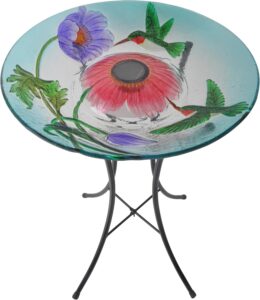
Hummingbirds enjoy fresh water to drink and bathe. A shallow birdbath with a fine spray from a mister is ideal. Just make sure the water is changed regularly to keep it clean.
Here’s a solar powered bird bath.
Hummingbird misters at Amazon.com
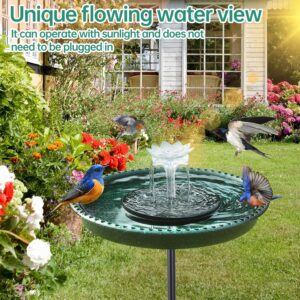
Install shallow bird baths with gently sloping edges. Hummingbirds prefer water sources that are no more than 1-1.5 inches deep.
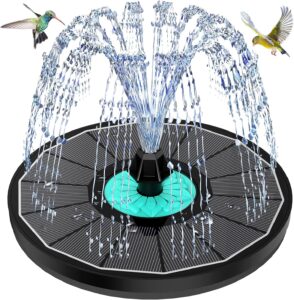
Consider adding a mister or dripper to create moving water, which attracts hummingbirds. They often enjoy flying through fine sprays of water.
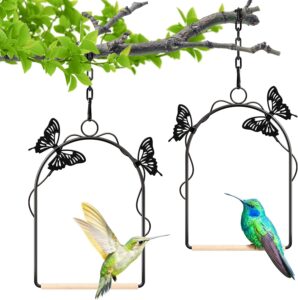
A hummingbird perch is a good way to attract hummingbirds to a particular spot near your feeder
Use Songbird Essentials Nectar Aid Self Measuring Pitcher and never measure ingredients again. Make any amount and the ingredients are measured for you.
 |
Column 2 |
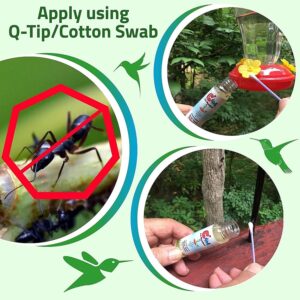
Nectar Fortress™ Natural Ant Repellent
CREATED FOR HUMMINGBIRD FEEDERS: Stop ants fast and keep them away from the bird feeder altogether. Use it on poles or hooks and create a barrier with a scent ants hate. Useful with ant moats or eliminate the moat entirely.
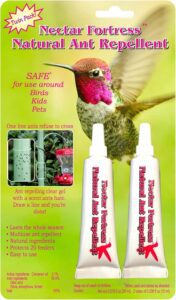
C’ANT, Ant and Bee Repellent for Hummingbird Nectar Feeders and Outdoor Bird Seed Feeders – Works with Shepherds Hook and Ant Moat – 1 oz.
Hummingbird resources to help make your garden a success
Here’s a complete guide to attracting hummingbirds to your yard. It lists plants, vines and shrubs that are in bloom for spring, summer and fall. Your hummingbirds will always have flowers to feed on.
Here’s a great article that tells everything you need to know about how to choose the best place to hang your hummingbird feeder.
Here’s the best designed hummingbird feeder to use. It’s leak proof, so it won’t attract insects and it’s easy to take apart and clean.
Here’s a comprehensive guide to help you clean your hummingbird feeder for those times when the nectar is not changed soon enough and mold starts to grow.
More Hummingbird Resources
U.S. Fish and Wildlife Service – Hummingbird Conservation
This site offers detailed information about various hummingbird species, their habitats, and conservation efforts. It also provides resources on how to protect these fascinating birds.
National Park Service – Hummingbird Resources
The National Park Service offers insights into hummingbird species found in national parks, their behaviors, and their role in ecosystems, along with tips for observing them.
Smithsonian National Museum of Natural History – Birds: Hummingbirds
This resource provides educational materials on the role of hummingbirds in pollination and biodiversity, backed by scientific research and exhibits from the Smithsonian.