Maryland: Attracting and Feeding Hummingbirds – A Complete Guide
Maryland is classic Ruby‑throated Hummingbird country with a few exciting western visitors in fall and winter.
Ruby‑throats are the only hummingbirds that regularly breed in the state, but Rufous and several other western species have been documented as rare visitors.
Key takeaways
-
Ruby‑throated Hummingbird is Maryland’s only regular breeding hummingbird; Rufous, Calliope, Allen’s, Black‑chinned, and Broad‑tailed have all been recorded as rare visitors.
-
Put feeders out by early April and keep them up through at least early October; some guidance suggests leaving one up into late November to catch late and winter visitors.
-
Use a 4‑to‑1 sugar‑water recipe with no red dye, and clean feeders every 2–4 days depending on temperature.
-
Native plants like eastern red columbine, scarlet beebalm, wild bergamot, cardinal flower, lyreleaf sage, summersweet, and coral honeysuckle are excellent for Maryland hummingbirds.
What hummingbirds live in Maryland?
Maryland has one common species and several “bonus” hummingbirds that appear occasionally.
-
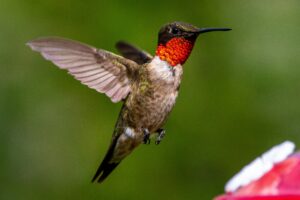
Ruby‑throated Hummingbird – The only hummingbird that breeds in Maryland and the only species you can count on seeing in summer; it is a common breeder statewide.
-
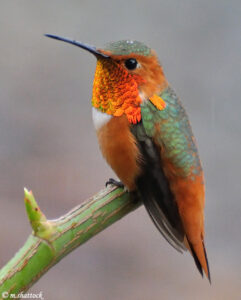
Rufous Hummingbird – Western species that sometimes winters in Maryland; documented in the state and occasionally visits feeders.
-
Other rare visitors – Calliope, Allen’s, Black‑chinned, and Broad‑tailed Hummingbirds have all been recorded in Maryland, but they are considered rare vagrants.
Virtually every hummingbird seen in Maryland will be a Ruby‑throat, with western visitors as thrilling exceptions.
When do hummingbirds visit Maryland?
Maryland sits in the heart of the Ruby‑throat’s eastern breeding range, so birds arrive in mid‑spring and leave in early fall.
From Maryland DNR and birding sources:
Spring arrival
- Ruby‑throated Hummingbirds arrive in Maryland in mid‑April, with migrants moving through the state through May.
Summer nesting
- Ruby‑throats breed across Maryland in late spring through summer, once flowers and insects are abundant.
Fall departure and winter visitors
-
Most Ruby‑throats depart Maryland by late October.
Maryland DNR suggests leaving feeders up until about October 1, and longer if hummingbirds are still present, noting that feeders do not stop birds from migrating.
-
Rufous and other western hummingbirds sometimes winter in Maryland, arriving in September and staying into late April.
Feeder timing:
-
Put feeders out in early April so they are ready a week or two before Ruby‑throats typically arrive in mid‑April.
-
Take feeders down in late November if you haven’t seen any hummingbirds for about two weeks, which helps catch late or winter visitors without keeping feeders up unnecessarily.
Best nectar recipe for Maryland hummingbirds
General Reccomendations
-
4 parts clean water to 1 part regular table sugar
Instructions:
-
Heat water, stir in sugar until fully dissolved, then cool before filling feeders.
-
Store extra nectar in the refrigerator and use within about a week.
Guidelines:
-
Use only plain white table sugar; avoid honey, brown/raw sugar, and artificial sweeteners.
- Do not add red dye; the feeder’s red parts are enough to attract birds.
How often to clean feeders in Maryland
Maryland has warm, often humid summers and mild spring/fall periods, so nectar spoils at different rates through the season.
-
In cooler spring and fall weather, change nectar and clean feeders every 3–4 days.
-
In warm or hot summer weather, change nectar every 1–2 days, and immediately if it becomes cloudy or stringy.
Cleaning basics:
-
Empty old nectar and rinse feeders with hot water.
-
Scrub the reservoir and ports with appropriate brushes to remove any film or mold.
-
For stubborn residue, soak in a mild vinegar solution, rinse thoroughly, and let the feeder dry before refilling.
Comprehensive feeder cleaning guide
- Keeping your feeder truly clean is one of the most important—and most confusing—parts of feeding hummingbirds. This step‑by‑step guide shows you exactly how to clean a hummingbird feeder with vinegar or bleach, how often to change nectar at different temperatures, how to spot mold before it becomes a problem, and which feeder designs, brushes, and ant moats make the job much easier. It even covers how to keep bees and ants away and includes a video walk through, so if you’d like clear, simple instructions you can follow with confidence, you can learn more here.
Where to hang hummingbird feeders in Maryland
Feeder placement in Maryland is about balancing sun, shade, safety, and viewing.
-
Aim for morning sun and afternoon shade, or bright dappled shade, to slow nectar spoilage while keeping feeders visible.
-
Hang feeders near flower beds, native shrubs, or woodland edges, so hummingbirds can move naturally between blooms, insects, and feeders.
Place feeders about 4–6 feet off the ground with clear flight paths and away from dense cover where cats might hide.
-
Keep feeders a little away from large windows or use decals to reduce the risk of collisions.
-
If an aggressive bird is guarding a feeder and keeping other birds from feeding, use a second or third feeder spaced apart or on different sides of the house so other birds have a chance to feed.
- I also wrote a more in‑depth guide on how to choose the best place to hang your hummingbird feeder.Discover exactly where to hang your hummingbird feeder for the best results. This complete guide walks you through sunlight and shade, height, distance from windows, wind and predator protection, and how close to place feeders to flowers so hummingbirds feel safe and visit often. You’ll also get practical tips on window feeders, hanging hardware, cleaning schedules by temperature, and simple tricks to stop ants and other pests. Click here for everything you need to turn one well‑placed feeder into a busy hummingbird hot spot.
Creating a hummingbird‑friendly yard in Maryland
You can think of your yard as a small habitat that offers hummingbirds food, shelter, safe nesting spots, and clean water. A mix of native plants, smart layout, and chemical‑free maintenance will bring more hummingbirds than feeders alone.
Plant layers of native vegetation
- Combine small trees, shrubs, vines, and flowering perennials to create a tiered garden with cover and perches at different heights.
-
Whenever possible, choose locally native plants, which support more insects and spiders for hummingbirds to eat and provide the flower shapes they evolved with.
- Layered planting example for a Maryland yard
In a Maryland yard, you can create a three‑layer hummingbird border along a 10‑ to 20‑foot fence, deck, or woodland edge. In the back layer, plant a few native shrubs such as summersweet (Clethra), New Jersey tea, or witch‑hazel, spaced 6–8 feet apart to provide structure, light shade, and insect‑rich foliage. In front of them, add a middle band of flowering vines and taller perennials—coral honeysuckle or trumpet creeper on a trellis, plus clumps of scarlet beebalm, wild bergamot, and beardtongue every 2–3 feet—to create a tall ribbon of tubular blooms. Along the front edge in the sunniest strip, mass lower plants such as eastern red columbine for spring, then cardinal flower and lyreleaf sage at 18–24‑inch spacing to keep nectar available through late summer. This simple layered design fits most Maryland yards and gives Ruby‑throated Hummingbirds safe cover, high perches, and continuous nectar at several heights from April through October.
Plan for blooms from spring through fall
-
Include early, mid‑season, and late‑blooming plants so something is always flowering when hummingbirds are present in your area.
-
Plant in groups or drifts rather than single plants so hummingbirds can feed efficiently and find flowers more easily.
- My special guide The Art of Attracting Hummingbirds to Your Yard will provide you with lists of hummingbird-attracting plants that bloom during each season: spring, summer and fall. It makes it easy for you to select plants that will provide continuous blooms for your hummingbirds during the time they are visiting your yard until the time they leave in the fall. You will also get advice on layering plants for a successful hummingbird garden. My guide also provides plant lists for sun and shade to make it easy to select plants for your particular growing conditions. Planting a “hummingbird-friendly garden” will never be easier!
Use feeders to supplement, not replace, flowers
-
Hang feeders where they are visible from flower beds so hummingbirds can move naturally between nectar plants and sugar water.
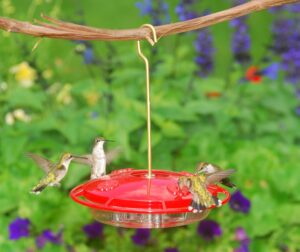
- One of the best Hummingbird feeders that’s easy to take apart and clean is the HummZinger Ultra.

Hummzinger saucer Feeder The HummZinger Ultra 12oz Saucer Feeder is one of the best choices for a hummingbird feeder that’s both easy to clean and maintain. It has patented Nectar Guard tips—flexible membranes on the feeding ports that keep flying insects out while still allowing hummingbirds to feed freely. Plus, it comes with a built-in ant moat to prevent crawling insects from reaching the nectar, and the raised flower ports help divert rain, keeping the nectar fresh.
- Follow good feeder hygiene—use the 4‑to‑1 sugar‑water recipe and clean often—to keep birds healthy and complement your plantings.
- Here’s my comprehensive guide to help you clean your hummingbird feeder especially for those times when the nectar is not changed soon enough and mold starts to grow.Keeping your feeder truly clean is one of the most important—and most confusing—parts of feeding hummingbirds. This step‑by‑step guide shows you exactly how to clean a hummingbird feeder with vinegar or bleach, how often to change nectar at different temperatures, how to spot mold before it becomes a problem, and which feeder designs, brushes, and ant moats make the job much easier. It even covers how to keep bees and ants away and includes a video walk through, so if you’d like clear, simple instructions you can follow with confidence, you can learn more here.
Provide safe perches and nesting cover
-
Keep some shrubs, small deciduous trees, and a few dead or thin branches where hummingbirds can rest, display, and build nests.
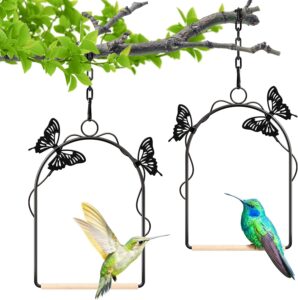
- A hummingbird perch is a good way to attract hummingbirds to a particular spot near your feeder
-
Avoid heavy pruning during nesting season and leave a few “messy” corners with twigs, lichens, and spider webs that birds use for nest building.
Offer water in a way hummingbirds like
-
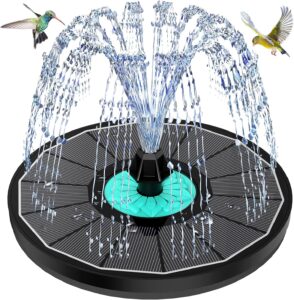
Add a mister, dripper, or fine spray so hummingbirds can bathe in moving droplets on leaves or in a shallow basin.
-
Consider adding a misterto create moving water, which attracts hummingbirds. They often enjoy flying through fine sprays of water.
- Place water features near, but not directly over, key flower beds so birds can move easily between bathing and feeding.
-
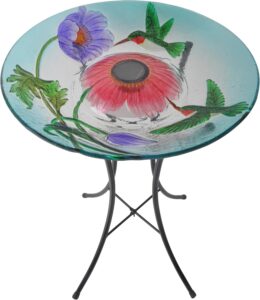
Install shallow bird baths with gently sloping edges. Hummingbirds prefer water sources that are no more than 1-1.5 inches deep.
- Most people focus on feeders and flowers, but the right water feature can turn your yard into a hummingbird hangout. My special guide shows you exactly which water features hummingbirds love (misters, drippers, fountains, and more), how shallow and gentle the water should be, where to place everything so birds feel safe, and how to keep it clean and affordable with simple DIY ideas. If you want hummingbirds to stick around, bathe, and put on a show where you can actually see them, you can learn more here: How to Use Water Features to Attract Hummingbirds
Skip pesticides and let insects thrive
-
Avoid or greatly limit pesticides, especially systemic insecticides, because hummingbirds and their chicks rely heavily on tiny insects and spiders for protein.
- A healthy, chemical‑free yard with native plants will naturally support more insects, which means more high‑quality food for hummingbirds.
This article shows readers they don’t have to choose between a healthy hummingbird garden and effective pest control. It explains exactly how to prevent and manage pests using natural methods—companion planting, encouraging “good bugs,” organic sprays like garlic, pepper, and neem, physical barriers, and smart traps—so they protect their plants without poisoning hummingbirds or the insects they eat. It also gives clear, season‑by‑season checklists and safety tips (like where not to spray, how to avoid harming pollinators, and how to keep pest control away from nests and feeders), making it easy to follow even if you’re new to organic gardening. If you want fewer pests, stronger plants, and a garden that’s truly safe for hummingbirds from spring through fall, you can learn more here: Natural Pest Control Methods for Your Hummingbird Garden
Keep Insects Away From Your Feeder
- Bees, wasps, and ant trails can quickly take over a hummingbird feeder, but you don’t have to give up and bring the feeder in. This guide walks you through the safest, most effective ways to keep pests out of your nectar—using ant moats, bee‑resistant feeders, smarter placement, and even “decoy” feeders that draw insects away—so the sugar water stays clean and available for hummingbirds only. If you’re tired of fighting swarms on your feeders and want a simple plan that actually works, you can learn more here: How to Keep Bees and Ants Away From Your Hummingbird Feeder
Native plants that attract hummingbirds in Maryland
Maryland DNR and Chesapeake‑region guides provide a solid list of hummingbird‑friendly native plants.
Shrubs
- Summersweet / sweet pepperbush (Clethra alnifolia) – fragrant, summer‑blooming shrub; good for rain gardens and part shade.
-
New Jersey tea (Ceanothus americanus) – low shrub that supports insects and provides structure in sunny borders.
- Witch‑hazel (Hamamelis virginiana) – fall‑blooming shrub; more important as structure and insect habitat than nectar, but valuable in a layered yard.
Vines
- Coral honeysuckle (Lonicera sempervirens) – non‑invasive native vine with red tubular flowers, excellent for hummingbirds.
-
Trumpet creeper (Campsis radicans) – very vigorous native vine with large trumpet flowers; best where you can contain its spread.
Perennials and wildflowers
-
Eastern red columbine (Aquilegia canadensis) – early nectar source for returning Ruby‑throats.
-
Scarlet beebalm and wild bergamot (Monarda didyma, M. fistulosa) – classic mid‑summer hummingbird magnets.
- Beardtongue (Penstemon spp.) and lyreleaf sage (Salvia lyrata) – tubular flowers that hummingbirds readily use.
-
Cardinal flower (Lobelia cardinalis) – intense red spikes that thrive in moist to wet areas; excellent late‑season fuel.
Choose a mix of early, mid‑season, and late‑blooming natives to plant so hummingbirds find nectar from their April arrival through fall migration.
My special guide The Art of Attracting Hummingbirds to Your Yard will provide you with lists of hummingbird-attracting plants that bloom during each season: spring, summer and fall. It makes it easy for you to select plants that will provide continuous blooms for your hummingbirds during the time they are visiting your yard until the time they leave in the fall. You will also get advice on layering plants for a successful hummingbird garden. My guide also provides plant lists for sun and shade to make it easy to select plants for your particular growing conditions. Planting a “hummingbird-friendly garden” will never be easier!
Frequently Asked Questions About Maryland Hummingbirds
1. What hummingbirds do we see in Maryland?
Ruby‑throated Hummingbirds are the only hummingbirds that regularly visit and nest in Maryland. Western hummingbirds such as Rufous, Calliope, Allen’s, Black‑chinned, and Broad‑tailed have been recorded in the state but are rare visitors.
2. When do hummingbirds arrive in Maryland?
Ruby‑throated Hummingbirds usually arrive in Maryland in mid‑April. Putting feeders out in early April ensures that hungry migrants find nectar waiting when they reach your yard.
3. When do hummingbirds leave Maryland?
Most Ruby‑throats leave Maryland by late October. You can leave feeders up until late November and then take them down after about two weeks with no hummingbird sightings.
4. What should I put in my hummingbird feeder?
Use a simple mix of 1 part white sugar to 4 parts water. Heat the water, stir in the sugar until it dissolves, let it cool, and then fill your feeder. Don’t add red dye, honey, or artificial sweeteners.
5. How often should I change the nectar?
In cool spring and fall weather, change nectar every 3–4 days. During warm or hot Maryland summers, change it every 1–2 days or any time it looks cloudy or stringy.
6. Where is the best place to hang a feeder in Maryland?
Hang feeders in morning sun and afternoon shade or dappled light, about 4–6 feet off the ground, near flowers or shrubs but not right in dense cover where cats can hide. Keep feeders a little away from large windows.
7. What native plants attract hummingbirds in Maryland?
Excellent choices include summersweet, New Jersey tea, coral honeysuckle, trumpet creeper, eastern red columbine, scarlet beebalm, wild bergamot, beardtongue, lyreleaf sage, and cardinal flower. Planting a mix of these provides nectar from spring through early fall.
More Hummingbird Resources
For more on hummingbird habitat, health, and conservation from leading experts, see these resources from the U.S. Forest Service, major hummingbird conservation organizations, and university research programs.
-
USDA Forest Service – Hummingbird habitat guides
Main hub with regional PDFs (Eastern, California, Colorado/Wyoming/South Dakota, Alaska, etc.) that back up your habitat and native‑plant advice.
https://www.fs.usda.gov/wildflowers/pollinators/animals/hummingbird-guides.shtml
Hummingbird Conservation Networks (formerly Hummingbird Monitoring Network)
Conservation non‑profit focused on monitoring, research, and community‑based hummingbird conservation across the Americas.
https://savehummingbirds.org
-
International Hummingbird Society
Long‑running global hummingbird conservation and education group; good for big‑picture “why they matter” and habitat expansion messages.
https://www.hummingbirdsociety.org -
UC Davis Hummingbird Health and Conservation Program
University research program on hummingbird health, contaminants, migration, and banding; excellent authority for health/physiology mentions.
https://hummingbirds.vetmed.ucdavis.edu -
U.S. Fish & Wildlife Service – Hummingbirds of North America
Federal overview of hummingbird species, distribution, and conservation context.
https://www.fws.gov/apps/story/hummingbirds-north-america