Indian pink (Spigelia marilandica) is a stunning native perennial best known for its vivid red, tubular flowers tipped in bright yellow. Each bloom stands upright like a little red candle, then flares open at the top into a yellow, star-like mouth. In bloom, a mature clump can carry dozens of flowers at once, creating a dramatic vertical display that stands out even in dappled shade. Indian pink typically grows 1.5–2 feet tall, forming compact clumps of glossy green foliage that emerge in spring and hold their color through the growing season.
Native to rich, moist woods and streambanks in the southeastern United States, Indian pink is still uncommon in the wild and considered uncommon or imperiled in parts of its range. In gardens, though, it shines as a long-lived, well-behaved perennial for partial shade and woodland edges. It’s especially prized by hummingbird gardeners because it combines intense color, a tubular flower shape, and a bloom time that lines up beautifully with peak hummingbird activity.
Key Characteristics
-
Height: 1.5–2 feet tall, with a similar spread over time
-
Bloom Time: Late spring to early summer (often May–July), with potential for light rebloom if deadheaded
-
Light Requirements: Partial shade to light shade; tolerates some morning sun, especially in cooler climates
-
Soil Preference: Rich, organic, well-drained soil with average to moist moisture; dislikes waterlogged or very dry, compacted sites
-
Zones: Commonly rated hardy in USDA zones 5–9 (often listed as 5b/6–9; can overwinter in protected 4–5 sites with care)
Indian pink forms tight clumps of upright stems clad in opposite, lance-shaped leaves of deep green. At the tips of the stems, clusters of upward-facing, red tubes open to reveal a yellow interior, creating a two-tone effect that is visible even in dappled light. Over time, well-sited plants expand into broader clumps, but they do not run aggressively or become weedy.
Why Indian Pink Is Attractive to Hummingbirds
Indian pink is consistently ranked as one of the top hummingbird plants for shade and woodland gardens. Its flowers combine all the classic features of a hummingbird-adapted bloom:
-
Bright red tubes: The intense crimson color is highly visible to hummingbirds, which are especially drawn to red.
-
Tubular shape: Each flower is a narrow tube with nectar at the base, perfectly suited to a hummingbird’s long bill and tongue.
-
Up-facing clusters: Flowers are held upright in terminal clusters, making them easy for hovering hummingbirds to approach and feed from multiple blooms in one visit.
Because it blooms in late spring and early summer—often around June in many regions—Indian pink provides nectar during a crucial time, when hummingbirds are actively nesting and feeding young. In filtered shade, where many traditional hummingbird plants struggle, Indian pink steps in as a reliable nectar source. Planting it in groups along shaded borders, woodland paths, or beneath open-canopy trees creates a “hummingbird runway” that brings these birds in close where you can enjoy watching them.
Natural Habitat and Growing Conditions
In its native range, Indian pink grows in rich, moist woodlands, shaded ravines, and along wooded streambanks from Maryland and Indiana south to Florida and Texas. It naturally favors dappled light, high organic matter, and soils that stay evenly moist but drain well.
To recreate this in the garden:
-
Light: Provide partial shade to light shade. Morning sun with afternoon shade or bright dappled light under deciduous trees is ideal. Deep, dense shade may reduce flowering; full, hot sun can scorch leaves or dry the soil too much unless moisture is consistent.
-
Soil: Aim for fertile, humus-rich, well-drained soil. Incorporate leaf mold, compost, or other organic material to mimic forest-floor conditions.
-
Moisture: Indian pink prefers average to moist soils that do not dry out severely, especially in spring and early summer. It will tolerate brief dryness once established but will not thrive in chronically dry or very sandy sites without supplemental water.
These preferences make Indian pink an excellent choice for woodland edges, shaded rain garden margins (with good drainage), north- or east-facing foundation beds, and lightly shaded spots where many hummingbird plants can’t perform.
Care and Maintenance
Indian pink is surprisingly low-maintenance once it’s in the right spot.
-
Watering: Keep the soil evenly moist, especially during the first couple of growing seasons. Once established, it copes well with average rainfall but will appreciate extra water during prolonged hot, dry periods.
-
Feeding: Incorporate compost at planting time and top-dress yearly in spring. In fertile soils, additional fertilizer is usually unnecessary. In leaner beds, a light, balanced organic fertilizer in early spring can support strong growth and flowering.
-
Mulching: Apply a layer of shredded leaves, pine fines, or compost to conserve moisture, stabilize soil temperature, and build organic matter. Keep mulch slightly away from the stem bases to prevent crown rot.
-
Deadheading: Removing spent flower stems after the main flush encourages some rebloom later in the season and keeps the plant tidy. If you want self-seeding, leave a few seed capsules to mature and disperse.
-
Cutting back: After frost, the stems die back to the ground. Cut the brown stems down in late fall or early spring to make way for fresh growth.
Indian pink prefers not to be moved once well established due to its root structure, so choose the planting site carefully and avoid frequent transplanting.
Ecological Benefits
Indian pink offers excellent wildlife value for shaded gardens.
-
Hummingbirds: It is widely considered one of the best shade-tolerant hummingbird plants available and is regularly recommended in top-ten lists for attracting these birds.
-
Pollinators: In addition to hummingbirds, Indian pink flowers can attract butterflies and certain bees able to access the tubular blooms.
-
Native plant conservation: As an uncommon native in much of its range, garden cultivation helps support and showcase this species, raising awareness and reducing pressure on wild populations.
Planted alongside other shade-loving natives like foamflower, woodland phlox, Solomon’s seal, and ferns, Indian pink helps create a more ecologically rich understory that supports wildlife while remaining visually refined.
Why Grow Indian Pink
Indian pink brings a rare combination of qualities to the shade garden.
1. Striking Color in Shade
Few woodland perennials offer the kind of bold, tropical-looking color Indian pink delivers. The red-and-yellow, upright tubular flowers stand out beautifully against dark green foliage and in dappled light, making this plant a focal point even in quieter, shaded corners.
2. Top Hummingbird Plant for Partial Shade
If you garden under trees or on the north side of a house, you know how hard it can be to find truly great hummingbird plants that don’t require full sun. Indian pink is one of the best answers to that problem, thriving in partial shade and pulling hummingbirds into spaces where feeders or sun-loving nectar plants may not work as well.
3. Compact, Well-Behaved Clumps
Indian pink forms tidy clumps that slowly expand but do not run aggressively or overwhelm neighbors. This makes it very manageable in small gardens, foundation beds, or more formal designs.
4. Long-Lived and Low-Maintenance
When planted in suitable conditions, Indian pink is a long-lived perennial that often looks better each year as clumps thicken and produce more flowering stems. It doesn’t require frequent division and needs only basic care: moisture, mulch, and occasional deadheading.
5. Adds Native Woodland Character
Indian pink carries strong regional character in southeastern and eastern woodland plantings, connecting cultivated gardens to native ecosystems. It pairs beautifully with other eastern woodland natives, helping create plantings that feel both intentional and ecologically grounded.
Planting Tips
Site Selection:
Choose a location with partial shade or dappled light, such as under high-branched deciduous trees, along woodland edges, or on the east side of a building. Morning sun with afternoon shade works particularly well.
Soil Preparation:
Loosen the soil and incorporate generous organic matter such as compost or leaf mold. Aim for a moist, well-drained, humus-rich soil similar to a forest floor. Avoid areas that stay waterlogged after heavy rain.
Spacing:
Space plants about 18–24 inches apart. This allows clumps room to expand while creating a full look as they mature.
Watering:
Water deeply at planting and keep soil consistently moist (but not saturated) during the first growing season. Once established, maintain even moisture in spring and early summer, watering during extended dry periods as needed.
Maintenance:
-
Mulch annually with shredded leaves or compost.
-
Deadhead spent flowers if you prefer a tidy look and want to encourage rebloom.
-
Leave some seedheads if you’d like a few volunteer seedlings.
-
Cut stems back after frost or in early spring.
Unique Characteristics of Indian Pink That Make It Special
Indian pink has several distinctive traits that set it apart from other hummingbird plants.
Upright, Two-Tone Tubes
Most hummingbird flowers dangle or hang; Indian pink’s flowers stand upright, with red tubes that flare into a yellow star at the top. This unusual form is visually striking and easy to spot even under trees.
Shade Adaptation
Unlike many red, tubular hummingbird flowers that demand full sun and moist soil, Indian pink thrives in partial shade and average garden moisture. This makes it uniquely valuable where sunlight is limited but hummingbirds are desired.
Medicinal History (With Caution)
Historically, the roots of species in the Spigelia genus were used medicinally as a dewormer due to the alkaloid spigeline, but improper use can be poisonous and has been associated with serious toxicity. Today, Indian pink is best appreciated purely as an ornamental and wildlife plant, not as an herbal remedy.
Frequently Asked Questions
Is Indian pink native?
Yes. Indian pink (Spigelia marilandica) is native to the southeastern and parts of the eastern United States, where it grows in rich woods and along shaded streambanks.
Does Indian pink attract hummingbirds?
Definitely. Indian pink is considered one of the best hummingbird plants for shade and woodland gardens. Its red tubular flowers are highly attractive to hummingbirds during its late spring–early summer bloom.
How much shade can Indian pink tolerate?
Indian pink thrives in partial shade to light shade, especially with morning sun and afternoon shade or bright dappled light. It can tolerate more sun if soil stays moist and roots are kept cool, but deep shade may reduce flowering.
Is Indian pink drought tolerant?
It prefers consistent moisture and is not as drought tolerant as some prairie perennials. Once established, it can handle short dry periods, but prolonged drought and very dry soils will reduce vigor and flowering.
Will Indian pink come back every year?
Yes. Indian pink is a long-lived herbaceous perennial that returns from its crown each spring under suitable conditions. Well-grown clumps often become fuller and more floriferous over time.
Is Indian pink poisonous?
Spigelia species contain the alkaloid spigeline, which historically was used medicinally as a dewormer but can be toxic, especially in larger doses or improper preparations. For safety, Indian pink should be treated as an ornamental only, not ingested by people or pets.
Conclusion
Indian pink (Spigelia marilandica) is a standout native perennial that brings vivid red-and-yellow color, strong hummingbird appeal, and woodland elegance to shaded gardens. Its upright tubular flowers shine in dappled light, and its compact clumps fit beautifully into foundation beds, woodland edges, and shade borders.
By giving Indian pink partial shade, rich, well-drained soil, and consistent moisture, you can enjoy a long-lived, low-maintenance plant that returns year after year and reliably draws hummingbirds into your shadier spaces. For gardeners looking to combine beauty, biodiversity, and regional character, Indian pink is an exceptional choice.
A few additions that will make any garden more hummingbird friendly
Provide nesting materials like cotton or plant fibers. You can place these materials in suet cages or spread them around your garden.
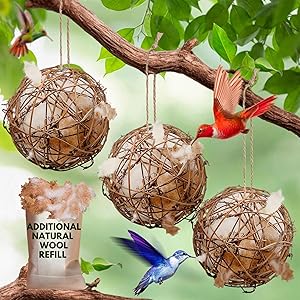
A major component of any successful hummingbird garden is a dependable hummingbird feeder that is easy to take apart and clean and doesn’t leak.
One of the best Hummingbird feeders that’s easy to take apart and clean is the HummZinger Ultra.
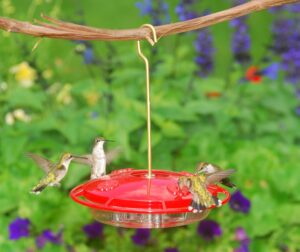
Aspects 12oz HummZinger Ultra With Nectar Guard.
The HummZinger Ultra 12oz Saucer Feeder is one of the best options for a hummingbird feeder that’s both easy to clean and maintain. This top-tier feeder features patented Nectar Guard tips—flexible membranes on the feeding ports that keep flying insects out while still allowing hummingbirds to feed freely. Plus, it comes with an integrated ant moat to prevent crawling insects from reaching the nectar, and the raised flower ports help divert rain, keeping the nectar fresh.
With a 12 oz capacity, this mid-size feeder offers plenty of space and can be hung or mounted on a post using the included hardware. It has four feeding ports and is made from durable, unbreakable polycarbonate. Whether you’re concerned about bees, wasps, or ants, this feeder is built for easy cleaning and insect protection.
If you already have a hummingbird feeder, and you want to protect it from ants and other crawling insects, the ant moat below will do the job.
Trap-It Ant Moat for Hummingbird Feeders
Using an ant moat for your hummingbird feeder is an effective way to keep ants away from the sweet nectar. These tiny creatures are drawn to
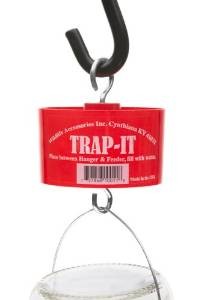
the sugar water, and without a barrier, they will quickly infest your feeder, preventing the birds from enjoying the nectar. An ant moat works by creating a barrier of water that ants can’t cross. Positioned above the feeder, it effectively blocks the ants’ path, keeping them from reaching the nectar.
This simple solution also ensures that your hummingbird feeder remains clean and accessible for the birds, rather than becoming a breeding ground for ants or other pests. It’s a small addition that can make a big difference in maintaining a healthy, inviting space for hummingbirds, while also reducing the need for chemical ant deterrents.
The first and still the best to protect your Hummingbird and Oriole feeder from ants and other crawling insects. Insert between hanger and feeder and fill with water, providing a barrier to crawling pests. Red color to attract hummingbirds.
In addition to nectar, hummingbirds need water and safe spaces to rest. By providing a birdbath or misting system, you can ensure they have everything they need.
Water Sources
Hummingbirds enjoy fresh water to drink and bathe. A shallow birdbath with a fine spray from a mister is ideal. Just make sure the water is changed regularly to keep it clean.
Here’s a solar powered bird bath.
Hummingbird misters at Amazon.com
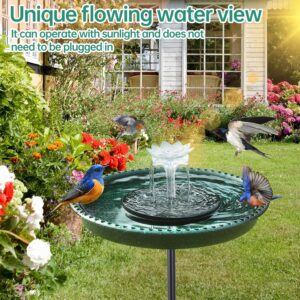
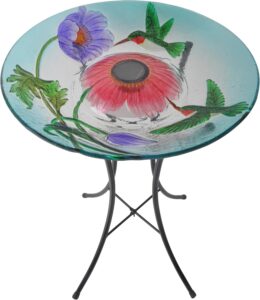
Install shallow bird baths with gently sloping edges. Hummingbirds prefer water sources that are no more than 1-1.5 inches deep.
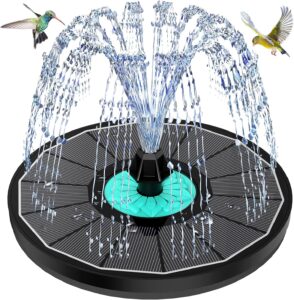
Consider adding a mister or dripper to create moving water, which attracts hummingbirds. They often enjoy flying through fine sprays of water.
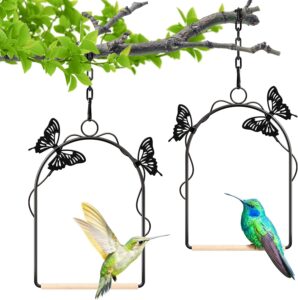
A hummingbird perch is a good way to attract hummingbirds to a particular spot near your feeder
Use Songbird Essentials Nectar Aid Self Measuring Pitcher and never measure ingredients again. Make any amount and the ingredients are measured for you.
 |
Column 2 |
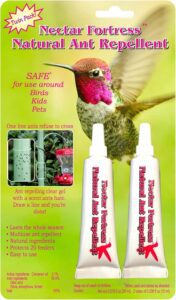
Nectar Fortress™ Natural Ant Repellent
CREATED FOR HUMMINGBIRD FEEDERS: Stop ants fast and keep them away from the bird feeder altogether. Use it on poles or hooks and create a barrier with a scent ants hate. Useful with ant moats or eliminate the moat entirely.
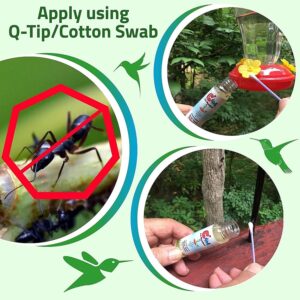
C’ANT, Ant and Bee Repellent for Hummingbird Nectar Feeders and Outdoor Bird Seed Feeders – Works with Shepherds Hook and Ant Moat – 1 oz.
Hummingbird resources to help make your garden a success
Here’s a complete guide to attracting hummingbirds to your yard. It lists plants, vines and shrubs that are in bloom for spring, summer and fall. Your hummingbirds will always have flowers to feed on.
Here’s a great article that tells everything you need to know about how to choose the best place to hang your hummingbird feeder.
Here’s the best designed hummingbird feeder to use. It’s leak proof, so it won’t attract insects and it’s easy to take apart and clean.
Here’s a comprehensive guide to help you clean your hummingbird feeder for those times when the nectar is not changed soon enough and mold starts to grow.
More Hummingbird Resources
U.S. Fish and Wildlife Service – Hummingbird Conservation
This site offers detailed information about various hummingbird species, their habitats, and conservation efforts. It also provides resources on how to protect these fascinating birds.
National Park Service – Hummingbird Resources
The National Park Service offers insights into hummingbird species found in national parks, their behaviors, and their role in ecosystems, along with tips for observing them.
Smithsonian National Museum of Natural History – Birds: Hummingbirds
This resource provides educational materials on the role of hummingbirds in pollination and biodiversity, backed by scientific research and exhibits from the Smithsonian.