American elderberry (Sambucus canadensis) is a vigorous native shrub known for its showy white flower clusters and heavy crops of dark purple berries. It typically grows 5–12 feet tall and wide, forming multi-stemmed thickets that look right at home along fencerows, streambanks, woodland edges, and in naturalized corners of the garden. In late spring to early summer, it produces broad, flat-topped clusters of tiny creamy-white flowers, followed later by dense clusters of berries that ripen from green to deep purple-black.
This shrub has a long history of use in food and folk medicine. Today, gardeners prize elderberry both for its ecological value and for its berries, which can be cooked into jams, syrups, wines, and baked goods. Raw berries, leaves, and other green parts contain compounds that can cause nausea or worse if eaten in quantity, so the fruit is best used cooked and the rest of the plant left to wildlife.
Key Characteristics
-
Height: About 5–12 feet tall; similar spread, often forming clumps or colonies
-
Bloom Time: Late spring to early summer (often May–July, depending on region)
-
Fruit Time: Late summer to early fall (typically August–September)
-
Light Requirements: Full sun to bright partial shade (best flowering and fruiting in full sun)
-
Soil Preference: Rich, moist, well-drained soils are ideal, but elderberry is adaptable and tolerates a range of conditions, including periodically wet or compacted soils
-
Zones: Generally hardy in USDA zones 3–9
Elderberry has pinnate leaves composed of several leaflets, giving it a somewhat lacy appearance. The flat-topped flower clusters (corymbs) can be quite large and are often buzzing with insect activity when in bloom. The berries that follow are small but produced in big, heavy clusters, which quickly attract birds and other wildlife once they ripen.
Why Elderberry Is Attractive to Hummingbirds and Pollinators
Elderberry’s flowers are not tubular, so they’re not classic hummingbird blooms, but the shrub still plays a useful role in a hummingbird-friendly landscape. The large flower clusters are loaded with nectar and pollen and are highly attractive to bees, flies, beetles, butterflies, and other insects. Hummingbirds will visit the shrub both to sip small amounts of nectar and, importantly, to hunt insects among the blossoms.
The peak bloom period—late spring into early summer—lines up with intense activity by both pollinators and nesting birds. Elderberry helps bridge the gap between spring tree and shrub bloom and the later summer perennials. By offering abundant food for insects, it indirectly supports hummingbirds, which depend heavily on insects as a protein source, especially when feeding young.
Natural Habitat and Growing Conditions
In the wild, American elderberry is commonly found in:
-
Stream and river banks
-
Pond and lake margins
-
Moist meadows and low fields
-
Woodland edges and clearings
-
Roadside ditches and disturbed moist soils
It naturally favors sites with decent moisture and reasonably fertile soils but is quite adaptable.
In the garden, it thrives when you provide:
-
Light: Full sun for best flower and fruit production. It will grow in bright partial shade but may bloom and fruit less.
-
Soil: Rich, loamy, moisture-retentive soil is ideal. Elderberry tolerates a wide range of soil types, including clay and somewhat compacted soils, as long as they aren’t bone-dry.
-
Moisture: Prefers moist to average moisture. It grows well in damp or periodically wet areas and can be used in rain gardens and riparian plantings. Once established, it tolerates some drought, but prolonged dryness will reduce berry yields and vigor.
Elderberry spreads by suckers and can form colonies over time, especially in open, moist ground. This makes it excellent for naturalizing, hedgerows, and erosion control on moist slopes and streambanks.
Care and Maintenance
Elderberry is relatively easy to grow and forgiving, but a few practices will keep it productive and attractive.
-
Watering: Keep the soil consistently moist during the first growing season. After establishment, water during extended dry spells, especially if you want good berry production.
-
Feeding: In good garden soil, elderberry needs little additional fertilizer. A yearly top-dressing of compost or a light application of a balanced fertilizer in early spring is usually sufficient. Over-fertilizing can lead to lush foliage at the expense of flowers and fruit.
-
Mulching: Apply a 2–3 inch layer of organic mulch (such as shredded leaves or wood chips) around the base to retain moisture, moderate soil temperature, and suppress weeds. Keep mulch away from the main stems to prevent rot.
-
Pruning:
-
Remove dead, damaged, or crossing canes in late winter or early spring.
-
Older, thick canes can be cut to the ground periodically to encourage new, vigorous growth.
-
Many growers maintain elderberry on a 3-year cane cycle, keeping a mix of one-, two-, and three-year-old canes because fruiting is often strongest on younger wood.
-
-
Suckers: Elderberry suckers freely. In wilder plantings, let it form a thicket. In smaller gardens, remove or thin suckers to keep the shrub within its allotted space.
Elderberry is generally resilient but can have weak wood and may break under heavy snow or ice; thinning and shaping can help reduce damage.
Ecological Benefits
Elderberry is one of the highest-value wildlife shrubs you can plant.
-
Pollinators: The flowers attract a wide range of pollinators, including bees, flies, beetles, and butterflies. The broad, open clusters provide easy access for many insect types.
-
Birds: Berries are eaten by dozens of bird species—often more than 40–50 kinds of songbirds and game birds. They provide an important summer and early fall food source. Elderberry thickets also offer excellent nesting and shelter opportunities.
-
Mammals and other wildlife: Small mammals, deer, and even box turtles have been documented eating elderberries. Deer and other browsers often feed on stems and foliage.
-
Insects and moths: Elderberry hosts numerous moth species as caterpillars, which in turn supply food for nesting birds. Hollow older stems can provide nesting and overwintering sites for native bees.
-
Erosion control: Dense root systems and suckering growth help stabilize soil along creeks, ponds, and damp slopes.
If your goal is to support birds, pollinators, and broader biodiversity, elderberry is a cornerstone species for moist or average sites.
Why Grow Elderberry
Elderberry combines ornamental interest, wildlife value, and edible potential in one rugged shrub.
1. Flowers, Fruit, and Seasonal Interest
The large white flower clusters in late spring are showy and fragrant, followed by heavy, pendulous berry clusters in late summer. Even in winter, the branching structure and remaining seedheads add visual texture.
2. High Wildlife Value
Few shrubs feed as many creatures as elderberry. It supports insects, birds, and mammals, making it ideal for habitat gardens, hedgerows, and naturalized plantings.
3. Edible Uses (With Care)
Cooked berries can be used in jams, jellies, syrups, pie fillings, wines, and cordials. Flowers are sometimes used in fritters, teas, or infused syrups. Because raw plant parts can cause nausea and contain potentially harmful compounds, berries should be cooked and other parts not eaten.
4. Fast Growth and Easy Establishment
Elderberry establishes quickly from cuttings or young plants and can reach near-mature size within a few years under good conditions. This makes it useful when you want relatively quick screening, habitat, or fruit production.
5. Versatile in Design
Elderberry fits well in:
-
Native and wildlife gardens
-
Rain gardens and riparian plantings
-
Hedgerows and living screens
-
Food forests and edible landscapes
It’s best used in informal or naturalistic designs, as its suckering habit and somewhat loose form are less suited to formal, tightly clipped spaces.
Planting Tips
Site Selection:
Choose a location with full sun to bright partial shade and soil that holds moisture reasonably well. Elderberry does especially well along the lower parts of a slope, near downspouts, or beside water features where moisture is more consistent.
Soil Preparation:
Loosen the soil and incorporate compost or well-rotted organic matter to improve fertility and structure, especially in very poor or compacted soils. Elderberry can tolerate clay but will appreciate organic matter mixed in.
Spacing:
Space shrubs about 6–10 feet apart, depending on the mature size of the variety and whether you want a continuous thicket or individual specimens. Remember that elderberry spreads by suckers, so allow extra room in naturalized settings.
Watering:
Water deeply at planting and keep soil consistently moist through the first growing season. In later years, water during extended droughts to maintain vigor and fruiting.
Cross-Pollination:
Most American elderberries set more and larger fruit when more than one genetically distinct plant is present. If fruit production for human use is a goal, plant at least two different elderberry selections within pollinating distance.
Unique Characteristics of Elderberry That Make It Special
Elderberry has several traits that make it stand out among native shrubs.
Host, Shelter, and Food All in One
It provides nectar and pollen, hosts caterpillars, offers nesting habitat and cover, and produces abundant fruit. This “all-in-one” habitat value is rare and extremely beneficial in a home landscape.
Rapid Thicket-Former
Elderberry’s suckering habit can quickly create a dense thicket—ideal for wildlife shelter, screening, and erosion control along moist edges. In the right setting, this is a huge advantage.
Rich Cultural History
From traditional medicinal uses to its role in homemade wines, syrups, and preserves, elderberry has deep cultural roots. Growing it can connect your garden to both ecological and human history.
Frequently Asked Questions
Is elderberry native?
American elderberry (Sambucus canadensis) is native to much of eastern and central North America, where it grows along streams, in moist fields, and at woodland edges.
Does elderberry attract hummingbirds and pollinators?
Yes. The flowers attract a wide variety of pollinators, and hummingbirds visit both for insects and small amounts of nectar. The shrub is an excellent choice for pollinator and bird gardens.
How much sun does elderberry need?
Elderberry grows in full sun to bright partial shade but flowers and fruits best in full sun. In too much shade, you’ll get more foliage and fewer berries.
Is elderberry drought tolerant?
It prefers moist to average soils and does best with consistent moisture. Once established, it can tolerate some drought, but extended dryness will reduce vigor and fruiting.
Can I eat elderberries?
Cooked American elderberries are commonly used in jams, jellies, syrups, wines, and baked goods. However, raw berries and other parts of the plant contain compounds that can cause nausea or be harmful, so berries should be cooked and the rest of the plant left to wildlife. If in doubt, consult reliable foraging or extension resources.
Will elderberry spread?
Yes. Elderberry spreads by suckers and can form colonies over time. In larger or naturalized spaces, this is beneficial. In smaller gardens, you may need to remove suckers to keep the plant within bounds.
Conclusion
Elderberry (Sambucus canadensis) is a fast-growing, wildlife-rich native shrub that delivers abundant flowers and fruit, excellent habitat, and potential edible uses. It thrives in moist, sunny to lightly shaded sites and fits naturally into hedgerows, rain gardens, streambanks, and informal borders.
By planting elderberry where the soil stays reasonably moist and giving it room to form a clump or thicket, you’ll gain a long-lived shrub that feeds birds, supports pollinators, stabilizes soil, and brings seasonal beauty and productivity to your landscape.
A few additions that will make any garden more hummingbird friendly
Provide nesting materials like cotton or plant fibers. You can place these materials in suet cages or spread them around your garden.
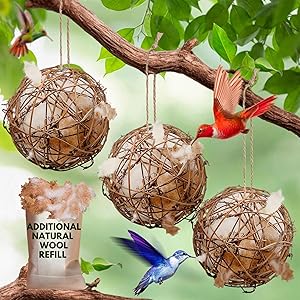
A major component of any successful hummingbird garden is a dependable hummingbird feeder that is easy to take apart and clean and doesn’t leak.
One of the best Hummingbird feeders that’s easy to take apart and clean is the HummZinger Ultra.
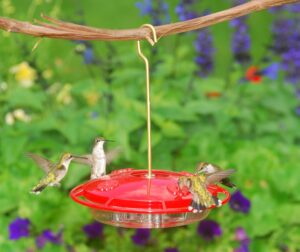
Aspects 12oz HummZinger Ultra With Nectar Guard.
The HummZinger Ultra 12oz Saucer Feeder is one of the best options for a hummingbird feeder that’s both easy to clean and maintain. This top-tier feeder features patented Nectar Guard tips—flexible membranes on the feeding ports that keep flying insects out while still allowing hummingbirds to feed freely. Plus, it comes with an integrated ant moat to prevent crawling insects from reaching the nectar, and the raised flower ports help divert rain, keeping the nectar fresh.
With a 12 oz capacity, this mid-size feeder offers plenty of space and can be hung or mounted on a post using the included hardware. It has four feeding ports and is made from durable, unbreakable polycarbonate. Whether you’re concerned about bees, wasps, or ants, this feeder is built for easy cleaning and insect protection.
If you already have a hummingbird feeder, and you want to protect it from ants and other crawling insects, the ant moat below will do the job.
Trap-It Ant Moat for Hummingbird Feeders
Using an ant moat for your hummingbird feeder is an effective way to keep ants away from the sweet nectar. These tiny creatures are drawn to
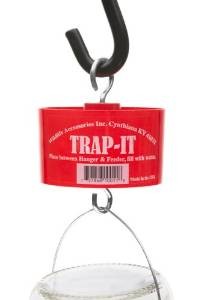
the sugar water, and without a barrier, they will quickly infest your feeder, preventing the birds from enjoying the nectar. An ant moat works by creating a barrier of water that ants can’t cross. Positioned above the feeder, it effectively blocks the ants’ path, keeping them from reaching the nectar.
This simple solution also ensures that your hummingbird feeder remains clean and accessible for the birds, rather than becoming a breeding ground for ants or other pests. It’s a small addition that can make a big difference in maintaining a healthy, inviting space for hummingbirds, while also reducing the need for chemical ant deterrents.
The first and still the best to protect your Hummingbird and Oriole feeder from ants and other crawling insects. Insert between hanger and feeder and fill with water, providing a barrier to crawling pests. Red color to attract hummingbirds.
In addition to nectar, hummingbirds need water and safe spaces to rest. By providing a birdbath or misting system, you can ensure they have everything they need.
Water Sources
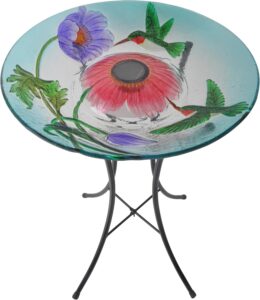
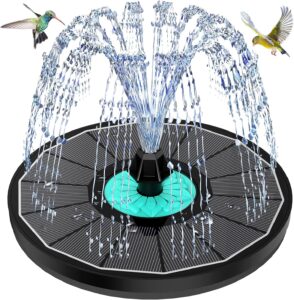
Hummingbirds enjoy fresh water to drink and bathe. A shallow birdbath with a fine spray from a mister is ideal. Just make sure the water is changed regularly to keep it clean.
Here’s a solar powered bird bath.
Hummingbird misters at Amazon.com
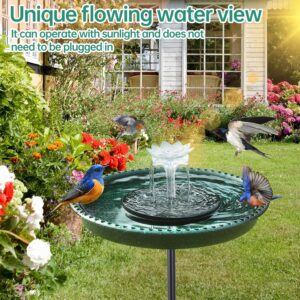
Install shallow bird baths with gently sloping edges. Hummingbirds prefer water sources that are no more than 1-1.5 inches deep.
Consider adding a mister or dripper to create moving water, which attracts hummingbirds. They often enjoy flying through fine sprays of water.
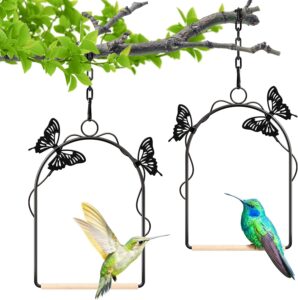
A hummingbird perch is a good way to attract hummingbirds to a particular spot near your feeder
Use Songbird Essentials Nectar Aid Self Measuring Pitcher and never measure ingredients again. Make any amount and the ingredients are measured for you.
 |
Column 2 |
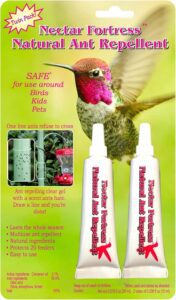
Nectar Fortress™ Natural Ant Repellent
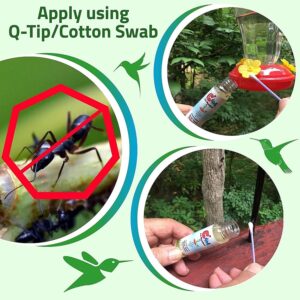
CREATED FOR HUMMINGBIRD FEEDERS: Stop ants fast and keep them away from the bird feeder altogether. Use it on poles or hooks and create a barrier with a scent ants hate. Useful with ant moats or eliminate the moat entirely.
C’ANT, Ant and Bee Repellent for Hummingbird Nectar Feeders and Outdoor Bird Seed Feeders – Works with Shepherds Hook and Ant Moat – 1 oz.
Hummingbird resources to help make your garden a success
Here’s a complete guide to attracting hummingbirds to your yard. It lists plants, vines and shrubs that are in bloom for spring, summer and fall. Your hummingbirds will always have flowers to feed on.
Here’s a great article that tells everything you need to know about how to choose the best place to hang your hummingbird feeder.
Here’s the best designed hummingbird feeder to use. It’s leak proof, so it won’t attract insects and it’s easy to take apart and clean.
Here’s a comprehensive guide to help you clean your hummingbird feeder for those times when the nectar is not changed soon enough and mold starts to grow.
More Hummingbird Resources
U.S. Fish and Wildlife Service – Hummingbird Conservation
This site offers detailed information about various hummingbird species, their habitats, and conservation efforts. It also provides resources on how to protect these fascinating birds.
National Park Service – Hummingbird Resources
The National Park Service offers insights into hummingbird species found in national parks, their behaviors, and their role in ecosystems, along with tips for observing them.
Smithsonian National Museum of Natural History – Birds: Hummingbirds
This resource provides educational materials on the role of hummingbirds in pollination and biodiversity, backed by scientific research and exhibits from the Smithsonian.