Desert Willow (Chilopsis linearis) for Hummingbirds in Arizona
Desert willow is one of the best small trees you can plant for hummingbirds in Arizona. It offers bright flowers, sweet nectar, and safe perches all in one tough native plant.
Arizona hummingbirds need both safe feeders and rich native plants. To see when to put feeders up and take them down, visit my Arizona hummingbird feeding dates. For tips on nectar, feeders, and yard setup, see my backyard hummingbird guide and my hummingbird food recipes.
What Is Desert Willow?
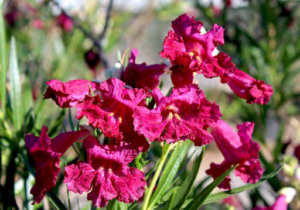
Desert willow (Chilopsis linearis) is a small native tree or large shrub from the deserts of the southwestern United States and northern Mexico. It naturally grows along dry washes and desert stream beds in Arizona, where the soil can be rocky and the rain is light.
Even though it is called “willow,” it is not a true willow tree. Instead, it belongs to the trumpet vine family. Many plants in this family have tube-shaped flowers that hummingbirds love. So, right away, desert willow fits perfectly in a hummingbird garden.
Desert willow usually grows about 15–30 feet tall. It has long, narrow leaves that look like those on true willows, and it often has several trunks that twist and spread. Gardeners often grow it as a multi-trunked tree, but you can prune it into a single trunk if you prefer a cleaner, more formal look.
The overall shape is open and airy. This means you can often see hummingbirds flitting through the branches. It also means light can reach plants under the tree, which is helpful if you want a layered hummingbird garden.
Flowers That Hummingbirds Can’t Resist
The main reason hummingbirds love desert willow is the flowers. The blossoms are trumpet-shaped, which makes them easy for hummingbirds to feed from with their long beaks and tongues. Each flower is like a tiny nectar cup for a visiting bird.
The flowers come in many colors. Some are soft pink. Others are lavender or white. Some newer varieties have deep purple or burgundy blooms. Many flowers also have darker stripes or spots inside the petals. These markings act like landing lights and help guide hummingbirds to the nectar.
Another big advantage is the long bloom season. Desert willow usually starts blooming in late spring. Then, it keeps flowering through the hot Arizona summer and often into early fall. When many other plants shut down in the heat, desert willow keeps feeding hummingbirds.
The more sun the tree gets, the more flowers it will usually produce. So, when you give it a sunny spot, you give hummingbirds a long, steady buffet of nectar.
Why Desert Willow Works So Well in Arizona
Desert willow is a true desert survivor. It is very well adapted to Arizona’s hot, dry climate. It can handle intense sun, very high temperatures, and long stretches with little or no rainfall.
Once its roots are established, desert willow needs very little extra water. In fact, too much water can cause problems. If the soil stays wet, the roots may rot. If you use a lot of fertilizer, the tree may grow too fast and become weak. It might also make more leaves and fewer flowers, which is bad news for hummingbirds.
Because it stays relatively small, desert willow fits well in courtyards, patios, and smaller suburban yards. It works nicely near a sitting area, where you can relax in the shade while hummingbirds feed and perch above you. It also does well along driveways or walls where bigger trees would be too large.
In many Arizona yards, people choose desert willow because it is both beautiful and practical. It adds color and wildlife without needing much water. It also drops dappled shade, which cools the ground without blocking all the light from your other plants.
How to Plant Desert Willow for Hummingbirds
First, choose the right spot. Pick a place that gets at least six hours of direct sun each day. Desert willow will bloom more and 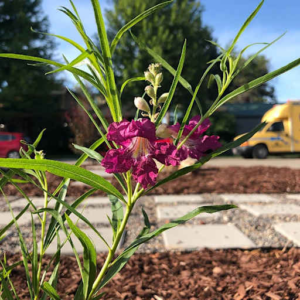 attract more hummingbirds when it has full sun. A spot with morning sun and some afternoon sun usually works well.
Next, check the soil. Desert willow likes well-drained soil. Sandy or gravelly ground is great. If you have heavy clay, make sure water does not sit around the roots. You may need to plant it on a slight mound or in an area that drains better.
When you are ready to plant, dig a hole about twice as wide as the root ball but no deeper. Place the tree so the top of the root ball is level with the surrounding soil. Backfill with the native soil you removed. You usually do not need compost or fertilizer in the planting hole.
After planting, water deeply to settle the soil around the roots. Then, spread a thin layer of mulch on top of the soil, but keep it a few inches away from the trunk. The mulch helps hold moisture and keeps the soil a little cooler.
During the first year or two, water deeply but not too often. You want the soil to get moist several inches down, then dry out some before you water again. This encourages the roots to grow deeper, which makes the tree tougher and more drought tolerant later on.
Simple Care Tips to Boost Blooms and Birds
Desert willow is easy to care for. It does not need much fertilizer. In fact, skipping fertilizer is often best. Too much nitrogen fertilizer can cause lots of leafy growth and fewer flowers. That means less nectar for hummingbirds, which is the opposite of what you want.
Pruning, however, is important. In late winter, while the tree is still resting, look for dead, damaged, or crossing branches and remove them. This helps the tree stay healthy and safe in strong winds. It also opens up the canopy so light and air can reach the center.
You can decide whether you want a multi-trunked, natural look or a single-trunk, small shade tree. If you like a more wild, desert feel, keep several trunks and shape them gently. If you prefer a cleaner look, choose one main trunk and slowly remove the others over a couple of seasons.
As the tree grows, it will drop some flowers, leaves, and seed pods. Underneath, you may see a layer of natural litter. Instead of seeing this as a mess, think of it as free mulch. It helps hold moisture in the soil and returns organic matter to the ground. You can gently rake it where you want it, or just let it build up under the canopy.
Creating a Hummingbird Haven Around Your Desert Willow
Desert willow is powerful on its own, but it is even better when you combine it with other hummingbird plants. Try planting native shrubs and perennials with tubular, colorful flowers nearby. When you do this, you create layers of nectar sources at different heights.
For example, you might plant lower-growing plants under and around the tree. Then, you can place medium-sized shrubs a little farther out. The desert willow becomes the upper story. Hummingbirds can move up and down between these layers, feeding and hiding as they go.
Adding a hummingbird feeder near the desert willow can also help. The bright flowers and active birds will draw attention to the feeder. As a result, new hummingbirds may find your yard more quickly. Just remember to clean and refill the feeder regularly so it stays safe and healthy.
Finally, try to keep at least part of your yard free of pesticides. Many hummingbirds also eat tiny insects for protein. When you avoid harsh chemicals, you protect the bugs they eat, along with other helpful pollinators.
Common Questions About Desert Willow and Hummingbirds
Does every desert willow attract hummingbirds?
Yes, almost every desert willow will attract hummingbirds because all varieties produce nectar-rich, trumpet-shaped flowers. Some named varieties produce extra-large or more colorful blooms, which may bring in even more birds, but all desert willows are useful in a hummingbird garden.
How long will desert willow bloom in Arizona?
In most Arizona locations, desert willow blooms from late spring through summer and often into early fall. With full sun and deep, occasional watering, it can hold flowers for many months. During this long bloom period, hummingbirds can return again and again to feed.
Is desert willow a good choice for small yards?
Yes, desert willow is ideal for small and medium yards because it stays relatively compact and can be pruned to fit tight spaces. You can keep it more shrubby or train it into a small tree, depending on how much room you have. Either way, it gives you shade, color, and hummingbird activity without overwhelming your yard.
Is desert willow messy?
Desert willow does drop flowers, leaves, and narrow seed pods, so it can look a bit messy under the canopy. However, many gardeners accept or even enjoy this because the tree needs so little water and offers great wildlife value. If needed, you can rake under it once in a while to keep paths or patios tidy.
Is desert willow truly drought tolerant?
Yes, once established, desert willow is highly drought tolerant and thrives with minimal watering. It is a top choice for low-water, climate-resilient landscapes in Arizona. As long as the soil drains well and the tree gets plenty of sun, it will handle dry times much better than many non-native trees.
Resources About Desert Willow and Hummingbirds
- Desert Willow – Plant of the Month (Water – Use It Wisely)
- Chilopsis linearis – UA Campus Arboretum
- Desert Willow – University of Arizona Cooperative Extension PDF
- Growing Desert Willow Trees (Garden Design)
- Desert Willow – Native Tree Beginner’s Guide
FAQ
Is desert willow safe around hummingbird feeders?
Yes, desert willow is safe near feeders and can actually help hummingbirds spot them more easily because the flowers and branches create a natural feeding and resting area.
Can I grow desert willow in a container?
You can grow young desert willow trees in large containers for a few years, but they do best planted in the ground where their roots can spread deeply and widely.
How fast does desert willow grow in Arizona?
Desert willow is a fairly fast grower. In good conditions, it can reach a useful size for shade and hummingbird habitat within just a few years after planting.