• Category Archives Uncategorized
  • Witch Hazel in Hummingbird Gardens

    Key Takeaways: Witch Hazel for Hummingbird Gardens

    • Late‑season wildlife support: Witch hazel blooms from roughly October into November, offering rare late nectar and pollen for moths, gnats, and small bees when almost nothing else flowers.

    • High habitat value shrub: This native understory shrub (about 10–20 feet tall, Zones 3–8) hosts 60+ moth and butterfly species, feeds birds with its seeds, and provides year‑round cover and structure near your nectar beds.

    Easy fit in Northeastern yards: Witch hazel thrives in moist, well‑drained, acidic to neutral soils in full sun to partial shade, making it perfect for woodland edges and mixed native shrub borders behind your main hummingbird flowers.

    Witch Hazel: A Fall‑Blooming Native Shrub for Hummingbird Gardens

    Most hummingbird plants hit their stride in spring and summer, but witch hazel is different. American witch hazel (Hamamelis virginiana) is a native understory shrub or small tree that blooms in late fall—often October into November in the Northeast—with fragrant, bright yellow, ribbon‑petaled flowers that appear after the leaves turn and fall. Those blooms provide some of the very last nectar and pollen of the year for insects, and the shrub’s dense branching, caterpillar‑hosting foliage, and seeds add to the habitat that supports hummingbirds indirectly.

    In a Northeastern hummingbird garden, witch hazel won’t be a top nectar source like cardinal flower or trumpet honeysuckle. Instead, it functions as a four‑season supporting shrub in the same category as serviceberry, chokeberry, American hazelnut, ninebark, and highbush blueberry: it feeds the food web, offers cover, and extends interest well beyond the main hummingbird season.


    Native Range, Size, and Year‑Round Interest

    American witch hazel is native to forests and woodland edges across much of eastern North America, including the Northeastern United States. It’s commonly found in the understory of mixed hardwood forests, along stream banks, and at woodland margins, often forming loose colonies.

    Typical stats:

    • Height: Usually 10–20 feet tall; can reach around 25 feet as a small tree in good conditions.

    • Spread: About 10–15 feet, with a multi‑stemmed, vase‑shaped habit.

    • Hardiness: Roughly USDA Zones 3–8, easily hardy throughout the Northeast.
    Seasonal interest:

    • Spring: Fresh, sometimes slightly bluish or bronze‑tinged leaves; emerging seeds from last year’s flowers.

    • Summer: Dense green foliage, providing shade, cover, and insect habitat.

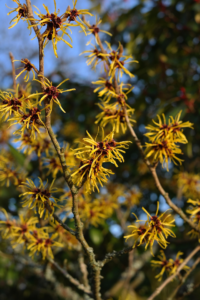
    • Fall: Bright yellow foliage followed—or overlapped—by fragrant, spidery yellow flowers on bare or nearly bare branches.

    • Winter: Persistent seed capsules that eventually snap open and eject glossy black seeds, plus zig‑zag twigs and branching that add structure.

    That combination makes witch hazel one of the few shrubs that truly offers something interesting in every season, which is ideal for a garden you want to enjoy year‑round, not just during peak hummingbird bloom.


    Wildlife Value That Supports Hummingbirds

    Witch hazel’s wildlife value runs deeper than its modest flowers might suggest.

    Late‑Season Nectar and Pollen

    American witch hazel blooms surprisingly late—typically October and November in much of the Northeast. The small yellow flowers produce both nectar and pollen and have been documented as being visited primarily by:

    • Flies

    • Small bees

    • Noctuid moths and other late‑flying moths

    This late bloom provides one of the last foraging opportunities before winter for insects that are still active when most other flowers are gone. While Ruby‑throated Hummingbirds generally depart the Northeast by late September, those insects become part of the food web that will support birds and other wildlife into winter and help jump‑start activity again in spring.

    Insects and Caterpillars

    American witch hazel is reported as a host plant for more than 60 species of moths and butterflies, including the Witch Hazel Dagger moth and other specialist species. Caterpillars feeding on its leaves provide critical protein for nesting and migratory birds. Hummingbirds don’t eat witch hazel foliage directly, but they do rely heavily on small insects and spiders to feed themselves and their young, so a shrub that produces this much “bug life” is a major asset.

    Seeds, Cover, and Structure

    Witch hazel’s hard seed capsules mature the year after flowering and then burst open, ejecting seeds several feet away with an audible “pop.” These seeds are eaten by birds such as wild turkeys and by small mammals. The dense, multi‑stemmed structure provides hiding spots and potential nesting cover for songbirds and small wildlife, especially when integrated into a hedgerow or woodland edge.

    In a hummingbird garden context, witch hazel helps:

    • Increase overall bird activity and diversity.

    • Provide safe cover near nectar plants and feeders.

    • Bolster the insect base that hummingbirds hunt.

    So, while witch hazel won’t be covered in hummingbirds like a patch of bee balm or trumpet honeysuckle, it absolutely plays a supporting role in a larger, wildlife‑rich planting.


    Growing Conditions and Care in the Northeast

    Witch hazel is relatively easy to grow in Northeastern conditions if you match it to an appropriate site.

    Light

    • Best: Full sun to part shade.

    • In nature: Often an understory shrub at woodland edges, so it can handle light shade.

    • For bloom and fall color: More sun typically means heavier flowering and brighter foliage color, especially in cooler climates.

    A good compromise in many Northeastern gardens is morning sun with afternoon shade, or high, filtered shade along a woodland edge.

    Soil

    • Prefers moist, well‑drained, slightly acidic to neutral soils rich in organic matter.

    • Tolerates clay and erosion and will grow in heavier soils as long as they don’t dry out severely.

    • Does not like prolonged drought; extremely dry locations are best avoided.

    Adding compost and a 2–3 inch layer of mulch helps retain soil moisture, which is particularly important because witch hazel dislikes drying out in summer.

    Water and Establishment

    • Water regularly during the first couple of years to encourage deep root development.

    • Once established, witch hazel can handle average moisture and some short dry spells, but it will perform best with consistent moisture.

    Pruning and Maintenance

    Witch hazel tends to have a naturally attractive, vase‑shaped form and needs minimal pruning.

    • If pruning is needed, do it right after flowering or in very early spring, removing crossing, damaged, or inward‑growing branches.

    • Avoid heavy shearing; it ruins the natural shape and can reduce flowering.

    • If you want more of a small tree form, gradually thin lower stems and select a few main trunks.

    Pest and disease issues are typically minor; witch hazel is considered low‑maintenance and resistant to most serious problems.


    Designing Witch Hazel into a Hummingbird Garden

    Because witch hazel blooms in fall and functions primarily as a habitat shrub, design it as backbone rather than a front‑and‑center nectar focal point.

    Layered Shrub Edge

    Along a property line, woodland edge, or the back of a hummingbird bed:

    In front of that shrub line, you can mass the classic nectar plants from your Best Hummingbird Plants for Northeastern United States guide—bee balm, wild bergamot, cardinal flower, fire pink, royal catchfly, great blue lobelia, butterfly weed, fringeleaf wild petunia, garden phlox, etc.

    Woodland‑Edge Hummingbird Corner

    Along a shady to part‑shade edge:

    • Use witch hazel as the understory anchor, taking advantage of its natural affinity for woodland margins.

    This creates a “woodland hummingbird room” with structure, spring nectar, summer cover, and fall fragrance from witch hazel.

    Near a Path or Window for Fall Interest

    Because witch hazel’s flowers are subtle up close but stunning when back‑lit, it’s worth placing at least one specimen where you actually see it in fall:

    • Near a path you use often in October and November.

    • Within view of a window, so you catch the yellow fall foliage and flowers against low autumn light.

    Even though hummingbirds will be gone by the time it blooms, you’ll be reminded that your hummingbird garden is still doing important work—feeding late insects and supporting wildlife on the shoulder of winter.


    FAQ: Witch Hazel in Northeastern Hummingbird Gardens

    Is witch hazel a good plant for hummingbirds?
    Not directly. Witch hazel’s late, small flowers are used mainly by flies, bees, and moths rather than hummingbirds, which have usually migrated before peak bloom in the Northeast. However, as a native shrub that hosts many moths and supports birds, it indirectly strengthens the habitat your hummingbirds depend on.

    Where is American witch hazel native?
    Hamamelis virginiana is native across much of eastern North America, including the Northeastern U.S., where it grows in forest understories, along streams, and at woodland edges.

    How big does witch hazel get, and will it fit in a small yard?
    American witch hazel usually grows 10–20 feet tall and 10–15 feet wide, forming a multi‑stemmed, vase‑shaped shrub or small tree. It can be too large for very tight foundation beds but works well along property lines, woodland edges, and in larger mixed shrub borders.

    What light and soil conditions does witch hazel need?
    Witch hazel performs best in full sun to part shade, in moist, well‑drained, slightly acidic to neutral soils with plenty of organic matter. It tolerates clay and erosion but dislikes prolonged drought.

    Does witch hazel require a lot of maintenance?
    No. Once established, it is low‑maintenance: just provide consistent moisture, a layer of mulch, and occasional light pruning to remove crossing or damaged branches or to refine shape.


    Hummingbirds and Habitat Resources

    USDA Forest Service – Hummingbird habitat in the East (PDF)
    “Maintaining and Improving Habitat for Hummingbirds in the Eastern United States.” Good for big‑picture habitat guidance.
    Follow-ups

  • Hummingbird Food Sugar Ratio


    Quick note: This page gives you a focused look at hummingbird food and recipes.
    For a complete guide to safe nectar ratios, cleaning schedules, and common mistakes, visit
    How to Make Hummingbird Feeder Nectar: A Beginner’s Guide.

    Key Takeaways: Hummingbird Food Sugar Ratio

    • The best hummingbird food sugar ratio is 1 part white sugar to 4 parts water, which closely matches natural flower nectar.

    • Use only plain white granulated sugar and clean water—never honey, brown sugar, or red dye in your nectar.

    • Change nectar every 1–3 days in warm weather and clean feeders regularly to prevent mold and fermentation.

    • Keep the ratio consistent year‑round; focus on freshness, feeder hygiene, and good placement rather than stronger mixes.

    Getting the hummingbird food sugar ratio right is one of the most important things you can do to keep these tiny birds healthy and coming back to your feeders. The wrong mix can spoil faster, attract fewer birds, or even cause problems for their delicate systems over time. The good news is that the ideal ratio is simple, reliable, and easy to remember.

    In this guide, you’ll learn exactly what sugar ratio to use, why it works so well, how to mix it in different batch sizes, and how this nectar fits into a bigger plan for attracting hummingbirds to your yard.


    What Is the Best Hummingbird Food Sugar Ratio?

    The best hummingbird food sugar ratio is:

    1 part white granulated sugar to 4 parts water.

    You’ll also see it written as:

    • 1:4 sugar-to-water

    • 4:1 water-to-sugar

    This ratio gives you a nectar solution that is close to the natural sugar concentration in many hummingbird-pollinated flowers. It is strong enough to give hummingbirds a quick burst of energy but not so strong that it becomes hard to digest or increases the risk of dehydration.

    Why the 1:4 Ratio Works So Well

    There are three big reasons why the 1:4 hummingbird food sugar ratio has become the standard:

    • It closely mimics natural nectar. Wild flowers visited by hummingbirds often have sugar concentrations in the 20–30% range, and a 1:4 mix falls right in that neighborhood.

    • It’s widely recommended by experts. Zoos, bird organizations, and hummingbird specialists consistently recommend a 1:4 sugar-to-water ratio for backyard feeders.

    • It balances attraction and safety. Slightly stronger mixes may attract more birds in the short term, but they can be harder on the birds and may encourage crystals or faster spoilage in your feeders.

    Because of this, the 1:4 ratio is the one you highlight across your hummingbird food and nectar recipe pages, and it’s the simplest to recommend to beginners.

    For a step‑by‑step recipe go to the detailed recipe page at:
    https://howtoenjoyhummingbirds.com/recipe-for-hummingbird-nectar/


    Easy Ways to Measure the Hummingbird Food Sugar Ratio

    The beauty of the 1:4 ratio is that you can scale it up or down using any measuring cup or spoon. The key is to keep the proportions the same.

    Here are some example batches that match the ratio you use on your hummingbird food and nectar recipes pages:

    • 1/4 cup sugar + 1 cup water

    • 1/2 cup sugar + 2 cups water

    • 1 cup sugar + 4 cups water

    • 2 cups sugar + 8 cups water (for multiple feeders)

    For a full chart of sugar and water measurements using the 1:4 ratio, visit:
    https://howtoenjoyhummingbirds.com/hummingbird-food/


    How to Mix Hummingbird Food Using the 1:4 Ratio

    Once you know the correct hummingbird food sugar ratio, mixing the nectar is quick and easy. Here’s a simple method that matches what you already teach across your recipe articles.

    1. Measure your ingredients

      • Use plain white granulated sugar.

      • Use clean tap, filtered, or spring water.

    2. Combine sugar and water

      • Mix 1 part sugar with 4 parts water in a clean container.

      • Stir until all the sugar is completely dissolved.

    3. Optional: Gently heat or boil

      • Some people like to heat the mixture to help dissolve the sugar and briefly kill microbes.

      • If you do boil it, let the nectar cool before filling your feeders.

    4. Fill and store

      • Fill your hummingbird feeders with cool nectar.

      • Store any extra in the refrigerator for up to about a week, and discard if it looks cloudy or smells off.

    For more step‑by‑step photos go to:


    Can You Change the Hummingbird Food Sugar Ratio?

    Once people learn the 1:4 ratio, the next question is often: “Should I ever change it?” In most situations, the answer is no—stick with 1 part sugar to 4 parts water year‑round.

    Here are a few common ideas and how you might address them:

    • Using a richer 1:3 mix.
      A few sources mention slightly stronger mixes in cold weather, but for backyard feeding, your safest and simplest recommendation is to stay with 1:4 so visitors don’t overcomplicate things or risk problems.

    • Using a weaker 1:5 mix.
      Weaker mixes are closer to some flowers but may not attract hummingbirds as well and don’t give as much energy per sip.

    • Switching ratios by season.
      Constantly changing the ratio doesn’t help the birds and can confuse beginners. A steady 1:4 mix is healthier and much easier for people to remember and maintain.

    Cleanliness, freshness, and good feeder placement matter more than tiny changes in sugar concentration. Check out the beginner’s nectar guide to reinforce best practices:


    Ingredients You Should and Shouldn’t Use

    Getting the hummingbird food sugar ratio right also means using the right ingredients. On your site, you clearly warn against adding anything other than white sugar and water, and this article can echo that guidance.

    Safe to use:

    • Plain white granulated sugar (sucrose).

    • Clean water.

    Do not use:

    • Honey (can ferment quickly and promote fungal infections in hummingbirds).

    • Brown sugar, raw sugar, or molasses (contain minerals and byproducts hummingbirds don’t need and that can cause problems).

    • Artificial sweeteners (no calories and no energy for the birds).

    • Red food coloring (unnecessary and potentially harmful; your feeders provide all the color they need).

    Here’s some quick, learn more, options:


    How Often Should You Change Nectar Made With the 1:4 Ratio?

    Even the perfect hummingbird food sugar ratio won’t help if the nectar sits too long and starts to ferment or grow mold. That’s why you already emphasize feeder cleaning and nectar changes across your site.

    General guidelines you can repeat on this page:

    • In hot weather, change nectar every 1–2 days.

    • In mild weather, every 3–5 days is usually fine.

    • Any time nectar looks cloudy, has black spots, or smells sour, dump it, clean the feeder, and refill with fresh nectar.

    These reminders give you a natural internal link to your more detailed cleaning and maintenance tips on your various hummingbird food and feeder pages.


    To learn more about feeder placement and how to help nectar stay fresh longer, you can go to the DIY feeder and attracting‑hummingbirds guides:


    How the Sugar Ratio Fits Into a Bigger Hummingbird Strategy

    The 1:4 hummingbird food sugar ratio is just one piece of a larger picture. Hummingbirds also need insects for protein, safe places to perch, and a yard full of nectar‑rich flowers.

    The articles below will give you the necessary information you need to keep your hummingbirds happy!

    These greatly informative links will take you from “What ratio should I use?” to “How do I build a full hummingbird‑friendly garden?”


    From here, visit my main hummingbird food or nectar recipe pages for a larger batch chart, and more detailed tips on feeder care:

    For Further Reading: Zoo and major conservation organizations


  • Hummingbird Facts: How They Live, Feed, and Thrive

    Hummingbirds are among the smallest birds in the world, but they pack in more speed and energy than almost any other creature. They can hover, fly backward, and beat their wings over 50 times per second. Their rapid metabolism demands constant food and makes them fascinating to watch in any backyard.

    This guide walks through the key facts about hummingbird bodies, flight, feeding, nesting, migration, and how you can support them at home.


    On This Page

    • How hummingbirds burn energy and survive with such high metabolisms.

    • What they need from your yard to feed and thrive (nectar, insects, shelter).

    • Simple changes you can make this week to better support hummingbirds.

    For practical tips on bringing them to your yard, see The Art of Attracting Hummingbirds to Your Yard.


    What Makes Hummingbirds So Special?

    Most hummingbirds are just 3–5 inches long and weigh less than a nickel. Their bodies are built for flight:

    • Long, narrow wings with a ball‑and‑socket shoulder joint that allows full rotation.
    • Compact, muscular bodies with oversized chest muscles for powerful wingbeats.
    • Long bills and extendable tongues specialized for drinking nectar from flowers and feeders.

    Hummingbirds can see into the ultraviolet range, which helps them find flowers, and they have excellent memory for locations of feeders and blooms they’ve visited before.

    If you’re just getting started with yard setup, try our step‑by‑step guide: Attracting Hummingbirds to Your Yard.


    How Hummingbirds Fly

    Hummingbirds don’t fly like other birds; their wings move in a figure‑eight pattern that generates lift on both the downstroke and the upstroke. This allows them to:

    • Hover in place to feed from flowers and feeders.
    • Fly backward, sideways, and straight up or down.
    • Make sudden stops and sharp direction changes in the air.

    To do this, they beat their wings incredibly fast—often 50–80 times per second—and their hearts can race to more than 1,000 beats per minute during intense activity.


    What Hummingbirds Eat

    Nectar is the main fuel that powers a hummingbird’s high‑speed life. They visit flowers and feeders throughout the day, sipping small amounts frequently rather than taking a few large meals.

    Nectar and sugar water

    In the wild, hummingbirds prefer tubular flowers rich in sucrose. In our yards, we can mimic this with a simple sugar‑water mix for feeders:

    • 4 parts water
    • 1 part plain white granulated sugar

    They don’t need red dye or additives; the color of the feeder and nearby flowers is enough to draw them in. For practical feeder and cleaning tips, visit Attracting Hummingbirds – Feeder Tips & Nectar Recipe.

    Insects and protein

    Nectar provides energy, but not much protein. Hummingbirds also eat tiny insects and spiders, including gnats, fruit flies, and small caterpillars. This protein is especially important for:

    • Growing nestlings and fledglings.
    • Adult birds during nesting and molt.
    • Migrating birds building up strength for long flights.

    A garden with fewer pesticides and more native plants naturally supports the insects hummingbirds need. You can explore plant ideas in the Flowers & Plants Hummingbirds Love section.


    How Hummingbirds Drink Nectar

    Hummingbirds don’t drink like a straw; they use a specialized tongue. Their tongues are long, forked, and can extend far beyond the bill. When they dip their tongue into nectar:

    • The tongue flicks in and out up to a dozen times per second.
    • Tiny grooves along the tongue trap nectar.
    • Surface tension and the tongue’s movement help pull nectar back into the mouth.

    This fast, efficient drinking allows them to feed quickly and move on before predators have time to react.


    Hummingbird Vision, Color, and Communication

    Color plays a big role in hummingbird life. Iridescent feathers on males can flash different colors depending on the angle of light. These colors:

    • Attract females during courtship.
    • Help males defend territories and display dominance.

    Hummingbirds also use a mix of chirps, chips, and high‑pitched calls. Wing and tail sounds—the hum, buzz, or sharp “chirp” in a dive—are part of their communication and courtship displays.

    For a deeper dive into their behavior, see Hummingbirds: Unveiling Their Hidden Social Lives.


    Territories and Behavior

    Hummingbirds are small but extremely territorial, especially around rich food sources like feeders and dense flower patches. A single dominant bird may patrol a feeder and chase others away.

    Common behaviors you’ll see:

    • Chasing and dive‑bombing around feeders or favorite flowers.
    • Hovering face‑to‑face with another hummingbird in a standoff.
    • Perching high on a favorite branch to watch over their territory.

    Providing multiple feeders and spreading them out can give more birds a chance to feed. If one bird is guarding everything, our guide on attracting hummingbirds shows how to arrange feeders and plants to reduce conflicts.


    Hummingbird Nests, Eggs, and Babies

    A hummingbird nest is a tiny masterpiece, usually no larger than a golf ball. The female does all the nest building, incubation, and chick care.

    Nest basics

    • Built on a small branch, often sheltered by leaves.
    • Made from plant down, moss, and fibers, held together with spider silk.
    • Flexible walls that can stretch as the chicks grow.

    Eggs and chicks

    • Typically two eggs per nest, each about the size of a jellybean.
    • The female incubates them for around two weeks.
    • Chicks remain in the nest about three weeks before fledging.

    Hummingbird nests are very delicate. If you find one in your yard, the best thing you can do is give it space, avoid pruning that branch, and keep activity around it gentle. For detailed nesting information and photos, visit Hummingbird Nesting Facts and Hummingbird Nests, Eggs & Baby Photos.


    Migration and Seasonal Movements

    Many hummingbirds migrate long distances between breeding and wintering grounds. Some species travel hundreds or even thousands of miles each year, including flights over the Gulf of Mexico.

    In North America:

    • Birds typically arrive in spring as flowers and insects become available.
    • They spend summer nesting and feeding heavily.
    • In late summer and fall, they fuel up on nectar and insects for the journey south.

    You can help by having clean feeders and blooming plants available during spring arrival and late‑summer migration. For species‑specific info, see Hummingbird Species in Ohio and your regional species guides.


    Hummingbirds and Their Ecosystem Role

    Hummingbirds aren’t just beautiful—they’re important pollinators. As they drink nectar, they brush against flower parts and transfer pollen from blossom to blossom. This helps:

    • Native plants set seed and fruit.
    • Maintain genetic diversity in plant populations.
    • Support other wildlife that depends on those plants.

    To explore their ecological role in more detail, read Hummingbirds and Their Important Role in the Ecosystem.


    How You Can Enjoy and Help Hummingbirds

    You don’t need a huge yard or fancy equipment to enjoy hummingbirds up close. A few simple steps make a big difference:

    • Offer clean feeders with a proper sugar‑water mix and regular cleaning.
    • Plant nectar‑rich flowers, especially native species that bloom from spring through fall.
    • Provide shallow, moving water like misters, drippers, or small bubblers.
    • Avoid pesticides so hummingbirds have plenty of insects for protein.
    • Create safe perches and cover with shrubs, small trees, and vines.

    Once hummingbirds find a reliable place to feed and rest, they often return year after year—and may even bring their youngsters to your yard. When you’re ready to put these facts into action, head back to our main how‑to guide: The Art of Attracting Hummingbirds to Your Yard.


    “For more on hummingbird habitat and biology from wildlife agencies, see these resources from the USDA and U.S. Fish & Wildlife Service.”Eastern habitat + native plants (food & shelter)


  • Virginia Creeper’s Importance in Hummingbird Gardens

    Key Takeaways: Virginia Creeper for Hummingbirds

    • Builds deep habitat, not nectar: Virginia creeper’s small flowers, caterpillar‑hosting foliage, berries, and dense cover support insects and birds that hummingbirds rely on for food and protection.

    • Tough native vine for the Northeast: Hardy roughly in USDA Zones 3–10, it thrives in sun or shade, climbs 30–50 feet on trees, fences, and walls, and delivers brilliant red fall color and bird‑loved berries.

    • Best as a backdrop to nectar vines: Use it to green and “wild up” fences, trees, and slopes behind high‑nectar vines like trumpet honeysuckle and crossvine, plus the hummingbird perennials from your Northeastern plant list.

    Virginia Creeper: A Wildlife Workhorse Vine for Hummingbird Gardens

    When gardeners think about vines for hummingbirds in the Northeastern United States, they usually picture bold, tubular blooms like trumpet honeysuckle / coral honeysuckle or trumpet creeper. Virginia creeper (Parthenocissus quinquefolia) looks different—five‑leaf clusters, small greenish flowers, and blue berries—but it quietly supports an enormous amount of wildlife.

    Virginia creeper won’t be your primary nectar source for hummingbirds, but it absolutely belongs in a Northeastern hummingbird garden as a structural, wildlife‑rich vine that feeds insects, birds, and small animals, and provides dense cover and nesting sites. In other words, it’s the “infrastructure” that makes your showier hummingbird vines and flowers part of a real habitat instead of just decoration.


    How Virginia Creeper Helps Hummingbirds

    Virginia creeper is a native woody vine in the grape family (Vitaceae), found across much of eastern and central North America, including the entire Northeastern U.S. It climbs using tendrils tipped with adhesive pads, allowing it to cling strongly to bark, rock, and walls without twining tightly or strangling its support.

    From a hummingbird perspective, its value comes mostly from indirect support:

    • Its small, greenish‑white flowers in late spring and summer provide nectar and pollen for bees and other small pollinators.

    • As a host plant, Virginia creeper supports numerous caterpillar species, including sphinx moths and other Lepidoptera, whose larvae become protein‑rich food for nesting birds.

    • Its dense foliage offers shelter and nesting sites for songbirds; cardinals, for example, are documented nesting in Virginia creeper on arbors and fences.

    • In fall, its blue‑black berries are eaten by many birds—sources note 30+ bird species using them—along with mammals like squirrels, chipmunks, and raccoons.

    Hummingbirds rely on a constant supply of tiny insects and spiders for protein, especially when feeding young, and they thrive in gardens that support a robust insect and bird community. By hosting caterpillars and other insects and providing cover for small birds, Virginia creeper indirectly feeds and protects the hummingbirds working your more obvious nectar plants.

    You may occasionally see hummingbirds investigate its flowers, but you should treat Virginia creeper primarily as a habitat vine that complements your true nectar vines and flowers, not as a direct replacement for them.


    Native Range, Hardiness, and Growth Habit

    Virginia creeper is native to a huge swath of eastern and central North America—from New England and the Mid‑Atlantic through the Midwest and South, and west into parts of the Plains and Rockies. That means it is fully at home in the Northeastern United States and already woven into local ecosystems.

    Key stats:

    • Hardiness: Approximately USDA Zones 3–10, making it hardy throughout the Northeast and far beyond.

    • Height: 30–50 feet or more when given a suitable support.

    • Spread: Typically 5–10 feet, but can spread further along the ground as a groundcover.

    • Climbing method: Tendrils with adhesive pads that “glue” themselves to surfaces.

    The vine is fast‑growing and vigorous. It can:

    • Climb tall trees, fences, and masonry walls.

    • Scramble along the ground as a dense groundcover, where it provides cover and nesting habitat for small animals.

    • Quickly cover banks and slopes, helping with erosion control.

    In fall, Virginia creeper is especially striking, turning deep red, burgundy, or crimson, often before many other vines color up. The combination of red foliage and blue berries is visually dramatic and highly attractive to birds.


    Flowers, Berries, and Wildlife

    Flowers

    Virginia creeper’s flowers are small and often overlooked, but they are ecologically important. They appear in clusters in late spring to early summer and are greenish‑white to yellowish.

    • Bees and other small pollinators visit the flowers for nectar and pollen.

    • Gardeners observing wildlife note bees, flies, and other insects using Virginia creeper blossoms heavily when in bloom.

    Although the flowers aren’t classic hummingbird magnets like trumpet honeysuckle or crossvine, that insect activity gives hummingbirds extra hunting opportunities around the vine.

    Berries

    After flowering, Virginia creeper produces clusters of small, blue‑black berries on bright red stems, typically ripening in late summer into fall. These berries are:

    • Eaten by at least 30 bird species, including chickadees, robins, catbirds, woodpeckers, warblers, bluebirds, and others.

    • Used by mammals such as squirrels, chipmunks, opossums, raccoons, and deer, which also browse leaves and stems.

    For your hummingbird garden, that bird traffic is a plus. More birds mean more insect‑control, more activity, and a richer experience overall. While the berries are not edible for humans (they are considered toxic to people), they are a major wildlife food in fall and early winter.

    Cover and Nesting

    Virginia creeper’s dense foliage and branching habit create excellent cover:

    • Birds nest in it when it grows over arbors, fences, and shrubs; Northern Cardinals are specifically documented nesting in Virginia creeper.

    • Small mammals and ground‑nesting birds use it as shelter when it sprawls along the ground or covers brush piles.

    In a hummingbird planting, Virginia creeper is the vine that turns the back fence or a tree‑covered corner into a wildlife hub, so hummingbirds aren’t feeding in a sterile landscape but in a living, bird‑rich environment.


    Growing Conditions and Site Selection

    Virginia creeper is remarkably adaptable, which is part of why it’s such a useful vine in the Northeast.

    Light

    • Thrives in full sun to part shade.

    • Tolerates full shade, though foliage will be less dense and fall color may be less intense; flowering and fruiting may also be reduced.

    Soil

    • Grows in a wide range of soils: clay, loam, sand, and chalk.

    • Handles acidic, neutral, or slightly alkaline pH.

    • Prefers moist but well‑drained soil but tolerates periods of drought once established.

    Hardiness

    • With hardiness from about Zone 3 to 10, Virginia creeper is entirely comfortable through Northeastern winters, from northern New England to the Mid‑Atlantic.

    Because it’s so adaptable, you can use Virginia creeper in spots where more finicky hummingbird vines or shrubs might struggle: north‑facing fences, partial shade, tough clay banks, and edges of woodland where roots compete.

    For sun‑drenched, prime hummingbird spots, you’ll still want nectar‑rich vines like trumpet honeysuckle and crossvine. Virginia creeper often shines just to the side of those, filling in less ideal but still valuable spaces.


    Managing a Vigorous Native Vine

    Virginia creeper is vigorous and can grow 30–50 feet or more, so you need to plan for its enthusiasm.

    Climbing and Surfaces

    • It climbs via tendrils with adhesive pads that can stick strongly to masonry, wood, and even relatively smooth surfaces.

    • The pads do not penetrate the surface, but they can be very hard to remove cleanly; pulling them off may damage paint or leave marks on walls.

    • Because the vine is flammable and can hold dry leaves close to structures, some sources recommend keeping it away from the exterior walls of houses for fire safety.

    Best supports:

    • Fences, arbors, pergolas, trellises, and free‑standing screens.

    • Large, mature trees (especially at woodland edges), where the vine can climb the trunk and branches without harming the tree.

    • Rock walls, old stumps, and banks, where it can function as a green (and then red) cloak.

    Pruning and Control

    Virginia creeper is easy to prune and can be cut back at almost any time to keep it in bounds.

    • Routine: Trim back unwanted shoots during the growing season to keep the vine from reaching gutters, windows, or roofs.

    • Structural: In late winter or early spring, you can do heavier thinning—removing older stems or reducing volume—to keep the framework manageable.

    • Along the ground: Mow or trim creeping runners if you don’t want it spreading across a lawn or into beds.

    Because it’s a native and not invasive, the goal is not to eradicate it but to guide it: let it cover the supports you want and edit it where it overreaches.


    Virginia Creeper vs. Other Hummingbird Vines

    Virginia creeper plays a different role than your classic hummingbird vines:

    • Trumpet honeysuckle / coral honeysuckle (Lonicera sempervirens):

      • A compact, well‑behaved native vine with red tubular flowers that are top‑tier nectar for hummingbirds.

      • Best for smaller structures, railings, and arbors in prime sunny spots.

    • Crossvine (Bignonia capreolata):

      • A vigorous native with orange‑red trumpets and a huge spring bloom that hummingbirds love.

      • Needs a big, sturdy framework and is best in Zone 6+ Northeastern microclimates.

    • Trumpet vine (Campsis radicans):

      • Very vigorous native with large orange‑red trumpets, excellent for hummingbirds but often too aggressive in small yards.

    • Virginia creeper (Parthenocissus quinquefolia):

      • Not a top direct nectar source, but an outstanding habitat vine that hosts insects, feeds birds with berries, and provides cover across sun and shade.

      • Ideal for covering fences, trees, and tough spots, especially where you want to support birds and insects around your nectar vines.

    A hummingbird‑focused, native‑heavy vine strategy in the Northeast might look like:

    • Trumpet honeysuckle as your primary nectar vine in smaller spaces.

    • Crossvine or trumpet vine (carefully) on one big structure if climate and space allow.

    • Virginia creeper as the “background” vine along fences, into trees, and over rough areas to create wildlife depth.


    Design Ideas: Using Virginia Creeper in a Northeastern Hummingbird Garden

    1. Wildlife Fence or Woodland Edge

    On a back fence or at a woodland edge:

    This gives you:

    • Vertical cover and berries from Virginia creeper.

    • Nectar from vines and shrubs.

    • Nesting and foraging habitat for birds and insects on multiple levels.

    2. Tree‑Climbing Habitat Column

    On the trunk of a mature tree near your hummingbird bed:

    The tree + Virginia creeper column becomes a background wildlife engine; the perennials below provide the nectar show where you can see it.

    3. Slope or Bank Stabilization with Habitat

    On a sunny or partly shaded slope:

    This turns a problem area into a wildlife asset while still centering hummingbird nectar in accessible, visible spots.


    FAQ: Virginia Creeper in Hummingbird‑Attracting Vine Plantings

    Is Virginia creeper a good plant for hummingbirds?
    Virginia creeper is not a top nectar vine like trumpet honeysuckle or crossvine, but it is an excellent supporting vine in a hummingbird garden. Its flowers feed pollinators, its foliage hosts caterpillars, and its berries and cover support birds and small wildlife.

    Will Virginia creeper damage my trees or structures?
    Virginia creeper uses adhesive‑tipped tendrils and does not girdle or strangle trees the way some vines can. It doesn’t usually harm masonry, but the adhesive pads can be hard to remove and may pull off paint or leave marks on certain surfaces. It’s best used on fences, arbors, rock walls, and trees rather than directly on house siding.

    Is Virginia creeper invasive?
    No. Virginia creeper is native to the eastern U.S., including the Northeast, and is not considered invasive. It is vigorous and can spread, so you’ll want to prune and edit it, but it plays a positive role in local ecosystems.

    Are the berries or leaves poisonous?
    The berries are an important food for birds and wildlife but are considered toxic to humans and can cause illness if eaten. Leaves and stems can also cause irritation in some people. Plant it where children and pets are unlikely to eat the fruit, and avoid confusing it with poison ivy (which has three leaflets, not five).

    How does Virginia creeper compare to ivy?
    Unlike English ivy, which is non‑native and invasive in many areas, Virginia creeper is native and supports local wildlife with flowers, berries, and caterpillars. If you want a wildlife‑friendly “ivy‑like” vine in the Northeast, Virginia creeper is the better choice.


    If you found this article helpful please share it with your friends using the social bookmarking buttons on the left side of this page.  Help everyone to increase their knowledge and enjoyment of feeding hummingbirds. Do it for the hummingbirds! It also helps my ranking so my information will be available to more people. The more people that see this vital information, the more the hummingbirds are helped. Thank for your help. The hummingbirds and I appreciate you very much!

    A few additions that will make any garden more hummingbird friendly

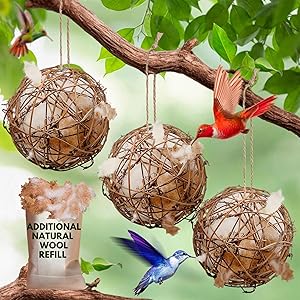
    Provide nesting materials like cotton or plant fibers. You can place these materials in suet cages or spread them around your garden.

    hummingbird nesting material
    hummingbird nesting material


    A major component of any successful hummingbird garden is a dependable hummingbird feeder that is easy to take apart and clean and doesn’t leak.

    One of the best Hummingbird feeders that’s easy to take apart and clean is the HummZinger Ultra.

    hummingbird feeder
    Hummzinger saucer Feeder

    Aspects 12oz HummZinger Ultra With Nectar Guard.

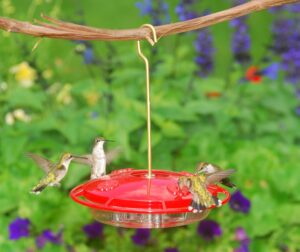
    The HummZinger Ultra 12oz Saucer Feeder is one of the best options for a hummingbird feeder that’s both easy to clean and maintain. This top-tier feeder features patented Nectar Guard tips—flexible membranes on the feeding ports that keep flying insects out while still allowing hummingbirds to feed freely. Plus, it comes with an integrated ant moat to prevent crawling insects from reaching the nectar, and the raised flower ports help divert rain, keeping the nectar fresh.

    With a 12 oz capacity, this mid-size feeder offers plenty of space and can be hung or mounted on a post using the included hardware. It has four feeding ports and is made from durable, unbreakable polycarbonate. Whether you’re concerned about bees, wasps, or ants, this feeder is built for easy cleaning and insect protection.


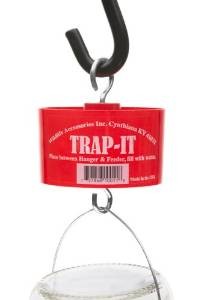
    If you already have a hummingbird feeder, and you want to protect it from ants and other crawling insects, the ant moat below will do the job.

    Trap-It Ant Moat for Hummingbird Feeders

    Using an ant moat for your hummingbird feeder is an effective way to keep ants away from the sweet nectar. These tiny creatures are drawn to

    hummingbird feeder ant moat
    ant moat

    the sugar water, and without a barrier, they will quickly infest your feeder, preventing the birds from enjoying the nectar. An ant moat works by creating a barrier of water that ants can’t cross. Positioned above the feeder, it effectively blocks the ants’ path, keeping them from reaching the nectar.

    This simple solution also ensures that your hummingbird feeder remains clean and accessible for the birds, rather than becoming a breeding ground for ants or other pests. It’s a small addition that can make a big difference in maintaining a healthy, inviting space for hummingbirds, while also reducing the need for chemical ant deterrents.

    The first and still the best to protect your Hummingbird and Oriole feeder from ants and other crawling insects. Insert between hanger and feeder and fill with  water, providing a barrier to crawling pests. Red color to attract hummingbirds.

    In addition to nectar, hummingbirds need water and safe spaces to rest. By providing a birdbath or misting system, you can ensure they have everything they need.

    Water Sources

    Hummingbirds enjoy fresh water to drink and bathe. A shallow birdbath with a fine spray from a mister is ideal. Just make sure the water is changed regularly to keep it clean.
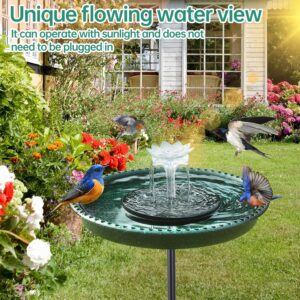
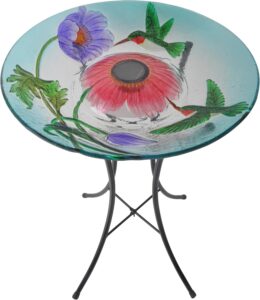
    Here’s a solar powered bird bath.

    Hummingbird misters at Amazon.com

    solar powered hummingbird feeder with fountain
    solar powered fountain birdbath


    Install shallow bird baths with gently sloping edges. Hummingbirds prefer water sources that are no more than 1-1.5 inches deep.

    hummingbird bird bath


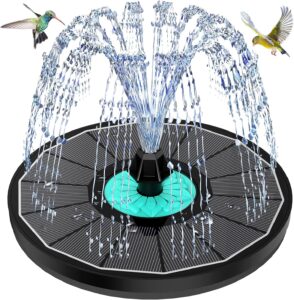
    Consider adding a mister or dripper to create moving water, which attracts hummingbirds. They often enjoy flying through fine sprays of water.

    hummingbird mister/fountain


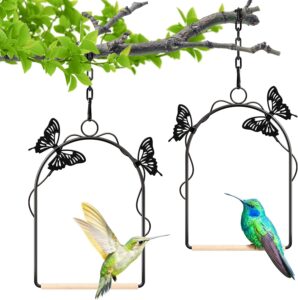
     A hummingbird perch is a good way to attract hummingbirds to a particular spot near your feeder

    hummingbird perches
    hummingbird perches


    Use Songbird Essentials Nectar Aid Self Measuring Pitcher and never measure ingredients again. Make any amount and the ingredients are measured for you.


    SONGBIRD ESSENTIALS 008104 Nectar Aid Self Measuring Pitcher Clear/Red Column 2


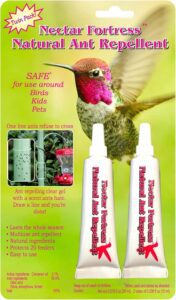
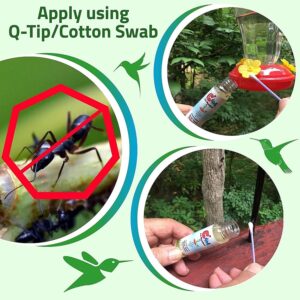
    Nectar Fortress™ Natural Ant Repellent

    CREATED FOR HUMMINGBIRD FEEDERS: Stop ants fast and keep them away from the bird feeder altogether. Use it on poles or hooks and create a barrier with a scent ants hate. Useful with ant moats or eliminate the moat entirely.

    ant repellent


    C’ANT, Ant and Bee Repellent for Hummingbird Nectar Feeders and Outdoor Bird Seed Feeders – Works with Shepherds Hook and Ant Moat – 1 oz.


    ant and bee repellent


    Hummingbird resources to help make your garden a success

    Here’s a complete guide to attracting hummingbirds to your yard. It lists plants, vines and shrubs that are in bloom for spring, summer and fall. Your hummingbirds will always have flowers to feed on.

    Here’s a great article that tells everything you need to know about how to choose the best place to hang your hummingbird feeder.

    Here’s the best designed hummingbird feeder to use. It’s leak proof, so it won’t attract insects and it’s easy to take apart and clean.

    Here’s a comprehensive guide to help you clean your hummingbird feeder for those times when the nectar is not changed soon enough and mold starts to grow.


    More Hummingbird Resources

    U.S. Fish and Wildlife Service – Hummingbird Conservation
    This site offers detailed information about various hummingbird species, their habitats, and conservation efforts. It also provides resources on how to protect these fascinating birds.

    National Park Service – Hummingbird Resources
    The National Park Service offers insights into hummingbird species found in national parks, their behaviors, and their role in ecosystems, along with tips for observing them.

    Smithsonian National Museum of Natural History – Birds: Hummingbirds
    This resource provides educational materials on the role of hummingbirds in pollination and biodiversity, backed by scientific research and exhibits from the Smithsonian.


  • Crossvine: A Native Powerhouse Vine for Hummingbirds


    Key Takeaways: Crossvine for Hummingbirds

    • Early, nectar‑rich bloom: Crossvine’s yellow‑throated, orange‑red trumpet flowers open in mid‑ to late spring, providing an important early nectar source for Ruby‑throated Hummingbirds.

    • Big, native vertical accent: This native vine (hardy about USDA Zones 5–9, best in 6–9) can climb 30–50 feet on arbors, fences, and trees, creating a dramatic hummingbird beacon without the invasiveness of some non‑native vines.

    • Best with layered companions: Use crossvine on a sturdy structure and surround its base with native nectar plants from your Northeastern list—like bee balm, cardinal flower, and trumpet honeysuckle—to keep hummingbirds fed from early spring through fall.

    If you want a vine that can stop traffic when it blooms and make hummingbirds slam on the brakes in midair, crossvine (Bignonia capreolata) deserves a serious look. Its clusters of orange to red, trumpet‑shaped flowers are packed with nectar, shaped for hummingbirds, and produced in such abundance that the whole plant can glow against a fence, arbor, or tree. Unlike aggressive non‑natives, crossvine is a native North American vine that supports wildlife and fits naturally into a hummingbird‑focused garden.

    In this article, you’ll learn how crossvine helps hummingbirds, where it’s hardy, how to grow and manage it, and how to pair it with the shrubs and perennials you already use on your site—so it becomes a showpiece in a layered, native‑rich hummingbird habitat.


    Why Crossvine is a Top Hummingbird Vine

    Crossvine has all the classic features of a hummingbird‑adapted flower:

    • Long, tubular corolla that matches a hummingbird’s bill.

    • Bright orange, red, or red‑orange coloration with a contrasting yellow throat.

    • Abundant nectar and a heavy, concentrated bloom.

    Wildlife and horticulture sources repeatedly call crossvine one of the best native vines for hummingbirds, and observers note Ruby‑throated Hummingbirds working the blooms intensively when the vine is in flower. It is often mentioned alongside trumpet honeysuckle (Lonicera sempervirens) and trumpet creeper (Campsis radicans) as a “big three” of tubular, red‑orange native hummingbird vines in the eastern U.S.

    Where crossvine really shines is its timing and abundance:

    • In much of its core range, crossvine can begin blooming in early to mid‑spring, sometimes as early as March or April, providing very early nectar when hummingbirds are returning and other nectar sources are still limited.

    • The main flush is intense, with vines sometimes covered in clusters of flowers along the length of the stems.

    • Some selections repeat lightly later in the season, adding extra nectar beyond the main spring show.

    For a Northeastern hummingbird garden, that early bloom helps bridge the gap before your herbaceous “superstars” like bee balmwild bergamotcardinal flower, and fire pink hit their stride.


    Native Range, Hardiness, and Where It Fits in the Northeast

    Crossvine is native primarily to the southeastern and south‑central United States, from Virginia and Maryland west to Kansas and south into Florida and Texas, often growing in woodlands, stream banks, and along fences or forest edges. It climbs by tendrils tipped with adhesive disks, allowing it to cling to bark, masonry, and other rough surfaces without needing to twine tightly around them.

    Hardiness is usually listed as:

    • USDA Zones: roughly 5 or 6 through 9, depending on the source and cultivar, with most reliable information centering on Zones 6–9.

    For the Northeastern United States, that means:

    • In Zone 6 areas (many parts of southern New England, southern New York, parts of Pennsylvania, New Jersey, and similar climates), crossvine can be a good fit if sited well (full sun, some wind protection, good drainage).

    • In colder Zone 5 sites and north, crossvine becomes more marginal; winter dieback and reduced flowering are more likely, and survival may depend heavily on microclimate and snow cover.

    If you garden in a solid Zone 6 pocket of the Northeast and have a big, sturdy structure, crossvine can be a spectacular choice. In colder or more constrained gardens, trumpet honeysuckle / coral honeysuckle is usually the safer primary hummingbird vine, with crossvine as an optional “stretch” plant if you want to experiment in a warm, protected spot.


    Growth Habit, Size, and Visual Impact

    Crossvine is a vigorous, woody, semi‑evergreen to deciduous vine that can easily reach 30–50 feet in length under good conditions. In the South it can be nearly evergreen; in colder climates it will lose most or all of its leaves in winter and leaf out again in spring.

    Key habit features:

    • Climbing method: Tendrils with tiny adhesive disks that latch onto rough surfaces—similar to Boston ivy or Virginia creeper.

    • Foliage: Opposite leaves; often 2 leaflets with a small tendril at the tip; some forms develop attractive reddish or bronzy winter foliage in milder climates.

    • Flowers: Clusters of tubular, flared trumpets in orange, red, or reddish‑yellow; many cultivars like ‘Tangerine Beauty’ have especially showy orange‑red blooms with yellow throats.

    • Fruit: Long, slender capsules after flowering that add some structural interest.

    Visually, a mature crossvine in full bloom can create a wall of hummingbird color. It’s ideal on:

    • Strong arbors or pergolas.

    • Sturdy fences.

    • Large trellises.

    • The trunks of mature trees (especially at woodland edges), where it can scramble up and flower at eye level and above.

    In a hummingbird garden, this makes crossvine a prime candidate for the “big vertical anchor” vine that birds can see from a distance and incorporate into their feeding circuit.


    Wildlife Value Beyond Nectar

    Crossvine is primarily grown for its hummingbird appeal and ornamental value, but like many native woody vines, it offers additional benefits.

    • Bees and other pollinators visit the blooms for nectar and pollen.

    • The dense foliage and twining habit provide cover and nesting opportunities for some birds and small wildlife, especially when grown on a trellis or over an arbor.

    • As a native vine, it integrates more comfortably into local ecosystems than non‑native vines like Japanese honeysuckle or invasive trumpet honeysuckle hybrids.

    Crossvine is often recommended by Audubon and native‑plant groups as a native alternative to more aggressive or invasive vines, especially when gardeners want a bold, trumpet‑flower look for hummingbirds without resorting to non‑native species.

    It doesn’t replace the deep insect‑hosting value of certain native shrubs, but as a nectar and structure vine in a mixed planting, it’s a very habitat‑friendly choice.


    Growing Conditions and Care

    Crossvine is vigorous, but it’s also relatively easy to manage if you plant it in the right spot and are comfortable pruning vines.

    Light

    • Best: Full sun for the heaviest flowering and best growth.

    • Acceptable: Part sun (especially in hotter southern parts of its range), but too much shade reduces bloom.

    For a Northeastern hummingbird garden, aim for full sun on the trellis or arbor where you plant crossvine, especially in cooler climates.

    Soil

    • Prefers well‑drained, moderately fertile soil.

    • Tolerates a range of soil types, from sandy to clay, as long as drainage is decent.

    • Adapts to slightly acidic to slightly alkaline conditions.

    Adding compost at planting helps with establishment, but crossvine doesn’t need heavy fertilization; too much nitrogen can push vegetative growth at the expense of flowers.

    Water

    • Needs regular moisture during establishment (first 1–2 growing seasons).

    • Once established, it is fairly drought tolerant, though consistent moisture in spring helps maximize flowering.

    Mulch around the base to conserve moisture and keep roots cool, but keep mulch a bit away from the main stems to prevent rot.


    Pruning and Controlling Vigorous Growth

    Crossvine is strong‑growing, which is great for quick coverage but means you need to be comfortable with a bit of pruning.

    General rules:

    • Crossvine blooms on old wood—stems that formed the previous season.

    • Do major pruning right after the main spring bloom so you don’t remove next year’s flower buds.

    • Thin out or shorten long, wandering stems to keep the vine on its support and away from gutters, windows, or neighboring trees you don’t want it to climb.

    Yearly maintenance:

    • Immediately after flowering, remove any dead or weak stems.

    • Cut back excessively long shoots to just above a strong bud or side branch.

    • If needed, remove some older stems near the base to encourage new flowering growth.

    Compared to trumpet creeper, crossvine is usually considered less aggressive, especially in terms of suckering and underground spread, but it is still a big, enthusiastic vine. Plant it only where you genuinely want a large vertical feature.


    Crossvine vs. Other Hummingbird Vines

    You already feature trumpet honeysuckle / coral honeysuckle (Lonicera sempervirens) and trumpet vine (Campsis radicans) on your site. Crossvine fits between them in some useful ways:

    • Compared to trumpet honeysuckle:

      • Crossvine is bolder and more massive, with thicker stems and larger flowers, but less refined foliage.

      • Trumpet honeysuckle is generally better‑behaved in small gardens and in colder Northeastern climates, and it offers a long bloom season when sited well.

    • Compared to trumpet vine:

      • Crossvine is often considered the more controllable choice; trumpet vine can sucker aggressively and pop up yards away from where it was planted.

      • Both have large, bold tubular flowers and are excellent for hummingbirds; if you want a “trumpet‑vine look” with somewhat less fear of rampant spread, crossvine is a strong option.

    A smart strategy in many Northeastern gardens is:

    • Make trumpet honeysuckle your primary hummingbird vine, especially in smaller yards.

    • Use crossvine on one substantial structure (like a big arbor or a fence run) where you want a “wow” spring display and can give it space.

    • Consider trumpet vine only where you truly have room and are comfortable managing its suckering.


    Design Ideas: Crossvine in a Layered Hummingbird Garden

    Here’s how you could integrate crossvine with the shrubs and perennials you already write about.

    Big Arbor or Pergola Feature

    If you have a sturdy arbor or pergola in a sunny spot:

    As crossvine peaks in spring, hummingbirds will work the overhead flowers. As the season progresses, they’ll transition to the perennials around the base, keeping the arbor area active all season.

    Fence or Property Line Screen

    Along a sunny fence or property line:

    This creates a full vertical gradient: ground‑layer nectar, mid‑layer shrubs, and crossvine overhead—all usable by hummingbirds in different ways.


    Crossvine in Small or Colder Northeastern Gardens

    If you garden in a modest‑sized yard or a colder part of the Northeast:

    • Consider using crossvine on only one structure, and keep it pruned so it doesn’t overwhelm the space.

    • Choose a warm, protected microclimate—south‑facing wall, sheltered fence line, or near masonry that holds heat—to help crossvine through winter.

    • Treat it as an experiment alongside your more reliable native vine, trumpet honeysuckle, which is a safer bet for bloom and survival in colder zones.

    Even if crossvine experiences some winter dieback in Zone 5–6 areas, it can resprout and still flower on new or partially overwintered stems, though the show may be reduced.


    FAQ: Crossvine in Hummingbird Gardens

    Is crossvine a good plant for hummingbirds?
    Yes. Crossvine’s tubular, orange‑red flowers with yellow throats are classic hummingbird flowers and are widely recommended as a top native vine for Ruby‑throated Hummingbirds.

    Is crossvine native to the Northeastern United States?
    Crossvine is native mainly to the Southeast and south‑central U.S., but it can be grown successfully in parts of the Northeast where winters are mild enough (generally Zones 6–9) and where conditions suit it.

    How hardy is crossvine?
    Most sources list crossvine as hardy roughly in USDA Zones 5 or 6–9, with the most reliable performance in Zones 6–9. In colder Northeastern gardens, it may experience winter dieback or fail to bloom reliably.

    How big does crossvine get?
    Crossvine is a vigorous vine that can reach 30–50 feet long or more under good conditions, so it needs a strong support like a large trellis, arbor, fence, or mature tree.

    Is crossvine invasive or too aggressive?
    Crossvine is native and not considered invasive, but it is vigorous and can spread across a structure and into nearby trees if not managed. It is generally regarded as less troublesome than trumpet creeper but still requires regular pruning.

    How should I prune crossvine for hummingbird gardens?
    Prune right after the main spring bloom, thinning and shortening stems as needed to keep the vine on its support and to encourage fresh flowering wood for the next year. Avoid heavy pruning in late summer or winter, which will reduce bloom.


    A few additions that will make any garden more hummingbird friendly

    Provide nesting materials like cotton or plant fibers. You can place these materials in suet cages or spread them around your garden.

    hummingbird nesting material
    hummingbird nesting material


    A major component of any successful hummingbird garden is a dependable hummingbird feeder that is easy to take apart and clean and doesn’t leak.

    One of the best Hummingbird feeders that’s easy to take apart and clean is the HummZinger Ultra.

    hummingbird feeder
    Hummzinger saucer Feeder

    Aspects 12oz HummZinger Ultra With Nectar Guard.

    The HummZinger Ultra 12oz Saucer Feeder is one of the best options for a hummingbird feeder that’s both easy to clean and maintain. This top-tier feeder features patented Nectar Guard tips—flexible membranes on the feeding ports that keep flying insects out while still allowing hummingbirds to feed freely. Plus, it comes with an integrated ant moat to prevent crawling insects from reaching the nectar, and the raised flower ports help divert rain, keeping the nectar fresh.

    With a 12 oz capacity, this mid-size feeder offers plenty of space and can be hung or mounted on a post using the included hardware. It has four feeding ports and is made from durable, unbreakable polycarbonate. Whether you’re concerned about bees, wasps, or ants, this feeder is built for easy cleaning and insect protection.


    If you already have a hummingbird feeder, and you want to protect it from ants and other crawling insects, the ant moat below will do the job.

    Trap-It Ant Moat for Hummingbird Feeders

    Using an ant moat for your hummingbird feeder is an effective way to keep ants away from the sweet nectar. These tiny creatures are drawn to

    hummingbird feeder ant moat
    ant moat

    the sugar water, and without a barrier, they will quickly infest your feeder, preventing the birds from enjoying the nectar. An ant moat works by creating a barrier of water that ants can’t cross. Positioned above the feeder, it effectively blocks the ants’ path, keeping them from reaching the nectar.

    This simple solution also ensures that your hummingbird feeder remains clean and accessible for the birds, rather than becoming a breeding ground for ants or other pests. It’s a small addition that can make a big difference in maintaining a healthy, inviting space for hummingbirds, while also reducing the need for chemical ant deterrents.

    The first and still the best to protect your Hummingbird and Oriole feeder from ants and other crawling insects. Insert between hanger and feeder and fill with  water, providing a barrier to crawling pests. Red color to attract hummingbirds.

    In addition to nectar, hummingbirds need water and safe spaces to rest. By providing a birdbath or misting system, you can ensure they have everything they need.

    Water Sources

    Hummingbirds enjoy fresh water to drink and bathe. A shallow birdbath with a fine spray from a mister is ideal. Just make sure the water is changed regularly to keep it clean.
    Here’s a solar powered bird bath.

    Hummingbird misters at Amazon.com

    solar powered hummingbird feeder with fountain
    solar powered fountain birdbath


    Install shallow bird baths with gently sloping edges. Hummingbirds prefer water sources that are no more than 1-1.5 inches deep.

    hummingbird bird bath


    Consider adding a mister or dripper to create moving water, which attracts hummingbirds. They often enjoy flying through fine sprays of water.

    hummingbird mister/fountain


     A hummingbird perch is a good way to attract hummingbirds to a particular spot near your feeder

    hummingbird perches
    hummingbird perches


    Use Songbird Essentials Nectar Aid Self Measuring Pitcher and never measure ingredients again. Make any amount and the ingredients are measured for you.


    SONGBIRD ESSENTIALS 008104 Nectar Aid Self Measuring Pitcher Clear/Red Column 2


    Nectar Fortress™ Natural Ant Repellent

    CREATED FOR HUMMINGBIRD FEEDERS: Stop ants fast and keep them away from the bird feeder altogether. Use it on poles or hooks and create a barrier with a scent ants hate. Useful with ant moats or eliminate the moat entirely.

    ant repellent


    C’ANT, Ant and Bee Repellent for Hummingbird Nectar Feeders and Outdoor Bird Seed Feeders – Works with Shepherds Hook and Ant Moat – 1 oz.


    ant and bee repellent


    Hummingbird resources to help make your garden a success

    Here’s a complete guide to attracting hummingbirds to your yard. It lists plants, vines and shrubs that are in bloom for spring, summer and fall. Your hummingbirds will always have flowers to feed on.

    Here’s a great article that tells everything you need to know about how to choose the best place to hang your hummingbird feeder.

    Here’s the best designed hummingbird feeder to use. It’s leak proof, so it won’t attract insects and it’s easy to take apart and clean.

    Here’s a comprehensive guide to help you clean your hummingbird feeder for those times when the nectar is not changed soon enough and mold starts to grow.


    More Hummingbird Resources

    U.S. Fish and Wildlife Service – Hummingbird Conservation
    This site offers detailed information about various hummingbird species, their habitats, and conservation efforts. It also provides resources on how to protect these fascinating birds.

    National Park Service – Hummingbird Resources
    The National Park Service offers insights into hummingbird species found in national parks, their behaviors, and their role in ecosystems, along with tips for observing them.

    Smithsonian National Museum of Natural History – Birds: Hummingbirds
    This resource provides educational materials on the role of hummingbirds in pollination and biodiversity, backed by scientific research and exhibits from the Smithsonian.


  • Weigela: A Showy Shrub for Hummingbird Fans in the Northeast

    Key Takeaways: Weigela for Hummingbird Gardens

    • Nectar‑rich, tubular blooms: Weigela’s funnel‑shaped pink and red flowers are packed with nectar and are repeatedly recommended as a shrub that hummingbirds and butterflies flock to in late spring.

    • Easy, sun‑loving shrub: Hardy through Northeastern winters, weigela thrives in USDA Zones 4–8 in full sun and average, well‑drained soil, with simple pruning right after bloom to keep it flowering heavily.

    • Best as a non‑native accent: Use weigela as a colorful nectar boost in front of native shrubs like buttonbush, serviceberry, chokeberry, ninebark, and American hazelnut, and surround it with top natives from your Best Hummingbird Plants for Northeastern United States list.


    If you’ve ever seen a weigela in full bloom, you know why hummingbirds notice it. In late spring, its arching branches can be smothered in tubular pink, red, or rosy‑white flowers that look like they were designed for a hummingbird’s bill. In a Northeastern United States garden, weigela can be a powerful nectar source and a colorful accent—but it’s also a non‑native shrub, so it’s best used as a supporting player alongside your native hummingbird plants rather than as the star of the show.

    If you’re planning or refining a hummingbird planting, start with the native perennials in your Best Hummingbird Plants for Northeastern United States guide, then layer weigela in as an ornamental shrub around them.


    How Weigela Helps Hummingbirds

    Weigela (most commonly Weigela florida and its hybrids) is a deciduous shrub originally from East Asia. In spring, it produces clusters of funnel‑shaped flowers along the previous year’s stems. Those flowers are the main reason hummingbird gardeners plant it.

    The blooms are:

    • Tubular to trumpet‑shaped, with a wide opening that makes it easy for hummingbirds to access nectar.

    • Produced in profusion—branches can be dotted or even covered in color during peak bloom.

    • Often followed by a lighter rebloom on some modern cultivars later in summer or early fall.

    That combination gives you a burst of nectar right around the time Ruby‑throated Hummingbirds are actively working your yard in late spring and early summer. While weigela won’t replace top native nectar plants like bee balmwild bergamot, or cardinal flower, it can fill an important role as an early‑season nectar “booster” shrub and as a visually striking target that pulls birds into your garden.

    Weigela flowers are also used by bees, butterflies, and other pollinators. The more insect activity you have around your shrubs, the more hunting opportunities you create for hummingbirds, which rely on small insects and spiders for protein. The dense branches offer some perching and cover near your nectar beds, though they don’t match the wildlife density of good native thickets like American hazelnutserviceberry, or chokeberry.


    Native vs. Non‑Native: Where Weigela Fits Ecologically

    Weigela is not native to North America; it comes from China, Korea, and Japan. In the Northeast it functions as a non‑native ornamental shrub that, importantly, is not generally considered invasive. In other words, it isn’t a problem plant that will run wild into natural areas, but it also doesn’t provide the same depth of ecological services as a comparable native.

    For a hummingbird and wildlife gardener, that means:

    • You can absolutely include weigela for its beauty and nectar.

    • You shouldn’t rely on it as your main habitat shrub.

    Native shrubs such as buttonbushchokeberryserviceberryAmerican hazelnuthighbush blueberryninebarkNew Jersey tea, and native azaleas do far more for local insects, caterpillars, and birds. They host many more moth and butterfly species, offer fruit and seeds, and provide long‑term structure and cover. Those are the shrubs that make your hummingbird garden feel like a functioning ecosystem rather than just a display bed.

    A practical approach for your Northeastern hummingbird garden is:

    This way you get both: ecological integrity and a big, visual hummingbird draw.


    Hardiness, Size, and Habit in the Northeastern U.S.

    Most weigela cultivars are hardy in USDA zones roughly 4–8, which covers the Northeastern United States very well. They handle winter cold in places like New England, upstate New York, and the upper Midwest, and they can also thrive in somewhat milder mid‑Atlantic sites.

    Mature size varies a lot by cultivar:

    • Dwarf forms: about 1–3 feet tall and wide—good for tight foundation beds or in front of taller shrubs.

    • Medium forms: often 3–5 feet tall, suitable as mid‑border shrubs.

    • Large forms: 6–10 feet tall and up to 8–12 feet wide, which can work as informal hedges or background shrubs.

    Most have an arching, fountain‑like habit: stems grow up and then bend outward, giving the shrub a soft, cascading look. Some newer varieties are more compact and upright.

    In a hummingbird garden, that arching shape can be useful:

    • Birds can sit on the outward‑arching stems to guard a patch of flowers, including nearby bee balmwild bergamot, or cardinal flower.

    • The interior of the shrub offers some shelter, especially when leaves are on.

    • The rounded outline softens fences, walls, and the transition between taller native shrubs and lower perennials.


    Growing Conditions and Basic Care

    Weigela is generally easy to grow if you meet its basic needs. That makes it a good pick for gardeners who want hummingbird appeal without complicated maintenance.

    Light

    • Best: Full sun (at least 6 hours of direct light) for maximum bloom and strongest color.

    • Acceptable: Light shade or morning sun/afternoon shade; the plant will survive, but flowering will be reduced and stems may get more open and leggy.

    Soil

    • Prefers average, well‑drained garden soil.

    • Tolerates a range from slightly acidic to slightly alkaline.

    • Not a fan of standing water—avoid spots that stay soggy after rain; for wetter spots, lean on buttonbush or swamp milkweed instead.

    Water

    • Water regularly during the first year to help roots establish.

    • Once established, weigela is reasonably drought‑tolerant, though consistent moisture in late spring improves flowering.

    Pruning

    • Weigela flowers on old wood (stems that grew the previous season).

    • Do major pruning just after the main spring bloom, not in late summer or winter, or you will cut off next year’s flowers.

    • Every year or two, remove some of the oldest stems at ground level to keep the shrub from getting woody and to encourage fresh flowering shoots.

    • Lightly shorten or shape the tips right after bloom if needed to keep the size in check.

    This style of pruning is very similar to how you might manage flowering native shrubs like ninebark or some serviceberry, so it fits naturally into a shrub‑border maintenance routine.


    Choosing Weigela Cultivars for Hummingbirds

    From a hummingbird’s point of view, what matters about a weigela cultivar is:

    • Flower color and abundance.

    • Flower shape (tubular, with good nectar).

    • Bloom period and any rebloom.

    For your Northeastern hummingbird garden, look for:

    • Red, deep pink, or rosy‑purple flowering varieties (these are highly visible to hummingbirds).

    • Cultivars specifically noted to rebloom or have an extended bloom season, to complement long‑blooming natives like garden phlox and rough blazing star.

    • Sizes that match your space: compact for small beds or in front of windows, larger for hedges or backdrops.

    Because you’re working on a hummingbird‑focused site, you can also frame weigela as an example of a non‑native shrub that’s worth including in moderation for nectar, but always surrounded by native nectar plants and backed by native shrubs.


    Design Ideas: Weigela with Your Existing Hummingbird Plants

    Here’s how you might weave weigela into a Northeastern hummingbird shrub design using the plants you already feature on your site.

    Layered Shrub Border

    Back layer (native structure)

    Use the shrubs from your Shrubs for Hummingbirds in the Northeast: Building a Layered Garden article as the backbone:

    This back layer is your habitat engine: it supports caterpillars, nesting birds, berries, and winter structure.

    Middle layer (weigela + native nectar)

    In front of that backbone:

    When weigela is in full bloom in late spring, it will be a magnet and visual beacon. As its main flush tapers off, the perennials around it will ramp up, carrying your nectar season through summer and into early fall. Hummingbirds can hop between shrub flowers and native perennials in the same area, turning that whole section into a feeding hub.

    Front and edges

    At the front edge of the bed and along paths:

    This gives you a full vertical gradient and multiple “nectar stations” within one sight line, which hummingbirds tend to patrol repeatedly through the day.


    Where Weigela Works Best in the Yard

    Some strategic spots in a Northeastern yard where weigela shines in a hummingbird context:

    • Near a patio or seating area: You get close‑up views of hummingbirds feeding on the shrub in late spring, then on your perennials through summer.

    • By a path or entry: A weigela in full bloom can be dramatic; if you pair it with bee balmcardinal flower, and trumpet honeysuckle, visitors will see hummingbirds almost at eye level.

    • As a “soft corner” anchor: At the corner of the house or where a fence turns, weigela softens the angle and becomes a focal point, with your native shrubs continuing along the fence line behind it.

    If you have a very small yard, a single compact weigela surrounded by a few clumps of bee balmwild bergamot, and cardinal flower, backed by one native shrub like serviceberry, can still dramatically increase hummingbird use and create a very satisfying, layered mini‑habitat.


    FAQ: Weigela in Northeastern Hummingbird Gardens

    Is weigela a good plant for hummingbirds?
    Yes. Weigela’s tubular flowers are rich in nectar and heavily used by hummingbirds, especially during the main spring flush and any summer rebloom. It won’t replace your very best native hummingbird plants, but it is a strong nectar shrub when paired with options from your Best Hummingbird Plants for Northeastern United States list.

    Is weigela native to the Northeastern United States?
    No. Weigela is native to East Asia. In the Northeast it functions as a non‑native ornamental shrub. It is not typically considered invasive, but it also does not match native shrubs like buttonbushserviceberry, or American hazelnut for deep ecological value.

    Will weigela survive Northeastern winters?
    Most weigela cultivars are hardy in roughly USDA Zones 4–8, which includes the majority of the Northeastern United States. In these zones, winter cold is generally not a problem if the shrub is sited and mulched properly.

    Where should I plant weigela in a hummingbird garden?
    Plant it in full sun, in front of or among native structural shrubs from your Shrubs for Hummingbirds in the Northeast page and surround it with native nectar perennials like bee balmwild bergamot, and cardinal flower. Treat it as a showy, nectar‑rich accent close to your viewing areas, not as the only shrub layer.

    How do I prune weigela without losing flowers?
    Because weigela blooms on old wood, do major pruning right after the main spring bloom. Thin out a few of the oldest stems at ground level to encourage new growth and lightly shape the plant at that time if needed. Avoid heavy pruning in late summer, fall, or winter, or you’ll remove the next season’s flower buds.


    If you found this article helpful, please share it with your friends using the social bookmarking buttons on the left side of this page.  Help everyone to increase their knowledge and enjoyment of feeding hummingbirds. Do it for the hummingbirds! It also helps my ranking so my information will be available to more people. The more people that see this vital information, the more the hummingbirds are helped. Thank for your help. The hummingbirds and I appreciate you very much!

    A few additions that will make any garden more hummingbird friendly

    Provide nesting materials like cotton or plant fibers. You can place these materials in suet cages or spread them around your garden.

    hummingbird nesting material
    hummingbird nesting material


    A major component of any successful hummingbird garden is a dependable hummingbird feeder that is easy to take apart and clean and doesn’t leak.

    One of the best Hummingbird feeders that’s easy to take apart and clean is the HummZinger Ultra.

    hummingbird feeder
    Hummzinger saucer Feeder

    Aspects 12oz HummZinger Ultra With Nectar Guard.

    The HummZinger Ultra 12oz Saucer Feeder is one of the best options for a hummingbird feeder that’s both easy to clean and maintain. This top-tier feeder features patented Nectar Guard tips—flexible membranes on the feeding ports that keep flying insects out while still allowing hummingbirds to feed freely. Plus, it comes with an integrated ant moat to prevent crawling insects from reaching the nectar, and the raised flower ports help divert rain, keeping the nectar fresh.

    With a 12 oz capacity, this mid-size feeder offers plenty of space and can be hung or mounted on a post using the included hardware. It has four feeding ports and is made from durable, unbreakable polycarbonate. Whether you’re concerned about bees, wasps, or ants, this feeder is built for easy cleaning and insect protection.


    If you already have a hummingbird feeder, and you want to protect it from ants and other crawling insects, the ant moat below will do the job.

    Trap-It Ant Moat for Hummingbird Feeders

    Using an ant moat for your hummingbird feeder is an effective way to keep ants away from the sweet nectar. These tiny creatures are drawn to

    hummingbird feeder ant moat
    ant moat

    the sugar water, and without a barrier, they will quickly infest your feeder, preventing the birds from enjoying the nectar. An ant moat works by creating a barrier of water that ants can’t cross. Positioned above the feeder, it effectively blocks the ants’ path, keeping them from reaching the nectar.

    This simple solution also ensures that your hummingbird feeder remains clean and accessible for the birds, rather than becoming a breeding ground for ants or other pests. It’s a small addition that can make a big difference in maintaining a healthy, inviting space for hummingbirds, while also reducing the need for chemical ant deterrents.

    The first and still the best to protect your Hummingbird and Oriole feeder from ants and other crawling insects. Insert between hanger and feeder and fill with  water, providing a barrier to crawling pests. Red color to attract hummingbirds.

    In addition to nectar, hummingbirds need water and safe spaces to rest. By providing a birdbath or misting system, you can ensure they have everything they need.

    Water Sources

    Hummingbirds enjoy fresh water to drink and bathe. A shallow birdbath with a fine spray from a mister is ideal. Just make sure the water is changed regularly to keep it clean.
    Here’s a solar powered bird bath.

    Hummingbird misters at Amazon.com

    solar powered hummingbird feeder with fountain
    solar powered fountain birdbath


    Install shallow bird baths with gently sloping edges. Hummingbirds prefer water sources that are no more than 1-1.5 inches deep.

    hummingbird bird bath


    Consider adding a mister or dripper to create moving water, which attracts hummingbirds. They often enjoy flying through fine sprays of water.

    hummingbird mister/fountain


     A hummingbird perch is a good way to attract hummingbirds to a particular spot near your feeder

    hummingbird perches
    hummingbird perches


    Use Songbird Essentials Nectar Aid Self Measuring Pitcher and never measure ingredients again. Make any amount and the ingredients are measured for you.


    SONGBIRD ESSENTIALS 008104 Nectar Aid Self Measuring Pitcher Clear/Red Column 2


    Nectar Fortress™ Natural Ant Repellent

    CREATED FOR HUMMINGBIRD FEEDERS: Stop ants fast and keep them away from the bird feeder altogether. Use it on poles or hooks and create a barrier with a scent ants hate. Useful with ant moats or eliminate the moat entirely.

    ant repellent


    C’ANT, Ant and Bee Repellent for Hummingbird Nectar Feeders and Outdoor Bird Seed Feeders – Works with Shepherds Hook and Ant Moat – 1 oz.


    ant and bee repellent


    Hummingbird resources to help make your garden a success

    Here’s a complete guide to attracting hummingbirds to your yard. It lists plants, vines and shrubs that are in bloom for spring, summer and fall. Your hummingbirds will always have flowers to feed on.

    Here’s a great article that tells everything you need to know about how to choose the best place to hang your hummingbird feeder.

    Here’s the best designed hummingbird feeder to use. It’s leak proof, so it won’t attract insects and it’s easy to take apart and clean.

    Here’s a comprehensive guide to help you clean your hummingbird feeder for those times when the nectar is not changed soon enough and mold starts to grow.


    More Hummingbird Resources

    U.S. Fish and Wildlife Service – Hummingbird Conservation
    This site offers detailed information about various hummingbird species, their habitats, and conservation efforts. It also provides resources on how to protect these fascinating birds.

    National Park Service – Hummingbird Resources
    The National Park Service offers insights into hummingbird species found in national parks, their behaviors, and their role in ecosystems, along with tips for observing them.

    Smithsonian National Museum of Natural History – Birds: Hummingbirds
    This resource provides educational materials on the role of hummingbirds in pollination and biodiversity, backed by scientific research and exhibits from the Smithsonian.


  • Why American Hazelnut Belongs in a Hummingbird Garden

    Key Takeaways: American Hazelnut for Hummingbird Gardens

    • Builds real habitat: American hazelnut doesn’t offer nectar, but it hosts many insect species, produces nutritious nuts, and forms dense cover that benefits hummingbirds and other birds.

    • Adaptable, thicket‑forming shrub: Grows about 8–16 feet tall, suckers into wildlife‑rich clumps, and thrives in full sun to part shade and a wide range of well‑drained soils.

    • Perfect backdrop for nectar stars: Use it behind high‑impact bloomers from your Best Hummingbird Plants for Northeastern United States list and alongside structural shrubs from Shrubs for Hummingbirds in the Northeast: Building a Layered Garden.

    American hazelnut (Corylus americana) doesn’t feed hummingbirds with nectar, but it’s a powerhouse “habitat shrub” that supports the insects, cover, and overall structure your hummingbird garden needs.


    American hazelnut is a medium to large native shrub that forms dense, multi‑stemmed clumps and produces nutritious nuts for wildlife. It’s wind‑pollinated and does not produce nectar, but its male catkins provide abundant pollen for bees, and its foliage hosts dozens of moth and butterfly species whose caterpillars feed songbirds. In a hummingbird garden, that insect life—and the safe, shrubby structure—creates a richer, more functional habitat around your showier nectar plants.

    Use American hazelnut the way you use serviceberry or chokeberry: as a background, wildlife‑dense layer behind your red, tubular flowers and feeders. It fits especially well into the “shrub” layer described in your Shrubs for Hummingbirds in the Northeast: Building a Layered Garden article, where structure and insect support are just as important as nectar.


    Size, Habit, and Native Range

    American hazelnut is typically a multi‑stemmed shrub 8–16 feet tall with a similar spread, often forming a dense, rounded thicket via underground suckers. It’s native across a broad range from Maine to Saskatchewan and south to Georgia, Arkansas, and Oklahoma, occurring in woodland edges, thickets, prairies, savannas, and along streams and roadsides. That wide native range makes it a good ecological fit for most Northeastern hummingbird gardens.

    The seasonal show works like this:

    • Late winter–early spring: Showy dangling male catkins and tiny, red female flowers on the same shrub.

    • Summer: Broad, green leaves and developing clusters of nuts in frilly husks.

    • Fall: Leaves turn yellow to orange; nuts ripen and drop or are quickly taken by wildlife.

    From a hummingbird perspective, those catkins and leaves are less about nectar and more about fueling the insect base and providing cover near your best bloomers.


    Wildlife Value That Indirectly Supports Hummingbirds

    American hazelnut is famously high‑value wildlife habitat. Its nuts are eaten by squirrels, chipmunks, foxes, deer, wild turkeys, ruffed grouse, bobwhite quail, woodpeckers, and many songbirds. The male catkins are an important winter food for birds like turkey and grouse, extending the shrub’s value beyond the growing season.

    For insect life, American hazelnut is exceptional: its foliage is documented to support well over 100 species of moth and butterfly larvae, including large silk moths like polyphemus and luna moth. Bees sometimes gather pollen from the male catkins, leaf beetles, leafhoppers, and other insects feed on the foliage, and all of that biomass becomes food for birds. Hummingbirds hunt small insects and spiders to feed themselves and their young, so a shrub that produces this much “bug life” boosts the protein side of your hummingbird habitat.

    The dense, many‑stemmed habit provides excellent “flee‑the‑predator” cover and potential nesting sites for songbirds, even in winter after the leaves drop. Planted near your nectar beds and feeders, American hazelnut becomes one more safe landing zone and lookout post in the hummingbird’s daily circuit.


    Growing Conditions and Maintenance

    American hazelnut is adaptable and relatively easy to grow when sited well. It prefers full sun to light shade, with best nut production and denser growth in sunnier sites, but it will still grow in partial shade along woodland edges. It tolerates a wide range of soils, from clay and loam to sandy, and handles dry to moist conditions once established, though it prefers well‑drained sites.

    This shrub spreads slowly by rhizomes and root suckers, forming clumps or even small thickets over time. If you want a wildlife hedge or naturalized border, you can let this behavior happen and simply edit out suckers that wander too far into paths or beds. In more formal areas, remove extra suckers yearly to keep the plant in bounds and maintain a neater outline.

    Once established, American hazelnut is cold hardy to at least USDA zone 4, moderately drought tolerant, and tolerant of juglone from black walnut, which is useful in older neighborhoods or mixed plantings. It’s often described as moderately deer‑resistant, though young shoots and leaves may still be browsed in high‑pressure areas.

    Routine care can be as simple as:

    • Watering during the first year and in severe droughts.

    • Mulching to keep roots cool and soil moisture stable.

    • Periodic thinning of older stems at ground level to refresh growth and keep the thicket open.


    Design Ideas with Your Existing Hummingbird Plants

    Think of American hazelnut as a multi‑purpose structural and wildlife shrub at the back or edges of your hummingbird garden. In a typical Northeastern yard, you could:

    In partial shade or woodland edges, American hazelnut combines nicely with shade‑tolerant hummingbird plants likeeastern red columbineIndian pink, and wild blue phlox. For late‑season nectar near hazelnut thickets, you can weave in great blue lobeliarough blazing star, or garden phlox.


    FAQ: American Hazelnut in Hummingbird Gardens

    Does American hazelnut feed hummingbirds directly?
    No. American hazelnut is wind‑pollinated and produces pollen but no nectar, so it isn’t a direct food source like bee balm or cardinal flower. Its value is in the insects, nuts, and shelter it provides around your nectar plants.

    Why include a non‑nectar shrub in a hummingbird garden?
    Because hummingbirds need more than sugar: they need insects for protein, safe cover, and a stable ecosystem. American hazelnut supports over 100 lepidoptera species, feeds many birds and mammals, and offers dense cover, all of which help your hummingbird garden function as real habitat.

    How big will American hazelnut get in my yard?
    Expect roughly 8–16 feet tall with a similar spread, though you can keep it somewhat smaller with pruning and by removing extra suckers.

    Is American hazelnut hard to control?
    It does sucker and can form thickets over time, but removing unwanted suckers each year keeps it in bounds for typical home landscapes.

    Can I eat the nuts?
    Yes. The nuts are edible and can be eaten fresh, roasted, or used in baking, but you’ll be competing with wildlife, which usually discovers and removes them quickly.


    If you found this article helpful, please share it with your friends using the social bookmarking buttons on the left side of this page.  Help everyone to increase their knowledge and enjoyment of feeding hummingbirds. Do it for the hummingbirds! It also helps my ranking so my information will be available to more people. The more people that see this vital information, the more the hummingbirds are helped. Thank for your help. The hummingbirds and I appreciate you very much!

    A few additions that will make any garden more hummingbird friendly

    Provide nesting materials like cotton or plant fibers. You can place these materials in suet cages or spread them around your garden.

    hummingbird nesting material
    hummingbird nesting material


    A major component of any successful hummingbird garden is a dependable hummingbird feeder that is easy to take apart and clean and doesn’t leak.

    One of the best Hummingbird feeders that’s easy to take apart and clean is the HummZinger Ultra.

    hummingbird feeder
    Hummzinger saucer Feeder

    Aspects 12oz HummZinger Ultra With Nectar Guard.

    The HummZinger Ultra 12oz Saucer Feeder is one of the best options for a hummingbird feeder that’s both easy to clean and maintain. This top-tier feeder features patented Nectar Guard tips—flexible membranes on the feeding ports that keep flying insects out while still allowing hummingbirds to feed freely. Plus, it comes with an integrated ant moat to prevent crawling insects from reaching the nectar, and the raised flower ports help divert rain, keeping the nectar fresh.

    With a 12 oz capacity, this mid-size feeder offers plenty of space and can be hung or mounted on a post using the included hardware. It has four feeding ports and is made from durable, unbreakable polycarbonate. Whether you’re concerned about bees, wasps, or ants, this feeder is built for easy cleaning and insect protection.


    If you already have a hummingbird feeder, and you want to protect it from ants and other crawling insects, the ant moat below will do the job.

    Trap-It Ant Moat for Hummingbird Feeders

    Using an ant moat for your hummingbird feeder is an effective way to keep ants away from the sweet nectar. These tiny creatures are drawn to

    hummingbird feeder ant moat
    ant moat

    the sugar water, and without a barrier, they will quickly infest your feeder, preventing the birds from enjoying the nectar. An ant moat works by creating a barrier of water that ants can’t cross. Positioned above the feeder, it effectively blocks the ants’ path, keeping them from reaching the nectar.

    This simple solution also ensures that your hummingbird feeder remains clean and accessible for the birds, rather than becoming a breeding ground for ants or other pests. It’s a small addition that can make a big difference in maintaining a healthy, inviting space for hummingbirds, while also reducing the need for chemical ant deterrents.

    The first and still the best to protect your Hummingbird and Oriole feeder from ants and other crawling insects. Insert between hanger and feeder and fill with  water, providing a barrier to crawling pests. Red color to attract hummingbirds.

    In addition to nectar, hummingbirds need water and safe spaces to rest. By providing a birdbath or misting system, you can ensure they have everything they need.

    Water Sources

    Hummingbirds enjoy fresh water to drink and bathe. A shallow birdbath with a fine spray from a mister is ideal. Just make sure the water is changed regularly to keep it clean.
    Here’s a solar powered bird bath.

    Hummingbird misters at Amazon.com

    solar powered hummingbird feeder with fountain
    solar powered fountain birdbath


    Install shallow bird baths with gently sloping edges. Hummingbirds prefer water sources that are no more than 1-1.5 inches deep.

    hummingbird bird bath


    Consider adding a mister or dripper to create moving water, which attracts hummingbirds. They often enjoy flying through fine sprays of water.

    hummingbird mister/fountain


     A hummingbird perch is a good way to attract hummingbirds to a particular spot near your feeder

    hummingbird perches
    hummingbird perches


    Use Songbird Essentials Nectar Aid Self Measuring Pitcher and never measure ingredients again. Make any amount and the ingredients are measured for you.


    SONGBIRD ESSENTIALS 008104 Nectar Aid Self Measuring Pitcher Clear/Red Column 2


    Nectar Fortress™ Natural Ant Repellent

    CREATED FOR HUMMINGBIRD FEEDERS: Stop ants fast and keep them away from the bird feeder altogether. Use it on poles or hooks and create a barrier with a scent ants hate. Useful with ant moats or eliminate the moat entirely.

    ant repellent


    C’ANT, Ant and Bee Repellent for Hummingbird Nectar Feeders and Outdoor Bird Seed Feeders – Works with Shepherds Hook and Ant Moat – 1 oz.


    ant and bee repellent


    Hummingbird resources to help make your garden a success

    Here’s a complete guide to attracting hummingbirds to your yard. It lists plants, vines and shrubs that are in bloom for spring, summer and fall. Your hummingbirds will always have flowers to feed on.

    Here’s a great article that tells everything you need to know about how to choose the best place to hang your hummingbird feeder.

    Here’s the best designed hummingbird feeder to use. It’s leak proof, so it won’t attract insects and it’s easy to take apart and clean.

    Here’s a comprehensive guide to help you clean your hummingbird feeder for those times when the nectar is not changed soon enough and mold starts to grow.


    More Hummingbird Resources

    U.S. Fish and Wildlife Service – Hummingbird Conservation
    This site offers detailed information about various hummingbird species, their habitats, and conservation efforts. It also provides resources on how to protect these fascinating birds.

    National Park Service – Hummingbird Resources
    The National Park Service offers insights into hummingbird species found in national parks, their behaviors, and their role in ecosystems, along with tips for observing them.

    Smithsonian National Museum of Natural History – Birds: Hummingbirds
    This resource provides educational materials on the role of hummingbirds in pollination and biodiversity, backed by scientific research and exhibits from the Smithsonian.

    WOW! ………. that seems like so much to ask for, and it is! That’s why so many hummingbird feeders will fall short of the mark.

    The good news is, there are feeders that have all these great feeder designs that will make your life easy.


  • Ninebark: A Tough Native Shrub for Hummingbird Gardens

    Key Takeaways: Ninebark for Hummingbirds

    • Supports the whole habitat: Native ninebark adds cover, nesting sites, and insect life that help Ruby‑throated Hummingbirds and other birds thrive around your nectar plants.

    • Tough, adaptable shrub: Grows in sun to light shade and handles clay, rocky, or average soils, along with periods of drought or extra moisture, making it ideal for challenging spots and rain‑garden edges.

    • Perfect backdrop for nectar stars: Use ninebark as a structural backdrop behind high‑impact bloomers from your Best Hummingbird Plants for Northeastern United States list and in layered designs from Shrubs for Hummingbirds in the Northeast: Building a Layered Garden.

    Ninebark (Physocarpus opulifolius) won’t replace your showiest red, tubular flowers, but it’s an excellent supporting shrub in a Northeastern hummingbird garden, adding structure, cover, and insect life around your true nectar magnets. Its spring flower clusters feed bees and other pollinators, its dense branches shelter birds and insects, and its peeling bark adds winter interest in the background of your hummingbird beds. Because it’s native, hardy, and adaptable, ninebark is an easy way to make your garden feel more like a layered habitat and less like a flat flower patch.

    If you’re just starting to plan your planting list, it pairs perfectly with the high‑octane nectar plants in your Best Hummingbird Plants for Northeastern United States guide, especially bee balm, cardinal flower, and other red bloomers.


    How Ninebark Helps Hummingbirds

    Ninebark’s individual flowers are small and not as dramatically tubular as something like cardinal flower, but the shrub still supports hummingbirds in several important ways. In late spring to early summer, ninebark produces rounded clusters of white to pinkish blooms that attract native bees, butterflies, flies, and other pollinators, creating a rich hunting ground for hummingbirds that also rely on insects for protein. Hummingbirds may sip at the blossoms, especially when early nectar is limited, but they benefit even more from the insect activity the shrub draws in.

    The shrub’s dense branching and arching habit give hummingbirds safe perches where they can rest and watch over your patches of bee balmwild bergamotIndian pink, and other nectar plants. That same thicket‑like form also provides quick, close cover when birds need to dive out of the open to avoid predators or bad weather.


    Native Range, Size, and Seasonal Interest

    Common or Eastern ninebark is native to a wide swath of central and eastern North America, including much of the Northeast and Mid‑Atlantic where Ruby‑throated Hummingbirds nest and migrate. In the wild, it grows along streambanks, on rocky outcrops and slopes, in moist thickets, and on river bluffs, showing just how adaptable it is. In a yard, that translates into a shrub that can thrive in many of the same tough spots where gardeners often struggle to get other plants established.

    Most ninebark plants in gardens reach about 5–10 feet tall and wide, though modern cultivars range from around 3 feet to 8 feet. The seasonal show typically looks like this:

    • Spring: Fresh foliage and rounded clusters of white to pinkish flowers along the branches.

    • Summer: Dense, leafy cover and developing papery seed clusters.

    • Fall: Good yellow, orange, or reddish foliage color on many forms, plus ripening seed capsules.

    • Winter: Peeling, multi‑layered bark on older stems that adds visual texture after leaves drop.

    In your broader planting plan, ninebark plays a similar structural role to shrubs like serviceberry and chokeberry: spring bloom, insect support, bird cover, and four‑season interest around your nectar perennials.


    Wildlife Benefits Beyond Hummingbirds

    Ninebark is a solid all‑around wildlife shrub, which matters because hummingbirds thrive in gardens that support the broader food web. Its flowers provide nectar and pollen for native bees (including mining bees), butterflies, and flies, contributing to pollinator diversity in your yard. The shrub is also a host plant for numerous moth and butterfly species, with caterpillars that become crucial food for nesting songbirds and their young.

    The papery seed clusters may not rival highbush blueberry in bird appeal, but they still provide some food for small birds, while the dense branches offer nesting and winter cover. That cover complements other wildlife‑friendly shrubs in your Shrubs for Hummingbirds in the Northeast: Building a Layered Garden hub, such as buttonbushNew Jersey tea, and native azaleas.

    Ninebark is generally considered deer‑resistant, which is a bonus in many Northeastern yards, though some grazing can still occur where deer pressure is heavy.


    Growing Conditions and Basic Care

    Ninebark is popular with native‑plant gardeners partly because it tolerates a wide range of conditions with very little fuss. It performs best in full sun to part shade, with full sun usually giving the richest foliage color and heaviest bloom, especially in purple, bronze, or orange‑leaf cultivars. In hot southern or exposed sites, a bit of afternoon shade can help keep foliage looking fresh and reduce stress.

    Soil‑wise, ninebark prefers moderately moist, well‑drained soil but will tolerate clay, rocky, or even poorer soils, as well as short periods of both drought and wetness once established. That makes it a good candidate for edges of rain gardens, the back of swales where water occasionally collects, or slopes where runoff can be a problem. For truly wet spots, you might pair it with wetter‑soil stars like swamp milkweed and buttonbush nearby.

    Water new plants regularly during their first season, then shift to occasional deep watering during prolonged dry spells; established ninebark is quite drought‑tolerant. A 2–3 inch layer of mulch around, but not touching, the stems helps conserve moisture and keep weeds down. Heavy fertilizing isn’t necessary; in average garden soil, a yearly top‑dressing of compost is usually sufficient.


    Pruning and Long‑Term Maintenance

    Ninebark looks best when allowed to keep its natural arching form with only light pruning. Since it blooms on old wood, do any shaping just after flowering rather than in fall or early spring, or you’ll remove the coming season’s blooms. A good long‑term strategy is renewal pruning: every year or two, remove up to a third of the oldest stems at ground level in early spring or right after bloom to encourage vigorous new growth and better air circulation.

    In gardens where the shrub has become overgrown or leggy, you can cut it back more severely during dormancy to rejuvenate it, but you’ll sacrifice flowering for a season and temporarily lose some winter bark display. Proper spacing (usually 5–10 feet between full‑size plants) and periodic thinning help reduce issues like powdery mildew by improving airflow through the canopy.


    Choosing Cultivars for Your Yard

    For maximum ecological value, many wildlife gardeners prefer the straight species of Eastern ninebark, but there are also many cultivars that blend habitat function with ornamental foliage. Popular named forms include deep purple, bronze, or orange‑leaf types, and dwarf selections that fit more comfortably into smaller beds. Typical height and spread ranges from about 3–4 feet for compact types to 8–10 feet for larger shrubs.

    When choosing, match mature size to your space so you’re not forced into hard pruning every year. If your main goal is to support hummingbirds and other wildlife, use at least one straight‑species or larger, full‑size cultivar in the mix to provide the most cover, flowering, and insect habitat, then tuck smaller or colored‑leaf forms around it for contrast.


    Design Ideas with Your Existing Hummingbird Plants

    Ninebark works best as the backbone shrub behind the high‑impact nectar plants featured in your Best Hummingbird Plants for Northeastern United States article. One classic layout is:

    Near arbors or fences with trumpet honeysuckle / coral honeysuckle or trumpet vine, ninebark can sit at the base or to the side, filling in the lower tier so the whole vertical space—from groundcover to vine—is useful hummingbird and bird habitat. In partial shade or woodland‑edge settings, you can pair ninebark with shade‑tolerant hummingbird favorites like eastern red columbineIndian pink, and wild blue phlox to extend nectar options into less sunny corners.

    If you have room, repeating ninebark and a few of your other shrubs (like highbush blueberry and native azaleas) along a property line can create a living hedge that blocks wind, screens views, and turns the entire edge of your yard into a hummingbird corridor.


    Quick FAQ: Ninebark in Your Hummingbird Garden

    Is ninebark a top hummingbird nectar plant?
    No. It’s not in the same league as cardinal flowerbee balm, or trumpet honeysuckle for nectar, but it still supports hummingbirds with some nectar, lots of insects, and excellent cover.

    Where should I place ninebark in my hummingbird planting?
    Use ninebark in the back or middle layer, behind the herbaceous nectar superstars featured in your Best Hummingbird Plants for Northeastern United States article, and alongside the structural shrubs in Shrubs for Hummingbirds in the Northeast: Building a Layered Garden.

    How many ninebark shrubs do I need?
    In a small yard, one well‑placed shrub can anchor a corner or bed; in larger spaces, groups of three or more, spaced 5–10 feet apart depending on the cultivar, create a more natural, thicket‑like feel that birds and hummingbirds love.

    Does ninebark work with wet‑soil hummingbird plants?
    Yes. It’s a good companion near rain gardens, swales, or lower spots where you might already be growing swamp milkweedbuttonbush, or jewelweed, because it tolerates periods of extra moisture once established.


    A few additions that will make any garden more hummingbird friendly

    Provide nesting materials like cotton or plant fibers. You can place these materials in suet cages or spread them around your garden.

    hummingbird nesting material
    hummingbird nesting material


    A major component of any successful hummingbird garden is a dependable hummingbird feeder that is easy to take apart and clean and doesn’t leak.

    One of the best Hummingbird feeders that’s easy to take apart and clean is the HummZinger Ultra.

    hummingbird feeder
    Hummzinger saucer Feeder

    Aspects 12oz HummZinger Ultra With Nectar Guard.

    The HummZinger Ultra 12oz Saucer Feeder is one of the best options for a hummingbird feeder that’s both easy to clean and maintain. This top-tier feeder features patented Nectar Guard tips—flexible membranes on the feeding ports that keep flying insects out while still allowing hummingbirds to feed freely. Plus, it comes with an integrated ant moat to prevent crawling insects from reaching the nectar, and the raised flower ports help divert rain, keeping the nectar fresh.

    With a 12 oz capacity, this mid-size feeder offers plenty of space and can be hung or mounted on a post using the included hardware. It has four feeding ports and is made from durable, unbreakable polycarbonate. Whether you’re concerned about bees, wasps, or ants, this feeder is built for easy cleaning and insect protection.


    If you already have a hummingbird feeder, and you want to protect it from ants and other crawling insects, the ant moat below will do the job.

    Trap-It Ant Moat for Hummingbird Feeders

    Using an ant moat for your hummingbird feeder is an effective way to keep ants away from the sweet nectar. These tiny creatures are drawn to

    hummingbird feeder ant moat
    ant moat

    the sugar water, and without a barrier, they will quickly infest your feeder, preventing the birds from enjoying the nectar. An ant moat works by creating a barrier of water that ants can’t cross. Positioned above the feeder, it effectively blocks the ants’ path, keeping them from reaching the nectar.

    This simple solution also ensures that your hummingbird feeder remains clean and accessible for the birds, rather than becoming a breeding ground for ants or other pests. It’s a small addition that can make a big difference in maintaining a healthy, inviting space for hummingbirds, while also reducing the need for chemical ant deterrents.

    The first and still the best to protect your Hummingbird and Oriole feeder from ants and other crawling insects. Insert between hanger and feeder and fill with  water, providing a barrier to crawling pests. Red color to attract hummingbirds.

    In addition to nectar, hummingbirds need water and safe spaces to rest. By providing a birdbath or misting system, you can ensure they have everything they need.

    Water Sources

    Hummingbirds enjoy fresh water to drink and bathe. A shallow birdbath with a fine spray from a mister is ideal. Just make sure the water is changed regularly to keep it clean.
    Here’s a solar powered bird bath.

    Hummingbird misters at Amazon.com

    solar powered hummingbird feeder with fountain
    solar powered fountain birdbath


    Install shallow bird baths with gently sloping edges. Hummingbirds prefer water sources that are no more than 1-1.5 inches deep.

    hummingbird bird bath


    Consider adding a mister or dripper to create moving water, which attracts hummingbirds. They often enjoy flying through fine sprays of water.

    hummingbird mister/fountain


     A hummingbird perch is a good way to attract hummingbirds to a particular spot near your feeder

    hummingbird perches
    hummingbird perches


    Use Songbird Essentials Nectar Aid Self Measuring Pitcher and never measure ingredients again. Make any amount and the ingredients are measured for you.


    SONGBIRD ESSENTIALS 008104 Nectar Aid Self Measuring Pitcher Clear/Red Column 2


    Nectar Fortress™ Natural Ant Repellent

    CREATED FOR HUMMINGBIRD FEEDERS: Stop ants fast and keep them away from the bird feeder altogether. Use it on poles or hooks and create a barrier with a scent ants hate. Useful with ant moats or eliminate the moat entirely.

    ant repellent


    C’ANT, Ant and Bee Repellent for Hummingbird Nectar Feeders and Outdoor Bird Seed Feeders – Works with Shepherds Hook and Ant Moat – 1 oz.


    ant and bee repellent


    Hummingbird resources to help make your garden a success

    Here’s a complete guide to attracting hummingbirds to your yard. It lists plants, vines and shrubs that are in bloom for spring, summer and fall. Your hummingbirds will always have flowers to feed on.

    Here’s a great article that tells everything you need to know about how to choose the best place to hang your hummingbird feeder.

    Here’s the best designed hummingbird feeder to use. It’s leak proof, so it won’t attract insects and it’s easy to take apart and clean.

    Here’s a comprehensive guide to help you clean your hummingbird feeder for those times when the nectar is not changed soon enough and mold starts to grow.


    More Hummingbird Resources

    U.S. Fish and Wildlife Service – Hummingbird Conservation
    This site offers detailed information about various hummingbird species, their habitats, and conservation efforts. It also provides resources on how to protect these fascinating birds.

    National Park Service – Hummingbird Resources
    The National Park Service offers insights into hummingbird species found in national parks, their behaviors, and their role in ecosystems, along with tips for observing them.

    Smithsonian National Museum of Natural History – Birds: Hummingbirds
    This resource provides educational materials on the role of hummingbirds in pollination and biodiversity, backed by scientific research and exhibits from the Smithsonian.


  • Serviceberry: Shrubs for Pollinator and Hummingbird Gardens

    Serviceberry / Shadbush (Amelanchier Species): Four-Season Native Shrubs for Birds, Pollinators, and Hummingbird Gardens

    Key Takeaways: Serviceberry in Hummingbird Gardens

    • Supports the whole food web: Serviceberry’s early blooms, caterpillar‑hosting foliage, and summer fruit feed pollinators, birds, and small mammals, strengthening the habitat your hummingbirds depend on.

    • Perfect small tree for layers: This native shrub‑tree (about 10–25 feet tall) anchors a layered hummingbird planting without overwhelming a typical Northeastern yard.

    • Pairs with top nectar plants: Serviceberry works best behind nectar powerhouses like cardinal flowerbee balmeastern red columbine, and trumpet honeysuckle, creating a continuous nectar and shelter corridor.

    Serviceberries (Amelanchier species) are native multi-stemmed shrubs or small trees that light up the landscape with white spring blossom, wildlife-loved berries, brilliant fall color, and graceful winter structure. They’re sometimes called shadbush or shadblow because their bloom often coincides with shad runs in spring. In a hummingbird-focused habitat, serviceberries shine as structural and food-producing shrubs that support birds, butterflies, bees, and even some hummingbird nectar visits, all around your core nectar plants.

    If you’re building a layered habitat in the Northeast, serviceberries fit perfectly into the framework I describe in Shrubs for Hummingbirds in the Northeast: Building a Layered Nectar and Shelter Garden, adding early flowers, fruit, and cover behind or beside your hummingbird vines and perennials.

    What Is Serviceberry / Shadbush?

    “Serviceberry” (or shadbush, shadblow, Juneberry) refers to a group of closely related Amelanchier species native across much of North America. In the Northeast, commonly used species include:

    • Downy or common serviceberry (Amelanchier arborea): Small tree to about 15–25 feet; often called shadbush.

    • Eastern or Canadian serviceberry (Amelanchier canadensis): Upright, suckering shrub or small tree to around 20 feet, native to eastern North America, often in moist sites.

    • Smooth or Allegheny serviceberry (Amelanchier laevis): Narrow, multi-stemmed shrub or small tree, about 25 feet tall and 5–10 feet wide.

    All share some key features:

    • Deciduous, with attractive branching and smooth gray bark.

    • Showy clusters of white star-like flowers in early spring, often before or with the leaves.

    • Small, sweet, edible berries that ripen from green to red to blue-purple in early summer (“Juneberries”).

    • Excellent fall color in shades of yellow, orange, and red, depending on species and site.

    • Serviceberry in a Hummingbird Garden

      Serviceberry (Amelanchier spp.) is a native small tree or large shrub that adds structure, early flowers, fruit, and wildlife value to hummingbird gardens. In Northeastern yards, it pairs perfectly with tube‑flowered perennials like cardinal flowerbee balm, and eastern red columbine for a season‑long buffet.

      For more plant ideas by bloom time and site conditions, see Best Hummingbird Plants for Northeastern United States.


      Do Hummingbirds Use Serviceberry?

      Serviceberry’s clusters of white spring blossoms offer nectar and pollen to bees, butterflies, and visiting hummingbirds early in the season. Ruby‑throated hummingbirds will sample these blooms, especially when serviceberry grows near more nectar‑rich flowers and feeders.

      Compared to heavy‑hitters like cardinal flowerjewelweedbee balm, and trumpet honeysuckle, serviceberry is a supporting nectar plant rather than a primary magnet. Its biggest contribution in a hummingbird garden is how it feeds the broader food web that hummingbirds depend on.


      Why Serviceberry Still Belongs in Your Hummingbird Yard

      Early-season food: Serviceberry is one of the earlier flowering shrubs, providing nectar and pollen for pollinators when few other plants are blooming. That early flush of life in the garden helps hummingbirds and other wildlife settle in after migration.

      Caterpillars for baby birds: The foliage hosts caterpillars of many moths and butterflies, which become essential baby bird food for nesting songbirds. More insects means more activity, more birds, and a healthier hummingbird habitat overall.

      Fruit for birds and mammals: By early summer, blue‑purple fruits feed robins, catbirds, cedar waxwings, orioles, and small mammals. Watching birds gorge on serviceberries near your hummingbird beds keeps the show going even when nectar plants take a breather.

      Shelter and perches: Multi‑stemmed serviceberries offer perches, cover, and occasional nesting sites in a size that fits most home gardens. Hummingbirds often pause in shrubs and small trees between feeding bouts, especially when feeders and flowers are within a short, direct flight.

      For more shrubs that provide nectar, insects, and cover, see Shrubs for Hummingbirds in the Northeast: Building a Layered Garden.


      How to Use Serviceberry in a Layered Hummingbird Planting

      Serviceberry works best as a small “anchor tree” or large shrub at the back or side of your hummingbird bed. It typically grows 10–25 feet tall in gardens and tolerates full sun to light shade, with the best flowering and fruiting in sunnier spots.

      Good placements include:

      • Near a viewing area so you can watch birds using it for perching and feeding.

      • At the back of a mixed border, layered with shrubs and perennials in front.

      • Along a woodland edge where it can get some sun but still feel natural.

    Wildlife and Hummingbird Benefits

    Serviceberries are wildlife powerhouses, especially for birds and early-season pollinators.

    For Birds and Other Wildlife

    • Early summer berries are relished by American robins, catbirds, cedar waxwings, mockingbirds, cardinals, and many other birds; fruits often disappear quickly, sometimes before they’re fully ripe.

    • Mammals such as squirrels, foxes, raccoons, and other small animals also feed on the fruit.

    • Serviceberries are documented host plants for well over 100 species of Lepidoptera caterpillars (butterflies and moths), providing critical food for nesting birds.

    • Dense multi-stemmed forms offer cover and perching sites in small yards, helping birds feel safe as they forage.

    For Pollinators and Hummingbirds

    • Early spring blossoms provide nectar and pollen for bees, butterflies, and other emerging pollinators, often in April when few other shrubs are in bloom.

    • Sources note that nectar-rich flowers attract adult butterflies, bees, and sometimes hummingbirds and other pollinators.

    For Ruby-throated Hummingbirds, serviceberries are best seen as supporting plants: they’re not in the same nectar league as your tubular red flowers, but they:

    • Offer occasional nectar sips during early spring bloom.

    • Support insect populations that hummingbirds prey on for protein.

    • Provide perches and cover near feeders and high-nectar flowers.

    That’s exactly how they fit into the broader design in Shrubs for Hummingbirds in the Northeast, where they sit behind or beside vines like trumpet honeysuckle and trumpet vine and in front of taller canopy trees.

    Key Characteristics

    Although each species varies, most serviceberries share these traits:

    • Size: 10–25 feet tall and often similar in spread; some cultivars smaller (e.g., 3–6 feet) for limited spaces.

    • Form: Multi-stemmed large shrub or small tree with an upright to spreading habit and rounded crown.

    • Flowers: White 5-petaled flowers in showy clusters (racemes), blooming early in spring.

    • Fruit: ¼–½ inch berries that ripen to dark reddish-purple or blue-black, sweet and edible for both people and wildlife.

    • Leaves: Oval leaves with bronzy purple or reddish new growth, maturing to green, then turning yellow-orange to red in fall.

    They’re ideal “four-season interest” plants for wildlife gardens because they rarely have a boring time of year.

    Growing Conditions and Site Selection

    Serviceberries are generally easy to grow when their basic preferences are met.

    Light

    • Prefer full sun to part shade.

    • Flower and fruit best in full sun, but will tolerate some shade, especially as understory trees or shrubs.

    Soil

    • Naturally woodland plants; they like moist, well-drained, slightly acidic soils rich in organic matter.

    • Will tolerate a variety of conditions if not extremely dry or compacted, but consistent moisture improves flowering and fruiting.

    Moisture

    • Do best with medium, even moisture; they don’t like to sit in waterlogged soil but also dislike prolonged drought.

    • Some species (like Amelanchier canadensis) occur naturally in moist sites, bogs, and swamps.

    Hardiness and Climate

    • Many serviceberries are hardy through a wide range (often zones 3–9, species-dependent), making them suitable across much of the Northeast and beyond.

    Planting and Basic Care

    Planting

    • Plant in autumn if possible to give roots time to establish; spring planting is also fine but may require more watering.

    • Dig a wide planting hole as deep as the root ball and loosen surrounding soil.

    • Set the plant at or slightly above the surrounding soil level.

    • Backfill with native soil (you can work in some compost if your soil is very poor).

    • Water deeply to settle the soil and mulch the root zone.

    Watering and Mulching

    • Keep newly planted serviceberries consistently moist for the first 1–2 years.

    • Once established, water during extended dry spells, especially in full sun.

    • Apply 2–3 inches of mulch around the root zone to conserve moisture, moderate soil temperature, and improve soil structure.

    Fertilizing

    • Generally not heavy feeders; if soil is reasonably fertile and mulched, additional fertilizer may not be necessary.

    • If needed, apply a light, balanced, slow-release fertilizer in early spring.

    Pruning

    • Prune in late winter or early spring while plants are dormant.

    • Remove dead, damaged, or crossing branches.

    • For multi-stemmed shrubs, thin older stems periodically to maintain good air flow and a graceful shape.

    • Many species can be kept as shrubs or pruned up into small trees, depending on your needs.

    Design Ideas for Hummingbird and Wildlife Gardens

    Serviceberries are extremely versatile and fit beautifully into a Northeast hummingbird and wildlife garden.

    Where to Use Serviceberry

    • As a small native “ornamental” tree near patios, paths, or windows where you can enjoy flowers, birds, and fall color.

    • In mixed native shrub borders along property edges, with viburnums, dogwoods, elderberries, witch hazel, and native azaleas.

    • As a transition plant between taller canopy trees and lower perennials, helping create the layered structure hummingbirds and other birds prefer.

    Companion Plants

    Companion plants around serviceberry

    Surround serviceberry with strong nectar producers to create a hummingbird corridor from ground to canopy.

    In the structural layout described in Shrubs for Hummingbirds in the Northeast: Building a Layered Nectar and Shelter Garden, serviceberries are excellent mid-sized “anchor shrubs” or small trees that give birds and hummingbirds somewhere safe to perch while they travel between feeders and nectar flowers.

    How Serviceberry Compares to Your Hummingbird Vines

    Here’s how serviceberries relate to your key hummingbird vines in a habitat design:

    Feature Serviceberry (Amelanchier spp.) Trumpet Honeysuckle (L. sempervirens) Trumpet Vine (Campsis radicans)
    Plant type Shrub/small tree, deciduous Twining woody vine Woody vine with clinging rootlets
    Primary value Early nectar, berries, caterpillars, cover Major nectar vine, long bloom for hummingbirds Intense mid–late summer nectar, very vigorous
    Bloom timing Early spring Late spring–summer with repeats Mid–late summer–early fall
    Space needs Small tree/shrub, good for modest yards Good for trellises, fences, smaller supports Needs large space and strong structures

    Together, they create a year-round support system: serviceberries help kick off spring and feed nesting birds, while trumpet honeysuckle and trumpet vine carry the nectar show through summer for hummingbirds.

    For placement ideas that combine all of these in one coherent design, see Shrubs for Hummingbirds in the Northeast: Building a Layered Nectar and Shelter Garden, and then dive into your detailed vine guides Trumpet Honeysuckle: A Classic Great Native Hummingbird Vine and Trumpet Vine / Trumpet Creeper: A Hummingbird Magnet That Needs Space for plant-specific care.


    Serviceberry in Hummingbird Gardens: Quick FAQ

    Is serviceberry a good plant for hummingbirds?
    Serviceberry isn’t a top nectar plant like cardinal flower or bee balm, but hummingbirds will visit its early spring blooms and use the shrub for perching and hunting insects.

    Why should I include serviceberry in a hummingbird garden?
    Serviceberry supports the whole food web by feeding pollinators, hosting caterpillars, producing fruit for birds, and providing shelter—all of which make your garden richer habitat for hummingbirds.

    Where should I plant serviceberry in my yard?
    Plant serviceberry in full sun to light shade at the back or side of a hummingbird bed, near windows or seating areas where you can watch birds use it.

    What plants pair well with serviceberry for hummingbirds?
    Great companions include eastern red columbinewild blue phloxbee balmwild bergamotcardinal flowerfire pink, and trumpet honeysuckle.

    Can I eat the berries from my serviceberry?
    Yes. The blue‑purple fruits are edible and can be eaten fresh or used in pies, jams, and syrups, though birds often get to them quickly.

    A few additions that will make any garden more hummingbird friendly

    Provide nesting materials like cotton or plant fibers. You can place these materials in suet cages or spread them around your garden.

    hummingbird nesting material
    hummingbird nesting material


    A major component of any successful hummingbird garden is a dependable hummingbird feeder that is easy to take apart and clean and doesn’t leak.

    One of the best Hummingbird feeders that’s easy to take apart and clean is the HummZinger Ultra.

    hummingbird feeder
    Hummzinger saucer Feeder

    Aspects 12oz HummZinger Ultra With Nectar Guard.

    The HummZinger Ultra 12oz Saucer Feeder is one of the best options for a hummingbird feeder that’s both easy to clean and maintain. This top-tier feeder features patented Nectar Guard tips—flexible membranes on the feeding ports that keep flying insects out while still allowing hummingbirds to feed freely. Plus, it comes with an integrated ant moat to prevent crawling insects from reaching the nectar, and the raised flower ports help divert rain, keeping the nectar fresh.

    With a 12 oz capacity, this mid-size feeder offers plenty of space and can be hung or mounted on a post using the included hardware. It has four feeding ports and is made from durable, unbreakable polycarbonate. Whether you’re concerned about bees, wasps, or ants, this feeder is built for easy cleaning and insect protection.


    If you already have a hummingbird feeder, and you want to protect it from ants and other crawling insects, the ant moat below will do the job.

    Trap-It Ant Moat for Hummingbird Feeders

    Using an ant moat for your hummingbird feeder is an effective way to keep ants away from the sweet nectar. These tiny creatures are drawn to

    hummingbird feeder ant moat
    ant moat

    the sugar water, and without a barrier, they will quickly infest your feeder, preventing the birds from enjoying the nectar. An ant moat works by creating a barrier of water that ants can’t cross. Positioned above the feeder, it effectively blocks the ants’ path, keeping them from reaching the nectar.

    This simple solution also ensures that your hummingbird feeder remains clean and accessible for the birds, rather than becoming a breeding ground for ants or other pests. It’s a small addition that can make a big difference in maintaining a healthy, inviting space for hummingbirds, while also reducing the need for chemical ant deterrents.

    The first and still the best to protect your Hummingbird and Oriole feeder from ants and other crawling insects. Insert between hanger and feeder and fill with  water, providing a barrier to crawling pests. Red color to attract hummingbirds.

    In addition to nectar, hummingbirds need water and safe spaces to rest. By providing a birdbath or misting system, you can ensure they have everything they need.

    Water Sources

    Hummingbirds enjoy fresh water to drink and bathe. A shallow birdbath with a fine spray from a mister is ideal. Just make sure the water is changed regularly to keep it clean.
    Here’s a solar powered bird bath.

    Hummingbird misters at Amazon.com

    solar powered hummingbird feeder with fountain
    solar powered fountain birdbath


    Install shallow bird baths with gently sloping edges. Hummingbirds prefer water sources that are no more than 1-1.5 inches deep.

    hummingbird bird bath


    Consider adding a mister or dripper to create moving water, which attracts hummingbirds. They often enjoy flying through fine sprays of water.

    hummingbird mister/fountain


     A hummingbird perch is a good way to attract hummingbirds to a particular spot near your feeder

    hummingbird perches
    hummingbird perches


    Use Songbird Essentials Nectar Aid Self Measuring Pitcher and never measure ingredients again. Make any amount and the ingredients are measured for you.


    SONGBIRD ESSENTIALS 008104 Nectar Aid Self Measuring Pitcher Clear/Red Column 2


    Nectar Fortress™ Natural Ant Repellent

    CREATED FOR HUMMINGBIRD FEEDERS: Stop ants fast and keep them away from the bird feeder altogether. Use it on poles or hooks and create a barrier with a scent ants hate. Useful with ant moats or eliminate the moat entirely.

    ant repellent


    C’ANT, Ant and Bee Repellent for Hummingbird Nectar Feeders and Outdoor Bird Seed Feeders – Works with Shepherds Hook and Ant Moat – 1 oz.


    ant and bee repellent


    Hummingbird resources to help make your garden a success

    Here’s a complete guide to attracting hummingbirds to your yard. It lists plants, vines and shrubs that are in bloom for spring, summer and fall. Your hummingbirds will always have flowers to feed on.

    Here’s a great article that tells everything you need to know about how to choose the best place to hang your hummingbird feeder.

    Here’s the best designed hummingbird feeder to use. It’s leak proof, so it won’t attract insects and it’s easy to take apart and clean.

    Here’s a comprehensive guide to help you clean your hummingbird feeder for those times when the nectar is not changed soon enough and mold starts to grow.


    More Hummingbird Resources

    U.S. Fish and Wildlife Service – Hummingbird Conservation
    This site offers detailed information about various hummingbird species, their habitats, and conservation efforts. It also provides resources on how to protect these fascinating birds.

    National Park Service – Hummingbird Resources
    The National Park Service offers insights into hummingbird species found in national parks, their behaviors, and their role in ecosystems, along with tips for observing them.

    Smithsonian National Museum of Natural History – Birds: Hummingbirds
    This resource provides educational materials on the role of hummingbirds in pollination and biodiversity, backed by scientific research and exhibits from the Smithsonian.


  • Chokeberry’s Place in a Hummingbird Garden

    What are chokeberries?

    Black chokeberry (Aronia melanocarpa) and red chokeberry (Aronia arbutifolia) are deciduous, multi‑stemmed shrubs native to eastern North America. They typically grow 3–8 feet tall, with clusters of white to pinkish spring flowers, glossy dark green summer foliage, colorful fall leaves, and showy berries that persist into winter.

    • Black chokeberry: usually 3–6 feet tall, with blackish‑purple fruit and red to orange fall color.

    • Red chokeberry: often 6–8 feet tall, with bright red fruit and brilliant red fall foliage.

    Their flowers appear in clusters (corymbs) in spring, followed by abundant, very astringent berries that give the shrubs their common name.


    Wildlife and Pollinator Benefits

    Chokeberries are high‑value wildlife shrubs that support many species throughout the year.

    • Pollinator‑rich blossoms: The spring flowers are visited by bees, butterflies, and other pollinators for nectar and pollen. Native bees, mason bees, mining bees, and butterflies all use the blooms, making Aronia an important early‑season resource.

    • Fruit for birds and mammals: The berries are eaten by songbirds and small mammals, especially in late winter when other foods are scarce; fruits often persist on the branches until they are raisin‑like.

    • Shelter and structure: Dense, twiggy growth and suckering habit provide cover, nesting sites, and thicket habitat for many birds.

    Some sources also note Aronia as a host plant for a number of moth and butterfly species, further increasing its insect value.


    How Chokeberry Helps a Hummingbird‑Attracting Garden

    Chokeberry doesn’t function like a trumpet vine or salvia—its flowers are open, not tubular—but it still supports hummingbirds in several important ways.

    1. Habitat structure, perches, and cover

    Multi‑stemmed chokeberry shrubs create thickets and layered structure that hummingbirds use for perching and quick cover between feeding and bathing. When planted near nectar beds and water features, they can:

    • Offer shaded perches where hummingbirds rest and preen between feeder or flower visits.

    • Provide safe “escape” spots if a predator appears.

    • Help break up open lawn, turning a flat yard into a three‑dimensional habitat with vertical interest.

    This structural role is especially valuable in small and suburban gardens, where adding a native shrub layer makes the space feel more secure to hummingbirds and other birds.

    2. Supporting the insect food web

    Ruby‑throated and many western hummingbirds rely on small insects and spiders for protein, especially during nesting and migration. By attracting bees, butterflies, and other pollinators with their nectar‑rich blossoms, chokeberries help maintain a robust insect community in your yard.

    Aronia is documented as a host for numerous moth and butterfly larvae, which means its foliage helps raise the very insects that hummingbirds and songbirds later eat. A garden with chokeberries, other native shrubs, and diverse perennials will generally support far more insect prey than one planted with non‑native ornamentals alone.

    3. Seasonal complement to hummingbird plants

    Chokeberries shine in spring (flowers), autumn (foliage and fruit), and winter (berries for birds), while many classic hummingbird plants dominate from late spring through summer.

    In a hummingbird garden, chokeberry works best when you:

    • Use it as a backdrop behind hummingbird nectar plants like bee balm, salvias, columbine, cardinal flower, agastache, and native honeysuckle.

    • Position it near—but not shading out—hummingbird feeders or water features, so birds have nearby safe perches and “lookout” posts.

    • Let it form small thickets or hedges along fences, woodland edges, or property lines, where hummingbirds can patrol their territories.

    While chokeberry flowers may occasionally be visited by hummingbirds in passing (especially where both are abundant), its main contribution is habitat and insect support rather than direct nectar.


    Growing Chokeberry in a Hummingbird‑Friendly Landscape

    Both black and red chokeberry are adaptable, low‑maintenance shrubs that fit easily into wildlife gardens.

    • Hardiness: Generally hardy in USDA zones 3–8/9 depending on species and cultivar.

    • Light: Full sun to partial shade; more sun usually produces better flowering, fruiting, and fall color.

    • Soil: Tolerates a wide range—from seasonally wet to fairly dry—and is often recommended for rain gardens, slopes, and naturalized plantings.

    • Form: Slowly suckering shrubs that can form colonies, useful as hedges, screens, or natural thickets.

    For a hummingbird‑focused design, consider:

    • Planting a row or drift of chokeberries along the back of a pollinator bed, with hummingbird perennials in front.

    • Pairing them with other native shrubs (e.g., viburnums, witch hazel, serviceberry) to create a varied shrub layer.

    • Leaving some leaf litter and seedheads nearby to support overwintering insects and additional bird food.


    Human Uses and Four‑Season Interest

    Beyond wildlife value, chokeberries are increasingly popular for their ornamental and edible qualities.

    • Ornamental impact: Masses of spring flowers, glossy berries that hang into winter, and fiery fall foliage rivaling burning bush make Aronia an attractive alternative to invasive shrubs.

    • Edible fruit: The berries are extremely astringent fresh but can be used in juices, jams, jellies, and syrups and are sometimes marketed as “aronia berries” with high antioxidant content.

    This four‑season appeal makes chokeberry an easy sell to gardeners who want both beauty and ecological function in their hummingbird‑friendly yard.


    Bottom line

    Chokeberries (Aronia melanocarpa and A. arbutifolia) may not be classic hummingbird nectar shrubs, but they are excellent native companions in a hummingbird garden, adding structure, supporting pollinators and insect prey, and feeding other birds through fall and winter. Pair them with hummingbird flowers and water features, and they help turn your yard into a rich, multi‑layered habitat that benefits far more than just one species.

    A few additions that will make any garden more hummingbird friendly

    Provide nesting materials like cotton or plant fibers. You can place these materials in suet cages or spread them around your garden.

    hummingbird nesting material
    hummingbird nesting material


    A major component of any successful hummingbird garden is a dependable hummingbird feeder that is easy to take apart and clean and doesn’t leak.

    One of the best Hummingbird feeders that’s easy to take apart and clean is the HummZinger Ultra.

    hummingbird feeder
    Hummzinger saucer Feeder

    Aspects 12oz HummZinger Ultra With Nectar Guard.

    The HummZinger Ultra 12oz Saucer Feeder is one of the best options for a hummingbird feeder that’s both easy to clean and maintain. This top-tier feeder features patented Nectar Guard tips—flexible membranes on the feeding ports that keep flying insects out while still allowing hummingbirds to feed freely. Plus, it comes with an integrated ant moat to prevent crawling insects from reaching the nectar, and the raised flower ports help divert rain, keeping the nectar fresh.

    With a 12 oz capacity, this mid-size feeder offers plenty of space and can be hung or mounted on a post using the included hardware. It has four feeding ports and is made from durable, unbreakable polycarbonate. Whether you’re concerned about bees, wasps, or ants, this feeder is built for easy cleaning and insect protection.


    If you already have a hummingbird feeder, and you want to protect it from ants and other crawling insects, the ant moat below will do the job.

    Trap-It Ant Moat for Hummingbird Feeders

    Using an ant moat for your hummingbird feeder is an effective way to keep ants away from the sweet nectar. These tiny creatures are drawn to

    hummingbird feeder ant moat
    ant moat

    the sugar water, and without a barrier, they will quickly infest your feeder, preventing the birds from enjoying the nectar. An ant moat works by creating a barrier of water that ants can’t cross. Positioned above the feeder, it effectively blocks the ants’ path, keeping them from reaching the nectar.

    This simple solution also ensures that your hummingbird feeder remains clean and accessible for the birds, rather than becoming a breeding ground for ants or other pests. It’s a small addition that can make a big difference in maintaining a healthy, inviting space for hummingbirds, while also reducing the need for chemical ant deterrents.

    The first and still the best to protect your Hummingbird and Oriole feeder from ants and other crawling insects. Insert between hanger and feeder and fill with  water, providing a barrier to crawling pests. Red color to attract hummingbirds.

    In addition to nectar, hummingbirds need water and safe spaces to rest. By providing a birdbath or misting system, you can ensure they have everything they need.

    Water Sources

    Hummingbirds enjoy fresh water to drink and bathe. A shallow birdbath with a fine spray from a mister is ideal. Just make sure the water is changed regularly to keep it clean.
    Here’s a solar powered bird bath.

    Hummingbird misters at Amazon.com

    solar powered hummingbird feeder with fountain
    solar powered fountain birdbath


    Install shallow bird baths with gently sloping edges. Hummingbirds prefer water sources that are no more than 1-1.5 inches deep.

    hummingbird bird bath


    Consider adding a mister or dripper to create moving water, which attracts hummingbirds. They often enjoy flying through fine sprays of water.

    hummingbird mister/fountain


     A hummingbird perch is a good way to attract hummingbirds to a particular spot near your feeder

    hummingbird perches
    hummingbird perches


    Use Songbird Essentials Nectar Aid Self Measuring Pitcher and never measure ingredients again. Make any amount and the ingredients are measured for you.


    SONGBIRD ESSENTIALS 008104 Nectar Aid Self Measuring Pitcher Clear/Red Column 2


    Nectar Fortress™ Natural Ant Repellent

    CREATED FOR HUMMINGBIRD FEEDERS: Stop ants fast and keep them away from the bird feeder altogether. Use it on poles or hooks and create a barrier with a scent ants hate. Useful with ant moats or eliminate the moat entirely.

    ant repellent


    C’ANT, Ant and Bee Repellent for Hummingbird Nectar Feeders and Outdoor Bird Seed Feeders – Works with Shepherds Hook and Ant Moat – 1 oz.


    ant and bee repellent


    Hummingbird resources to help make your garden a success

    Here’s a complete guide to attracting hummingbirds to your yard. It lists plants, vines and shrubs that are in bloom for spring, summer and fall. Your hummingbirds will always have flowers to feed on.

    Here’s a great article that tells everything you need to know about how to choose the best place to hang your hummingbird feeder.

    Here’s the best designed hummingbird feeder to use. It’s leak proof, so it won’t attract insects and it’s easy to take apart and clean.

    Here’s a comprehensive guide to help you clean your hummingbird feeder for those times when the nectar is not changed soon enough and mold starts to grow.


    More Hummingbird Resources

    U.S. Fish and Wildlife Service – Hummingbird Conservation
    This site offers detailed information about various hummingbird species, their habitats, and conservation efforts. It also provides resources on how to protect these fascinating birds.

    National Park Service – Hummingbird Resources
    The National Park Service offers insights into hummingbird species found in national parks, their behaviors, and their role in ecosystems, along with tips for observing them.

    Smithsonian National Museum of Natural History – Birds: Hummingbirds
    This resource provides educational materials on the role of hummingbirds in pollination and biodiversity, backed by scientific research and exhibits from the Smithsonian.