Arizona Yuccas for Hummingbirds
Why Yucca Is Important in Arizona
Arizona is hot, dry, and sunny for much of the year, so nectar can be hard to find for hummingbirds.
Because yucca plants and yucca-like plants love these harsh conditions, they become steady food sources in tough seasons.
They also add strong structure, bold leaves, and tall flower stalks to your yard, which hummingbirds use as safe perches while they feed and rest.
Key Yucca and Yucca-Like Plants
Several yucca species and yucca-like plants work well for Arizona hummingbird gardens.
Banana Yucca (Yucca baccata)
Banana yucca is a true yucca native to the deserts and mountains of the Southwest, including Arizona.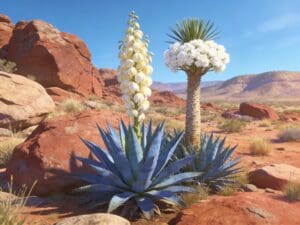
It forms clumps of blue-green leaves and sends up tall stalks of white to cream flowers in spring and early summer.
These flowers provide nectar and also support the famous yucca moth partnership, making banana yucca a strong wildlife plant.
Soaptree Yucca (Yucca elata)
Soaptree yucca grows tall, sometimes with branching trunks, and carries a large cluster of white flowers above narrow leaves.
It does well in parts of Arizona, especially in higher Sonoran and Chihuahuan Desert zones with good drainage.
Its flowers and sturdy structure help birds by providing nectar and lookout posts in open desert spaces.
Joshua Tree (Yucca brevifolia)
Joshua trees form dramatic woodlands in far northwestern Arizona and nearby deserts.
They support many desert birds and insects, and they help create a larger yucca-rich landscape where hummingbirds can hunt for nectar and perches.
Red Yucca / Hummingbird Yucca (Hesperaloe parviflora)
Red yucca is not a true yucca, but it looks and acts very similar in the landscape.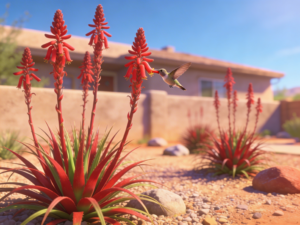
It forms arching, sword-like leaves and sends up tall stalks packed with red or coral tubular flowers for much of the warm season.
These tube-shaped blooms are rich in nectar and shaped just right for hummingbird beaks and tongues, so birds visit them again and again.
Red yucca is native to the Chihuahuan Desert but thrives across Arizona, from low desert to some cooler sites, as long as the soil drains well.
How Yuccas Help Hummingbirds
Hummingbirds burn huge amounts of energy, so they must drink nectar many times each hour.
In Arizona, they use a wide range of habitats, from deserts and grasslands to canyons and forests.
Nectar During Dry Times
Yucca and red yucca flowers are especially helpful in hot, dry periods when many other plants stop blooming.
Because red yucca often blooms over a long season, it acts like a desert “fuel station” for hummingbirds in neighborhoods, medians, and yards.
Perches and Guard Posts
Hummingbirds often guard their favorite nectar plants, so they need tall perches nearby.
Yucca stalks and stiff leaves give them safe spots to rest, scan for rivals, and then dash back to feed.
Part of a Bigger Wildlife Web
Yucca species also support moths, insects, songbirds, and small mammals, so they help build a more complete desert ecosystem.
When you plant yucca or red yucca, you support hummingbirds and many other native species at the same time.
Yucca Options by Arizona Elevation Zone
Because Arizona has many elevation zones, your best yucca choices change as you move from low desert to high country.
Low Desert: Phoenix, Tucson, Yuma
- Main yucca and yucca-like plants: Red yucca, Soaptree yucca.
- Hummingbird value: Very high, thanks to long stalks of tubular flowers with rich nectar.
- Notes: Both love full sun, heat, and reflected light, and they thrive in well-drained desert soils.
Mid Elevation: Prescott, Payson, Rim Country
- Main yucca and yucca-like plants: Banana yucca, Red yucca.
- Hummingbird value: High, providing nectar plus strong vertical perches and structure.
- Notes: These plants do well in rocky, well-drained woodland and town gardens with warm summers and cooler nights.
High Country: Flagstaff and Other Cool Elevations
- Main yucca and yucca-like plants: Red yucca in warm, sunny micro-sites.
- Hummingbird value: Good where winters are not too harsh and soil drains quickly.
- Notes: Combine red yucca with scarlet gilia, high-elevation penstemons, and desert columbine to provide more nectar through the short mountain growing season.
Planting and Care Tips
Yuccas and red yucca are generally low-maintenance, but a few steps help them thrive.
Sun and Soil
Choose full sun for all yucca and yucca-like species that you plant for hummingbirds.
Provide very well-drained soil by using native gravelly soil, mounds, or raised beds, especially in clay or compacted areas.
Watering and Fertilizing
Water deeply but not often during the first year, then slowly reduce watering once roots are well established.
After that, water only during very long dry spells, and avoid rich fertilizers that can cause weak, floppy growth.
Design for Hummingbirds
Plant yuccas and red yucca in small groups of three or more to create strong vertical lines and big nectar targets.
Then, surround them with native shrubs and perennials like chuparosa, desert honeysuckle, penstemons, and agastache to keep nectar flowing across the seasons.
Arizona hummingbirds need both safe feeders and rich native plants. To see when to put feeders up and take them down, visit my Arizona hummingbird feeding dates. For tips on nectar, feeders, and yard setup, see my backyard hummingbird guide and my hummingbird food recipes.
Frequently Asked Questions
Do hummingbirds really use yucca and red yucca flowers?
Yes, hummingbirds regularly visit red yucca and other yucca flowers, especially when the blooms are rich in nectar and easy to reach.
Which yucca is best for small Arizona yards?
Red yucca is usually the best choice for small spaces because it forms neat clumps and sends up tall flower spikes without taking over.
Are yucca plants hard to care for?
No, most yucca species and red yucca are hardy, drought-tolerant, and need only full sun, good drainage, and occasional deep watering once established.
Will yucca alone support all my local hummingbirds?
Yucca and red yucca help a lot, but hummingbirds do best when you also plant a mix of native nectar plants and keep a few clean feeders available.
Resources for Arizona Gardeners
Use these trusted sources to explore more native plants and hummingbird advice.
- Arizona Native Plant Society – Native Plant List
- Arizona Native Plant Society – Soaptree Yucca Profile
- University of Arizona Campus Arboretum – Hesperaloe parviflora (Red Yucca)
- University of Arizona – Yuccas in Your Landscape
- Arizona-Sonora Desert Museum – Hummingbirds
- Arizona-Sonora Desert Museum – Plants That Attract Hummingbirds (PDF)
- Maricopa Community Colleges – Hummingbird Attracting Plant Lists