The Secret Sanctuary: Inside the Hummingbird Nest
In this article, you will discover fascinating insights into the life cycle of hummingbirds, including their nest-building process, egg-laying, nurturing of their young, feeding habits, and much more. Be sure to check out my special video at the end of the article, where I’ll show you how to hand-feed hummingbirds for a truly unique experience.
When it comes to raising their young, the female hummingbird takes on the entire responsibility. From constructing the nest to caring for the eggs and feeding the chicks, she handles it all. Typically, a female will raise one brood (or group of offspring) per season. However, in the warmer southern regions of their range, some species may raise two broods in a year. In Florida, there have even been reports of females raising up to three broods annually, thanks to the mild climate.
Hummingbirds are quite particular about where they build their nests. Unlike some bird species, they do not seek out birdhouses or nest in cavities. Instead, they prefer to create a tiny, cup-shaped nest, usually tucked away in the fork of a tree branch. This nest is delicately constructed with a variety of materials, including plant fibers, spider silk, and down feathers, making it incredibly well camouflaged and perfectly suited to protect their delicate eggs.
Nature’s Tiny Masterpiece: Discovering the Hidden Beauty of a Hummingbird Nest

Hummingbird nests are remarkable structures, intricately built to provide a safe and secure space for their tiny eggs and, later, their chicks. The average diameter of a hummingbird nest is about 1 1/2 inches, which is roughly the size of a ping pong ball. This small size reflects the tiny size of hummingbirds themselves, which are among the smallest birds in the world.
The nests are cup-shaped, often resembling a small, open bowl or cradle. The nest’s cup shape is essential for holding the eggs securely in place. Hummingbirds usually lay two eggs, which are very small—roughly the size of a jelly bean—and the nest’s design helps protect these delicate eggs from the elements and predators. The compact, snug fit also helps the mother to incubate the eggs more effectively, keeping them warm and protected.
Moreover, the small size of the nest and its careful construction allows it to blend in with its surroundings, offering camouflage against predators. The nests are often tucked away in hidden spots, such as on the branches of shrubs or trees, or even on artificial structures like hanging planters. Overall, the tiny hummingbird nest is a marvel of natural engineering, perfectly suited to the needs of these delicate and agile birds.
The materials used in building these nests serve both practical and protective purposes, allowing the nest to withstand weather conditions and support the delicate growing birds.
Key materials in hummingbird nests include:
- Plant Fibers: Hummingbirds use fine plant fibers, such as cotton, dandelion fluff, and seeds, to form the base and lining of the nest. These materials are lightweight and soft, offering comfort and insulation for the eggs and chicks.
- Leaves and Lichen: Some species incorporate small leaves and lichen into their nests. These materials help camouflage the nest, blending it with the surrounding environment and protecting it from predators. Lichen also has a natural antibacterial property, providing some protection to the eggs and chicks from pathogens.
- Feathers: Feathers are another important component of a hummingbird nest. The feathers provide added softness and insulation, helping to regulate the temperature of the nest and keep the young birds warm. Feathers can come from a variety of sources, including the hummingbirds themselves or from other birds in the area.
- Spider Silk: Spider silk is one of the most fascinating materials used by hummingbirds. This material is incredibly strong yet elastic, which makes it perfect for helping the nest expand as the chicks grow. Spider silk’s flexibility allows the nest to stretch without tearing, a critical feature for accommodating the rapid growth of baby hummingbirds. It also provides a certain level of structural integrity, holding the nest together even in windy conditions.
- Other Natural Elements: In addition to the primary materials mentioned above, hummingbirds may also use tree sap or resin to bind the nest components together. This sticky substance acts as a glue, securing the plant fibers and other materials in place.
Hummingbird nest material
Discover the ultimate nesting material for hummingbirds and other wild birds! This premium blend of natural fibers and soft, eco-friendly materials provides the perfect foundation for birds to build their cozy nests. Whether you’re helping hummingbirds craft their delicate homes or supporting a variety of wild birds, this nesting material ensures they have everything they need to thrive. Add a touch of nature’s magic to your backyard and watch as birds gather these fibers to create their safe, snug retreats. Perfect for bird lovers and nature enthusiasts alike!
Below is Hummingbird Nesting Material you can purchase for hummingbirds and other wild birds to nest in your yard

Video: Picture this—an industrious mother hummingbird decides to build her nest right on a string of Christmas lights! And guess what? She positions one single light smack dab in the center of the bottom of the nest. Was she feeling extra festive? Or maybe she was just in the mood for a little sparkle and flair? Either way, she’s not just building any ordinary nest—this clever bird is creating a glowing, one-of-a-kind masterpiece. This could be the first hummingbird nest with its very own electric lighting. Talk about lighting up the holidays in style!
Hummingbird Nest Video: A mother hummingbird is gracefully crafting a tiny masterpiece — a delicate nest — on the vibrant, butterfly-shaped ornament hanging on our patio. With her wings fluttering in a blur, she’s weaving together soft twigs and leaves, creating a safe haven in the most unexpected of places. It’s a magical, intimate moment unfolding right before our eyes, as nature’s beauty takes shape in the most unexpected and enchanting way!
Hummingbird Eggs are very small.

The female hummingbird typically lays two eggs in her nest, although occasionally only one egg is laid. These eggs are often laid a day apart, and the exact timing of the second egg can vary depending on the species and environmental factors. The eggs themselves are incredibly small, often resembling tiny white jellybeans, measuring about the size of a pea or smaller.
Interestingly, the female does not begin incubating the eggs immediately after laying the first one. She will wait until the second egg is laid before starting incubation. This means that both eggs usually hatch around the same time, even though they were laid a day apart. The incubation period typically lasts around 14 to 23 days, depending on the species and weather conditions.
The female hummingbird is solely responsible for incubation and nest care. She will incubate the eggs by sitting on them to keep them warm, often adjusting her position to ensure the eggs stay at the optimal temperature. During this period, she will also spend time feeding on nectar to maintain her energy levels, sometimes visiting flowers multiple times an hour.
Once the eggs hatch, the tiny chicks are altricial, meaning they are born blind, featherless, and completely dependent on their mother for warmth, food, and care. The female hummingbird will continue to feed and protect her young until they are old enough to leave the nest, usually within 3 to 4 weeks.
What do hummingbird eggs look like?
Hummingbird eggs are delicate, small, and quite distinct in appearance. Here’s a more detailed look at what they look like:
Size & Shape:
- Size: Typically about 0.5 inches (1.2 cm) long, roughly the size of a small jellybean or a pea. They are among the smallest eggs in the bird world.
- Shape: The eggs are oval, but they have a slightly pointed end, tapering to one side. This unique shape helps them fit snugly within the nest.
Color & Texture:
- Color: Hummingbird eggs are usually white or pale off-white. The color can sometimes be slightly translucent when freshly laid, but they tend to become more opaque as they mature.
- Speckling & Variations: Some species may have eggs with faint speckling or subtle coloring. The speckles are typically small and light, usually around the broad end of the egg. These speckles can range in color from light brown to beige, depending on the species.
- Smoothness: The surface of the eggs is smooth and somewhat glossy, though the texture can vary slightly depending on the bird species. They lack the rough texture seen in some other bird species’ eggs.
Shell:
- Thickness: The shells of hummingbird eggs are very thin and fragile. Despite their small size, they can be prone to cracking if handled roughly or subjected to vibrations, but they are also surprisingly resilient in the nest.
- Durability: Though fragile, the shell is strong enough to protect the developing embryo. The thinness of the shell helps the mother manage the incubation process, allowing heat transfer with ease.
When do hummingbird eggs hatch? (hummingbird eggs gestation period)
The gestation period for hummingbird eggs typically lasts between 16 to 18 days, though it can extend up to three weeks if the weather is cooler. The female hummingbird takes on the responsibility of incubating the eggs, working hard to maintain a stable temperature of approximately 96 degrees Fahrenheit (35.5 degrees Celsius). This ensures the eggs develop properly.
Hummingbirds generally lay two eggs at a time, although occasionally there may be only one. After the incubation period, the eggs hatch, and the tiny, helpless chicks emerge, usually a few hours apart. The female will continue to care for the young until they are ready to leave the nest, which generally happens 18 to 22 days after hatching.
“Miracle in the Making: Hummingbird Eggs on the Verge of Hatching!”

The female hummingbird will incubate the eggs usually for 16 to 18 days (hummingbird eggs gestation period) or up to three weeks if the weather happens to be cooler. She tries to maintain a temperature around 96 degrees. To answer the question when do hummingbird eggs hatch or what is the hummingbird eggs gestation period…….usually 2 to 3 weeks
Here are baby hummingbirds actually hatching out of the egg.
Does red dye affect hummingbird eggs?
There is currently no scientific evidence to support the claim that red dye affects hummingbird eggs, nor has it been proven that red dye causes hummingbird eggs to become thin or brittle.
However, there is a growing concern among some bird watchers that the increasing incidence of tumors in hummingbirds could be linked to the red dye used in nectar. While studies have shown that Red Dye #40 can cause tumors in animals, no research has been conducted specifically on birds. Given that this dye is harmful to both animals and humans, it’s reasonable to assume that it may also pose a risk to hummingbirds.
Moreover, red dye is unnecessary to attract hummingbirds. There are safer alternatives, such as using a red feeder, attaching red ribbons, or following my wife Gloria’s method of decorating the feeder with red silk flowers. There’s no need to take unnecessary risks when it’s so easy to offer a natural, safe option.
What do baby hummingbirds look like?
Baby hummingbirds are in the nest.
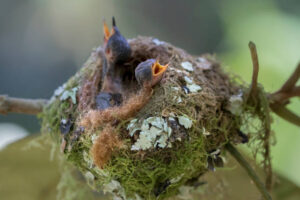
When baby hummingbirds first hatch, they are incredibly tiny and vulnerable. At birth, they are completely featherless, with soft, dark skin and closed eyes. Their tiny bodies weigh only about 0.62 grams, which is lighter than a single American dime. Their beaks are short and stubby, often with a yellowish hue. For comparison, three newly hatched Ruby-throated hummingbirds weigh less than one dime combined.
In the early stages of their lives, the female hummingbird plays an essential role in their survival. She stays close to the nest, rarely leaving, except for brief forays to search for food. This is crucial because the baby hummingbirds cannot regulate their body temperature without feathers, so the mother keeps them warm by incubating them with her body heat. During this time, the young ones rely on her for warmth and protection, as they are too fragile to survive on their own.
As the babies begin to grow, their feathers gradually start to develop. With the increasing insulation, they become better at regulating their body temperature. This allows the mother to leave the nest for longer periods, seeking out nectar and insects to nourish both herself and her growing brood. Despite her longer absences, she continues to return frequently to feed her babies, providing them with the energy they need to thrive.
By the time the young hummingbirds are ready to leave the nest, 18 to 22 days after hatching, they are fully feathered and capable of flying. They are now independent, having gained the skills and strength they need to embark on their own journey into the world. The transformation from helpless hatchlings to vibrant, independent creatures is a remarkable process that highlights the resilience and dedication of the mother hummingbird.
Here’s what baby hummingbirds look like!
What do baby hummingbirds eat?
The mother hummingbird feeds her young by providing a mixture of nectar and small insects, such as ants, aphids, and spiders. These insects are rich in protein and essential nutrients that the babies need to develop their muscles, feathers, and immune systems.
The feeding process is quite fascinating. The female hummingbird collects the nectar from flowers, which provides the necessary sugars and carbohydrates for energy. At the same time, she hunts for tiny insects and spiders, which offer the protein and fats that are important for healthy growth. She stores this food in her crop, a specialized area of the throat that functions as a storage pouch. When she returns to the nest, she regurgitates this mixture of nectar and insects directly into the open mouths of her babies. This feeding behavior is repeated frequently throughout the day, ensuring that the chicks receive a constant supply of energy and nutrients.
The nectar serves as the primary source of carbohydrates for the babies, while the insects provide the necessary protein and other essential nutrients. This combination of foods is perfect for the baby hummingbirds, as it allows them to grow quickly and develop the strength they need for their future independence. The baby birds are fed at regular intervals, sometimes several times an hour, especially in the first few days of life when they are growing rapidly.
How often do hummingbirds eat?
Hummingbirds have an exceptionally high metabolism, which requires them to feed every 10 to 15 minutes throughout the day to maintain their energy levels. Their diet primarily consists of nectar, which provides the necessary fuel for their rapid metabolism. However, during the night, when food sources are scarce, hummingbirds enter a state of torpor. This is a deep, hibernation-like sleep that significantly slows down their metabolism, allowing them to conserve energy and survive without feeding until the morning. Torpor helps them endure the long, foodless hours of the night, ensuring they can resume their energetic activity at dawn.
Experience the magical journey of hummingbird babies in this captivating video! Watch as these tiny marvels grow from delicate eggs to vibrant, fluttering birds, taking their first flight into the world. Witness every awe-inspiring moment as they hatch, stretch their wings, and finally leave their nest, ready to embrace life beyond. It’s a heartwarming and breathtaking adventure you won’t want to miss!
Female hummingbird sitting in her nest incubating her eggs
Click on the link hummingbird nest to see videos of hummingbird nests.
If you’re captivated by the wonder of hummingbird nests, don’t keep the excitement to yourself! Share this incredible page with your friends and family using the social bookmarking buttons on the left. Let’s spread the joy of these amazing creatures and help more people discover the enchanting world of hummingbirds! 🌸💫
Your sharing can make everyone’s day a little brighter! Thank you for being part of this magical journey! 🦋✨

